Wooden chicken coop
Wooden chicken coop
I have lived many years with hens scratching under my window and I have learned one simple truth: a good wooden chicken coop makes your flock calmer, healthier and easier to love. Let me walk beside you while you choose the right little wooden house for your birds.
Argomenti in evidenza
Pick the topic you care about and jump straight to the guide that helps you most.
When I built my very first wooden chicken coop, the boards were a bit crooked, the roof leaked, and the nest box lid slammed every time I closed it. The hens did not complain, but I could see they were nervous and restless. Eggs were few, feathers were everywhere, and every fox in the valley seemed to know our address.
Over the years I have tried many types of wooden coops: small ones for three gentle bantams, long runs for busy layers, and sturdy houses that stand through winter storms. I have made my share of mistakes so that you do not have to. On this page I will share what I have learned, in simple words, with the heart of a quiet backyard farmer who cares deeply for every bird.
Why a wooden chicken coop feels like home for hens
Chickens are simple, gentle creatures, but they sense comfort more clearly than we do. When they step into a wooden house, the air feels soft, the sounds are quiet, and the smell is natural. Wood keeps the warmth of the day and lets out the moisture of the night. It does not echo like metal or plastic. It is closer to the branches where their wild cousins still sleep.
I remember one cold evening when I moved a small flock from a noisy metal shed into a new timber coop. The first night they chattered and flapped around, unsure of the new roosts. The second night, they lined up shoulder to shoulder on the wooden perches, eyes half closed before the sun even set. By the third night, they were so settled that I could collect eggs under them without a fuss. The wooden walls simply felt safe to them.
A well‑built wooden chicken coop is not just a box with a roof. It is the place where your hens will sleep, lay, hide from the wind, whisper to each other, and raise their chicks. When the coop is right, everything about chicken keeping becomes easier.
Calm backyard flocks
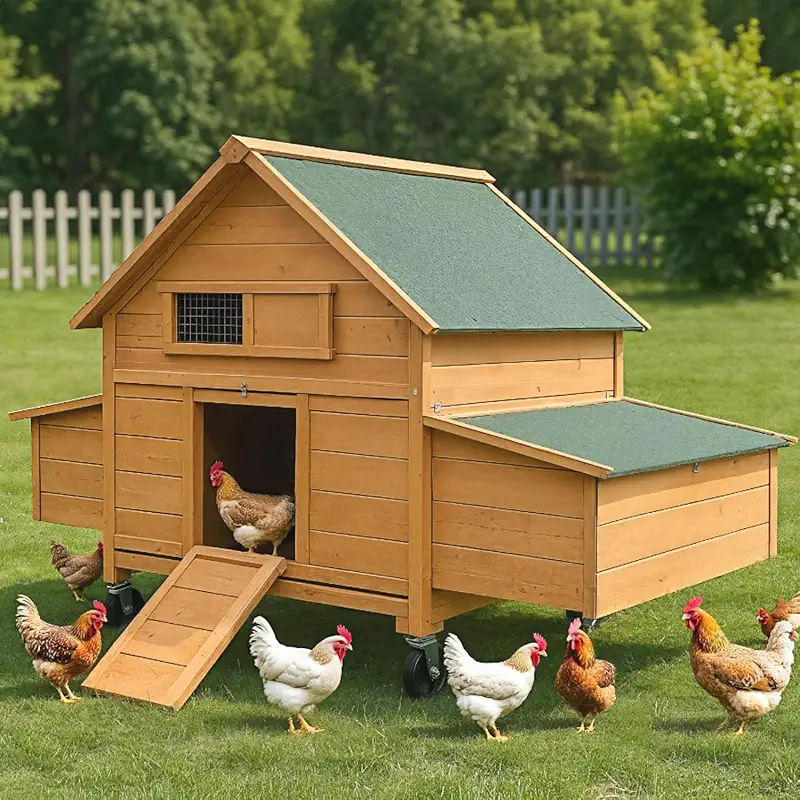
Compact wooden chicken coop
Good for a small garden and a handful of friendly hens. I like compact coops when someone is just starting out and wants to keep feeding, cleaning and collecting eggs simple.
- Space for 3–4 medium hens
- Short walks to food and water
- Easy to tuck into a quiet corner
Typical range: low to medium budget
Let me see sizes
Busier laying flocks
Walk‑in wooden chicken coop
Once you have more hens or children who love to visit them, a walk‑in coop changes everything. You can step inside, look every bird in the eye, and take your time.
- Comfortable access for cleaning
- Room for more roosts and nest boxes
- Better airflow and light
Typical range: medium to higher budget
I want to walk in
Storm and predator zones
Heavy duty wooden chicken coop
If you share your land with foxes, raccoons, dogs or strong winds, a sturdier wooden coop will help you sleep at night. Solid framing and tight mesh make a real difference.
- Thicker boards and framing
- Stronger locks and latches
- Deeper, safer run attachments
Typical range: mid to upper budget
Show me safer options
When you look at different wooden chicken coop models, imagine your hens inside on a rainy night. Picture where they will roost, how you will reach the eggs, and how easily you can close the door with one free hand.
I’ll picture my hens
Key things I always check before choosing a wooden chicken coop
Hens forgive a lot, but there are a few basics they truly need. When I help neighbors pick a wooden coop, I always walk through the same quiet checklist in my mind. You can use it too.
Dry floor and no standing water after rain
Enough roost space: about 20–25 cm per hen
Nest boxes: at least one for each 3–4 hens
Sturdy wire mesh, not thin “decorative” wire
Ventilation near the roof, not at roost height
A door you can close and lock with cold hands
Size is where many people stumble. They buy a pretty little wooden chicken coop for two hens, then end up with six because chickens have a way of inviting their friends. Crowded hens will pick at each other, sleep badly, and lay less. A simple rule I follow is this: if I think I need a coop for four hens, I look at options built for six.
Another detail that matters more than it seems is the height of the roosts. Chickens feel safer when they sleep a bit higher. In my favorite coops, the perches are above the nest box openings and far enough from the wall so their tails do not brush it. If roosts are too low or too close together, the birds end up pooping on each other, and nobody is happy in the morning.
How wood, weather and time work together
Wood is alive, even after the tree has been cut. It swells when it is wet, shrinks when it is dry, and slowly turns silver in the sun. A well‑designed wooden chicken coop is built with these changes in mind. Gaps stay small, doors still close, and rain goes where it should.
Rain and roof
A steep roof is kinder to wood. The faster the rain leaves, the longer the coop lasts. I look for solid roofing material and a small overhang so the walls stay dry. In heavy snow areas, steeper is better.
Sun and shade
Chickens like light, but wooden walls can crack under full, harsh sun. I try to place the coop where it gets morning light and some afternoon shade, or I use a simple shade cloth in summer.
Wind and drafts
Good airflow is not the same as a draft. Ventilation high under the roof lets moist air out, while the hens sleep in still air below. If I can feel wind at head height when I sit where the hens roost, I know I must adjust something.
Rot and soil
The bottom of a wooden chicken coop suffers most. If the legs sit in wet soil, rot comes fast. I like coops with legs off the ground or I place simple bricks or concrete blocks under each foot.
One winter, I had a small wooden coop that sat directly on the earth. After the freeze and thaw of two seasons, the floor began to soften. I noticed it when a hen pecked at a dark spot near the corner. Under the old board I found damp, blackened wood. It was fixable, but from that day on, I began raising every coop just a little above the ground. That simple habit has saved me a lot of repair work.
Little design details that make life easier every single day
After the big decisions about size and strength, it is the small details that shape your daily routine. A wooden chicken coop that feels “thoughtful” will quietly support you for years.
Doors, access and daily care
I like to imagine my hands full: one holding a feed bucket, the other keeping a curious hen from slipping out. In that moment, a door that swings the right way and a latch that closes smoothly are worth more than any pretty trim. When I look at a coop, I ask myself, “Can I open and close this half‑asleep in the dark?”
Removable trays or drop‑down floors under the roosts help more than any fancy gadget. Chickens always choose the same sleepy spots to poop from the perch. When waste falls onto a tray you can slide out, cleaning becomes a quick, nearly pleasant ritual instead of a stubborn chore.
Nest boxes where hens feel unseen but not forgotten
Hens like to lay where it feels quiet, dim and safe. Too much light, and they wander around searching for better places. Too little, and they may feel afraid to enter. I enjoy wooden chicken coops where the nest boxes sit slightly lower than the roosts, with a gentle lip to hold the bedding and eggs.
Side‑opening nest box lids are a blessing for older backs and busy mornings. I still remember the first time I opened one and saw five eggs lined up like warm stones in the straw. I did not have to crouch or reach blindly; the design gently invited me to take what the hens had so patiently given.
My quiet routine around the coop
My own mornings follow a soft rhythm. I walk to the wooden chicken coop while the sky is just turning pale. The hens are already murmuring inside, shuffling on the perches. I open the little pop door, step back, and they spill into the run like a calm, feathered river. Then I check feed, top up water, and slide a hand through the straw in each nest, feeling for early eggs.
In the evening, I walk the same path in reverse. I listen for the quiet rustle of the settled flock, count heads on the roosts, and close the door with a simple, well‑fitting latch. Each sound of wood against wood tells me they are safe for the night.
Wooden chicken coop inspiration: shapes and layouts
There are many ways to arrange a wooden chicken coop, and each one suits a different kind of keeper and garden. Sometimes seeing a few common shapes helps you picture what would fit into your own space.
Small A‑frame wooden chicken coop
A simple A‑frame coop with a little attached run is like a tiny cottage for two or three hens. It is low, neat and often light enough to move on fresh grass. Children enjoy these, as they can see the whole little world at once.
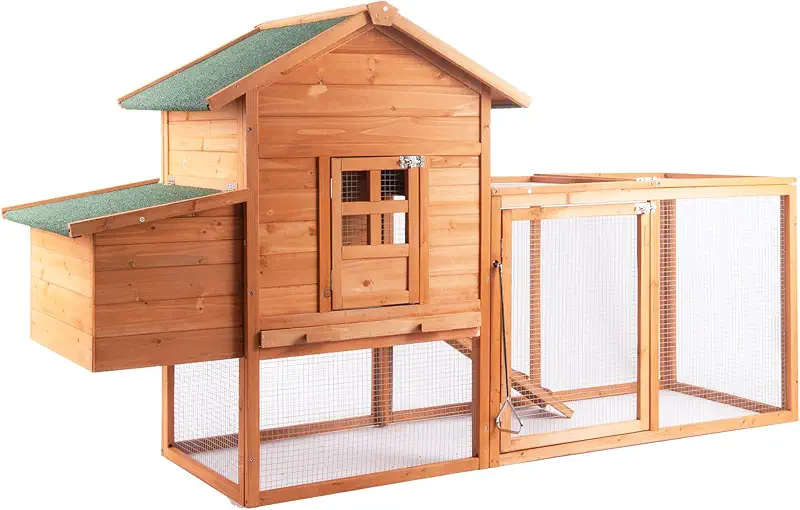
Raised coop with run underneath
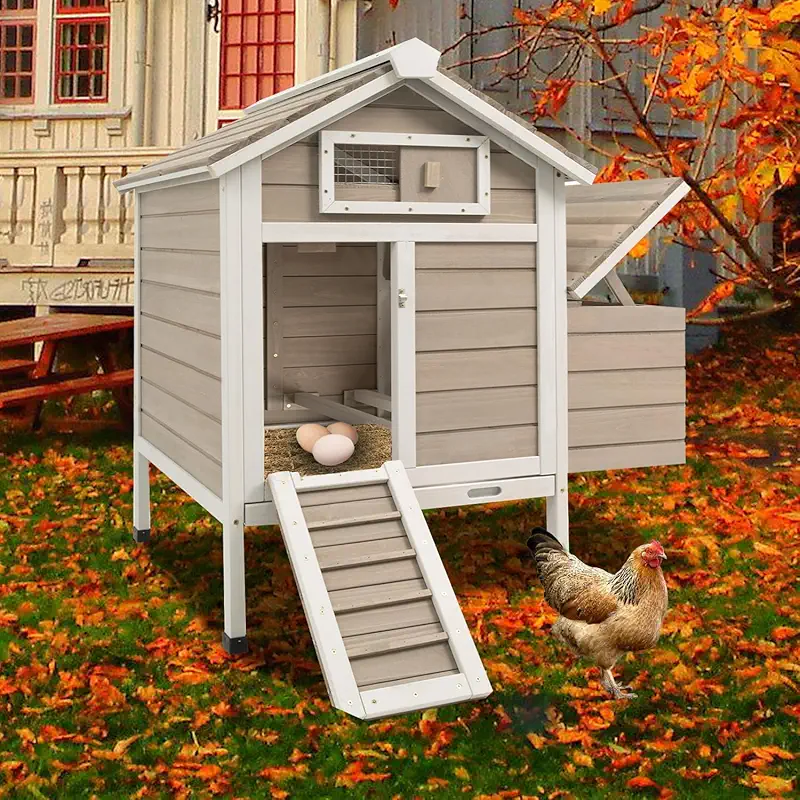
A raised wooden chicken coop gives shade and shelter under the house where hens can dust bathe, hide from rain or simply rest on hot afternoons. It also keeps the floor farther from damp ground and gives rats and other pests fewer dark corners to claim.
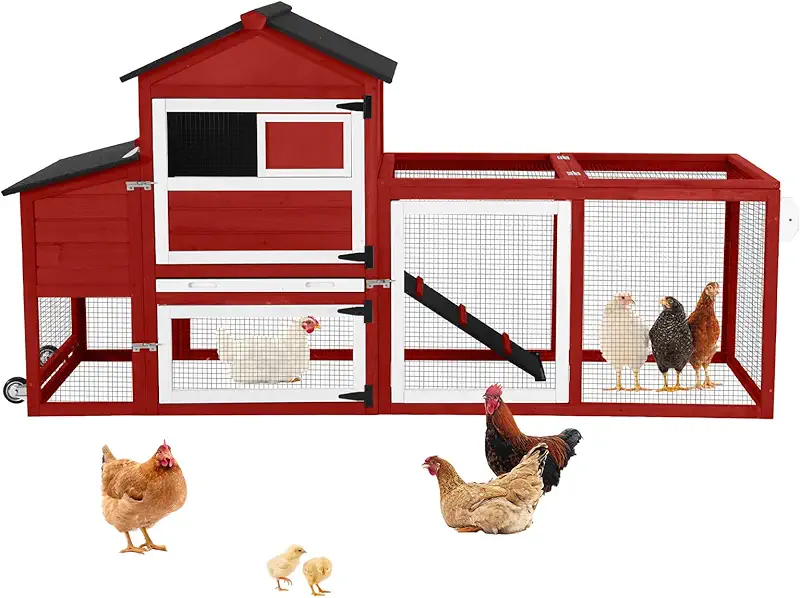
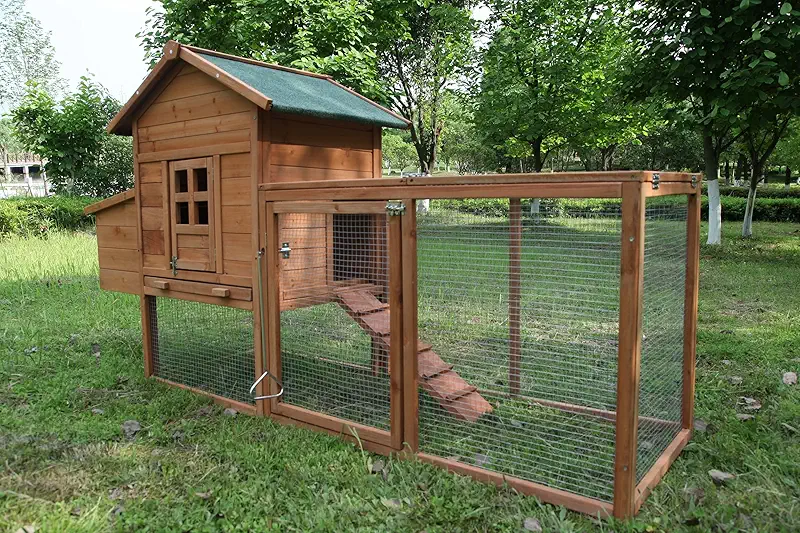
Long, low coop with attached run
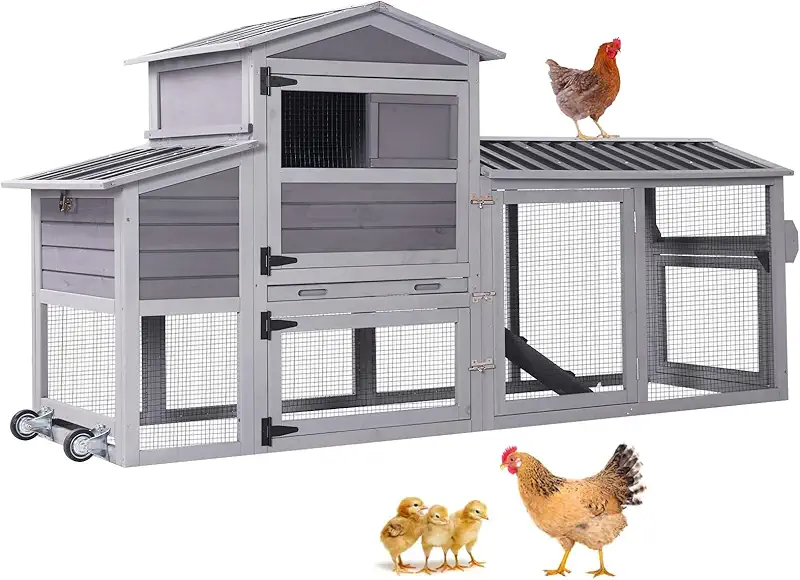
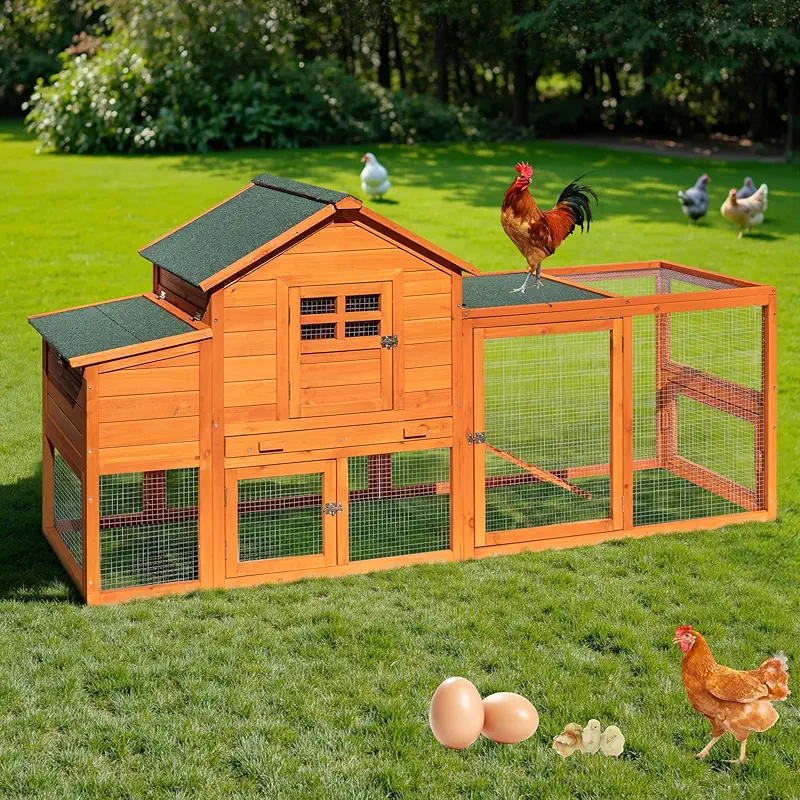
For slightly larger flocks, a long low coop with a flat or gently sloped roof can offer good roost space and an easy‑to‑reach interior. The attached run keeps the hens safe when you cannot be outside with them. I like when the run roof is solid rather than just mesh; it keeps the ground drier and the birds cleaner.
If you feel unsure which layout is right, think about your daily walk to the coop. How far is it, how often will you go, and who will care for the hens when you are away for a few days?
Let me explore calmly
Keeping a wooden chicken coop clean, kind and long‑lasting
A wooden coop asks for gentle, regular care rather than harsh, rare scrubbing. This rhythm keeps your hens healthy and the wood strong.
My simple cleaning rhythm
Once a week I bring a bucket, a small brush and a hoe to the wooden chicken coop. I scrape under the roosts, slide out the tray if there is one, and remove the week’s droppings. I add a thin layer of fresh bedding where it is needed, especially under the roosts and in the nests. It takes less than half an hour, and my hens reward me with clean feet and clean eggs.
A few times a year, I take everything out of the coop and let the sun reach every corner. Sunlight is the oldest and kindest disinfectant we have. While the coop airs, I check for loose boards, small gaps, and signs of red mites or other pests. Catching problems early keeps both birds and wood in good shape.
Protecting the wood without harming the hens
When you protect the outside of a wooden chicken coop, choose finishes and paints that are safe once dry. Many coops come already treated, but sun and rain still wear the surface down over time. A light re‑treat every couple of years makes a surprisingly big difference to how long the structure will last.
Inside, I avoid thick paints that can flake. Instead, I prefer smooth, sanded surfaces and a thin, well‑cured finish if one is used at all. When walls and floors are smooth, mites and other tiny creatures have fewer cracks to hide in, and cleaning becomes a gentle brushing instead of a battle.
Wooden chicken coop – frequently asked questions
How many hens can I keep in one wooden chicken coop?
It depends on the size and design of the coop and how much time your hens spend outside. As a calm rule, I aim for at least 0.35–0.5 square meters of inside floor space per medium hen, more if the birds stay indoors during bad weather. The run should be as generous as your space allows. Crowded hens get stressed, peck each other and are more likely to fall ill, so it is kinder to choose a coop that feels just a little bigger than you think you need.
Is a wooden chicken coop warm enough in winter?
Chickens handle cold better than damp drafts. A solid wooden coop with dry bedding, a roof that does not leak, and roosts away from drafts is usually enough, even in chilly weather. I do not use heaters; instead, I block direct drafts at bird level, add extra dry straw or shavings, and make sure vents high under the roof stay open so moisture can leave. Hens puff up their feathers and share body heat when the roost is well designed.
How do I protect a wooden chicken coop from predators?
I start from the ground and work upward. I like strong welded mesh rather than thin chicken wire, fixed firmly to the frame. On the run, I bury mesh or bend it outward along the ground so digging predators find a barrier. All doors and nest box lids need solid latches that a raccoon cannot twist open. At night, I always count the hens and close the pop door fully, even if I think nothing is hunting nearby. The routine itself is what keeps them safe.
Does a wooden chicken coop attract mites and pests?
Any coop can house mites if it is dark, crowded and rarely cleaned. Wood has little cracks where pests can hide, but regular care changes the story. I keep the coop dry, remove droppings often, and check roost ends, cracks and under nest box lips for tiny moving specks. When I see early signs, I brush, clean and treat those areas, then let the sun in for a few hours. With this gentle watchfulness, mites never become a big drama.
How long will a good wooden chicken coop last?
With decent materials and kind maintenance, a wooden chicken coop can serve you and your hens for many years. I have one that is over a decade old. I raised it slightly off the ground, repainted the outside twice, and repaired one roof edge after a winter storm. In return, it has sheltered several generations of birds. If you treat your coop almost like another animal on the farm—worthy of small, regular care—it will quietly stand by your flock for a long time.
If your heart is already picturing soft clucks coming from a tidy little wooden house in your yard, you are closer than you think. The right wooden chicken coop is the first gift you give to your future flock.
I’ll choose with care