
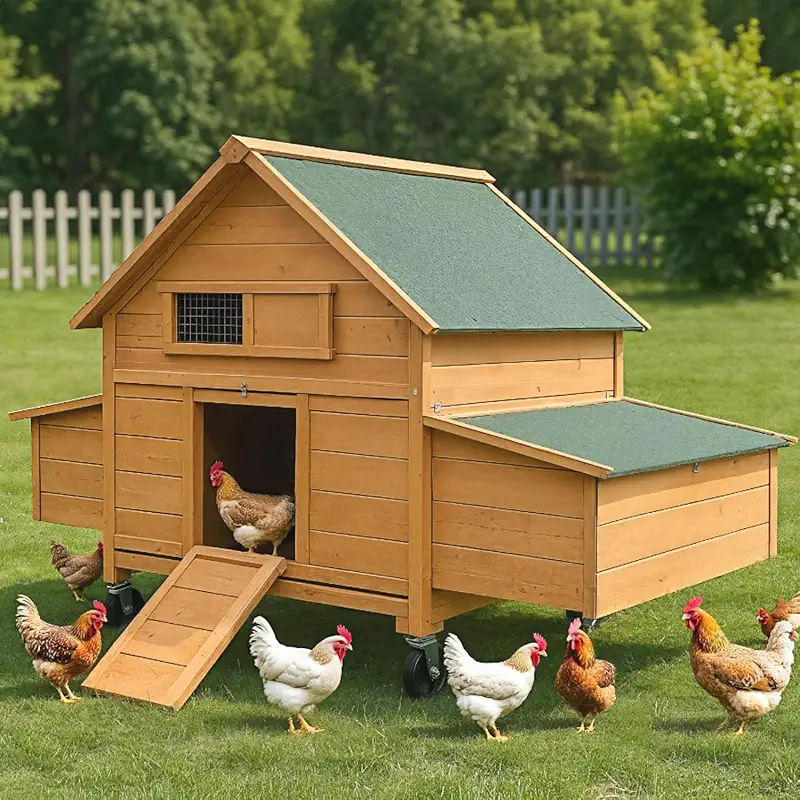
Why a wooden chicken coop feels like home
When I think about my hens, I always picture them settling on the roost at dusk, with that soft murmur they make when they feel safe. A good wooden coop helps create that feeling. Wood breathes. It does not feel cold and sharp like metal. When the wind blows around the coop at night, the inside still feels gentle and steady.
Over the years I have tried all kinds of shelters: old sheds, plastic houses, and even a converted dog kennel. The coops that kept my birds healthiest, with the fewest problems, were always made of wood. It is easy to repair, simple to insulate, and forgiving when you make small mistakes. And, if you are anything like me, the smell of fresh-cut boards and shavings just feels right.
- Keep your hens dry, even in heavy rain.
- Stay draft-free at roost height but still well ventilated.
- Be simple to clean on a tired winter morning.
- Give you quick access to eggs without disturbing the flock.
Building a wooden chicken coop is also a way to slow down. I often build mine over a few evenings, after feeding, when the light is soft and the birds are scratching nearby. It does not have to be perfect. It just needs to be safe, sturdy, and kind to the animals that will sleep inside it.
Planning your wooden coop: start with the hens, not the hammer
Before you cut the first board, sit for a minute and picture your hens inside the coop. I like to imagine them at three times of day: early morning, midday, and night. This simple picture in your mind will answer more questions than any blueprint.
At night, they need enough roost space so no one is pushed to the cold edge. During the day, they need light and air so the coop does not smell sour. And always, they need protection from foxes, raccoons, rats, and neighborhood dogs. When you plan with those details first, everything else falls into place more easily.
How big should your wooden chicken coop be?
Many people get this part wrong. Crowded hens get stressed, pick at each other, and are more likely to get sick. I have seen it when I tried to “just add two more hens” to a small coop. They let me know I had made a poor choice.
For standard-size hens, I like to aim for at least 4 square feet (about 0.37 m²) of indoor coop space per bird, if they have a run. If your birds will spend long winter days inside, a little more does not hurt. For bantams, you can use a bit less, but I still prefer to give them room to flap and stretch their wings.
- 3–4 hens: small wooden coop, about 12–16 sq ft.
- 5–8 hens: medium coop, about 20–32 sq ft.
- 9–12 hens: larger coop, about 36–48 sq ft or more.
Remember, adding hens later is easy. Stretching a small coop can be harder than starting slightly bigger today.
Height and head room
When I built my first coop, I made one silly mistake: it was tall enough for the hens but not for me. Cleaning it felt like doing chores inside a mailbox. Now I always make sure I can at least kneel or bend inside without bumping my head every minute.
Enough height also helps air move gently above the hens, carrying moisture and ammonia away. A low, flat roof might look tidy, but it can trap damp air right where your hens sleep. A slightly higher pitched roof makes the coop feel calmer and fresher.
Choosing wood and materials that age well
Building a wooden chicken coop is not just about what you can find cheaply this weekend. It is about picking materials that will not twist, rot, or fall apart when the first storm comes. I learned this the hard way when I built a coop from scrap boards that looked fine but soaked up water like a sponge.
Which wood works best for coops?
I like to use sturdy framing lumber for the structure, usually 2x2 or 2x4 pieces, and smoother boards or plywood for the walls. If your budget allows, cedar is lovely because it handles moisture well and smells clean. Pine is more common and works fine if you protect it from the weather and keep the coop well ventilated.
Whatever you choose, avoid boards that are soft, crumbly, or full of large cracks. Those cracks become hiding spots for mites. If you use pressure-treated wood for legs or the base, keep it where the hens do not peck or roost, and always cover it with plain boards on the inside if they can reach it.
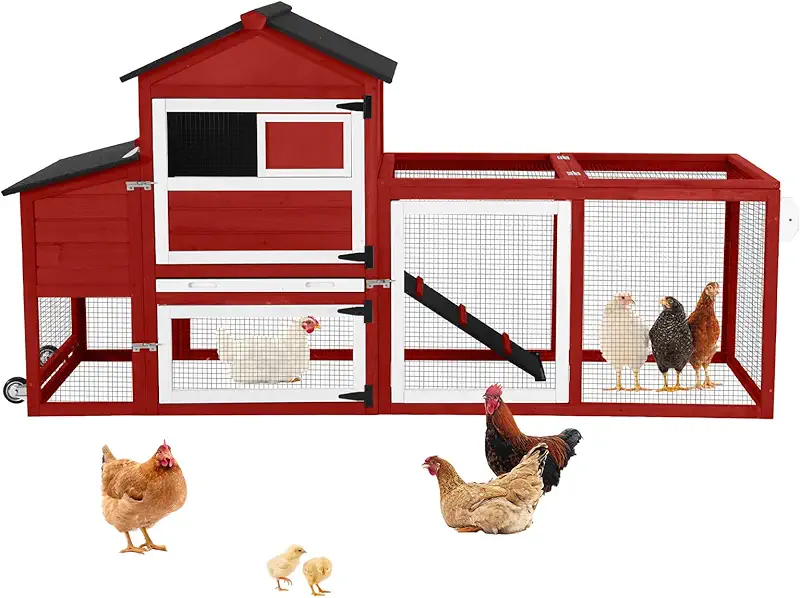
Simple, sturdy framing gives your wooden coop a quiet strength that your hens will feel every windy night.
Floors, roofs, and little details that matter
For floors, I like strong wooden boards or thick plywood, raised off the ground on blocks or legs. When you lift a coop even a little, it stays drier and is harder for predators to dig under. Inside, I often paint the floor with a non-toxic outdoor paint or seal it with a safe sealer. It makes cleaning easier and keeps the wood from soaking up damp bedding.
For roofs, a simple wooden frame with sturdy panels and a layer of shingles or metal works well. I always add enough overhang to keep rain from blowing straight into the ventilation openings. A quiet roof that does not leak will make your hens stay calm, even in heavy storms.
Ventilation, light, and warmth: the quiet balance
People worry a lot about cold, but in my years of keeping hens, damp air has caused far more trouble than low temperatures. Building a wooden chicken coop that stays dry inside is one of the kindest things you can do for your flock.
Ventilation without drafts
Ventilation means letting moist, stale air escape while fresh air enters slowly. Drafts are fast streams of air blowing directly on the hens. We want the first and must avoid the second.
On my coops, I place ventilation openings high on the walls, above roost level. Usually this means long, narrow gaps under the roof line, protected with sturdy wire mesh. In winter, I sometimes slide covers halfway over these gaps to calm the airflow, but I never close them fully. Frostbitten combs almost always come from damp, still air, not just from cold.
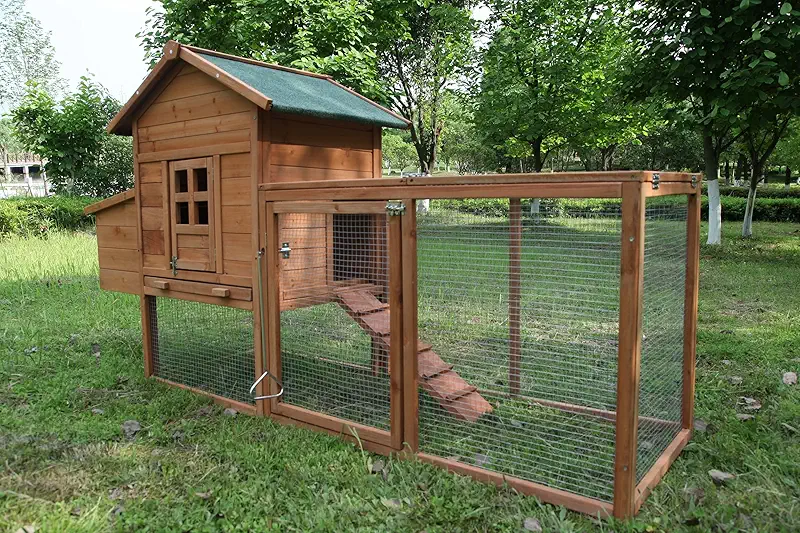
High vents let moist air escape while your hens sleep in a calm pocket of still, warm air below.
Windows and natural light
Hens greet the day gently when sunlight eases into the coop. A small window, placed where the morning sun can reach the litter and the nesting boxes, keeps things bright and dry. Glass or clear plastic panels can work, but always cover the inside with wire mesh so that if the glass breaks, your hens stay safe.
I like to add a window across from the main door. It makes the coop pleasant for me as well when I am cleaning or checking on a broody hen. A bright coop smells better, dries faster, and feels more cheerful, for birds and humans alike.
Roosts, nesting boxes, and inside layout
Building a wooden chicken coop is not just about walls and roofs. The inside layout changes how your hens behave. If you place the roosts and nesting boxes wisely, you will see calmer birds, cleaner eggs, and fewer problems.
Roosts that feel safe
Hens like to roost higher than the floor. It is in their nature. A simple wooden perch, about the width of a broom handle but with softened edges, works very well. I often use a 2x2 board with the corners rounded off. The top should be wide enough for their feet to rest flat.
I mount my roosts so that the hens sit a little higher than the nesting boxes. If you place nests higher, hens may choose to sleep in them, which leads to dirty eggs. I also leave enough space between roosts so that birds can flap up and down without bumping each other.
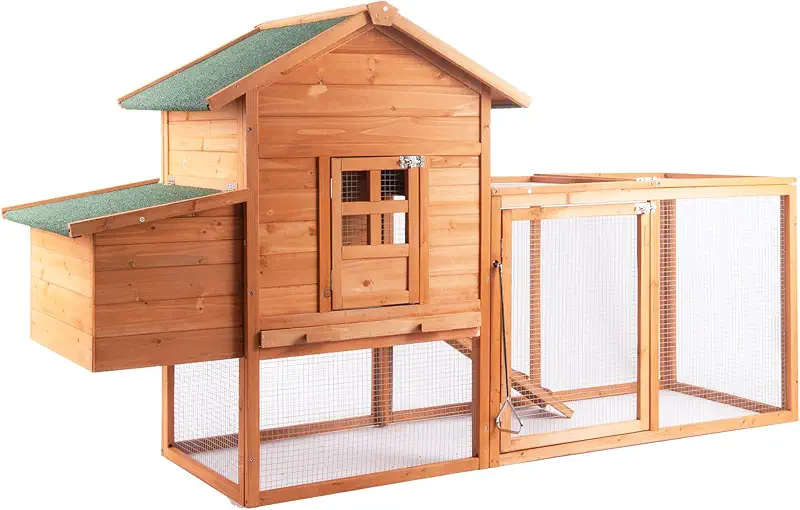
Sturdy wooden roosts let every hen find a calm spot without jostling or bullying at bedtime.
Nesting boxes that stay clean
For nesting boxes, I have tried many shapes, from buckets to wooden crates. I always end up going back to simple wooden boxes with a small lip in front to hold the bedding. I like one nesting box for every three or four hens. They will still all want the same box, but the extra spaces reduce squabbles.
Place the nests in the quietest part of the coop, away from the main door. A gentle slope on the roof of the nest boxes helps keep hens from roosting and leaving droppings there at night. Fresh shavings or straw in the nests and a dim, calm corner make egg-laying a peaceful moment.
Cleaning, access, and everyday chores
One of the biggest lessons I have learned while building wooden chicken coops is this: if a coop is hard to clean, it will not be cleaned as often as it should. Life gets busy, and hens deserve a place that is easy to keep fresh.
Doors that work for both you and the hens
I always build two kinds of doors. One small pop door just for the hens, and a larger access door for myself. The pop door should be easy to open and close with one hand, even when you are wearing gloves or holding a feeder. The tall door should give you clear access to most of the floor area so you can rake out bedding and check every corner.
On the first coop I made with a small access door, I had to crawl inside to catch a sick hen. That was the day I promised myself I would always, always plan for my own knees and back too.
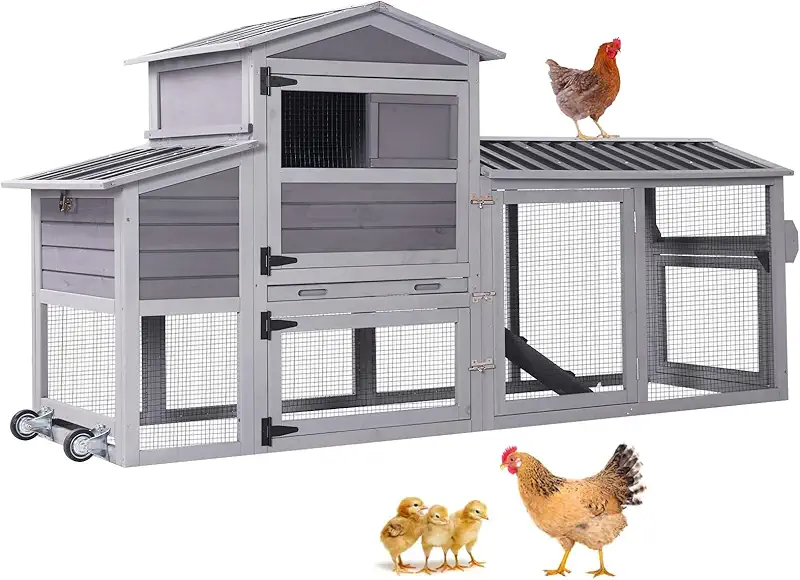
Wide access doors turn coop cleaning from a dreaded chore into a quick, simple part of your day.
Flooring and bedding
Inside my wooden coops, I like to use a generous layer of dry bedding. Pine shavings work well, and chopped straw can be good if it stays dry. In winter, I use a deeper layer and turn it often, letting it compost gently. When the floor is smooth and sealed, bedding slides out easily and does not snag on splinters.
A broom and a small rake kept nearby save time. I like to hang them on the outside wall of the coop, ready for the quick tidy-up after morning feeding. When cleaning is quick, it becomes a peaceful little habit instead of a big task you postpone.
Predator protection and quiet nights
The first time I heard a fox bark near the coop at night, my heart sank. I knew my hens were counting on the strength of the wooden walls I had built. That moment changed how I think about security. Building a wooden chicken coop means thinking like a fox, a rat, and a raccoon, and then quietly outsmarting them.
Strong wire and solid locks
For any opening, like windows or runs, I use strong wire mesh, not thin chicken wire. Chicken wire keeps birds in, but it does not keep determined predators out. A fox or dog can tear through it, and rats can squeeze through small holes. I fix the mesh with plenty of screws and washers or strong staples, checking it every season.
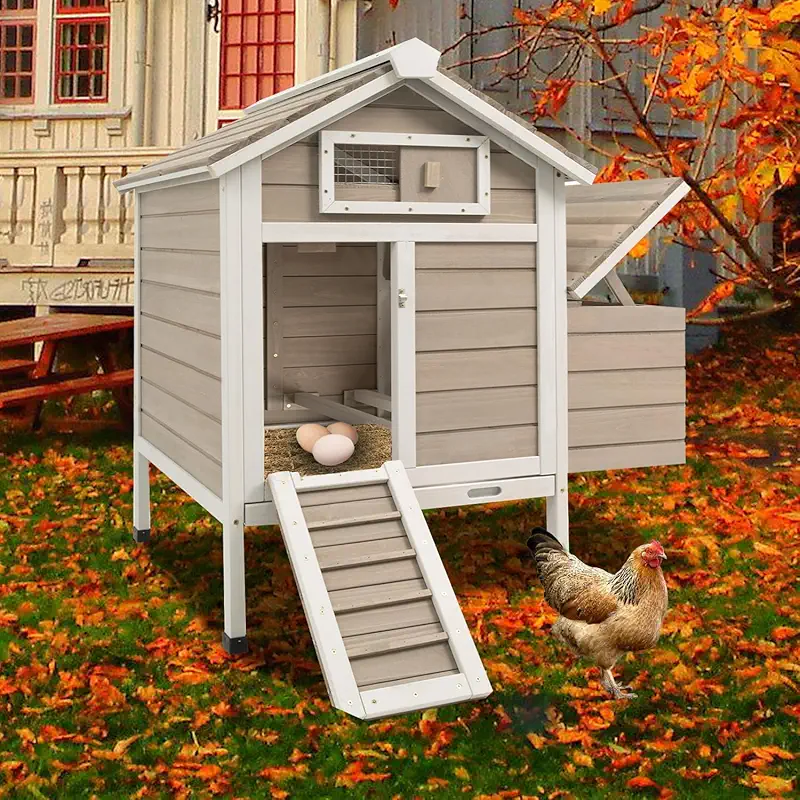
Firm latches, solid wood, and strong wire turn your wooden coop into a calm, safe bedroom for your flock.
On doors, I never trust a simple hook latch. Raccoons have clever fingers. I prefer sturdy latches that require lifting and sliding, the kind that take a bit of thought even for a sleepy human in the evening. When I close that latch at dusk, I like to hear a firm click. It is the sound of a promise kept.
Ground, gaps, and small visitors
Rats and weasels do not need big openings. When I build a wooden chicken coop, I pay close attention to where the walls meet the floor. I seal cracks, add boards where needed, and sometimes run wire mesh under the floor area or around the base, buried in the soil. It is quiet work, but it saves a lot of heartache later.
Using ready-made wooden coops as helpers
Not everyone has the time, tools, or energy to build everything from raw lumber. I understand that very well. There have been seasons in my life when a pre-built or partially assembled wooden coop was the best choice I could make for my hens.
Many wooden coops now come in flat packs with pre-cut panels. You still get the warm look and feel of wood, but most of the measuring and sawing is already done for you. You can often put them together in an afternoon with a simple screwdriver. For a small backyard flock, these coops can be an easy, gentle way to start.
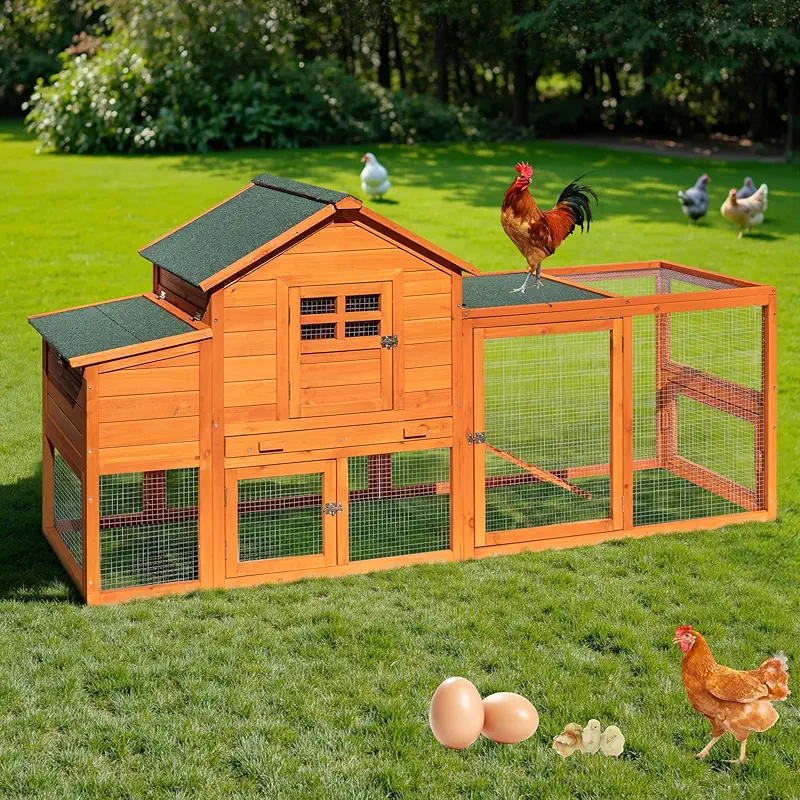
Pre-built wooden coop kits can save time while still giving your hens the warmth of natural wood.
When I look at ready-made wooden coops, I pay attention to the same things I do in my own builds: floor space, roost placement, ventilation, and ease of cleaning. A good kit should be easy to adjust a little. Maybe you add an extra vent, a sturdier latch, or another roost. In that way, you still make it your own, and your hens will feel that care.
Growing with your flock
Flocks rarely stay the same size forever. A neighbor offers you two pullets. You fall in love with a new breed. Before long, the coop that felt generous now looks a little snug. Building a wooden chicken coop with the future in mind is an act of patience with yourself.
When I build or choose a coop, I often plan for two or three extra birds, even if I do not have them yet. If I never add them, my existing hens simply enjoy more space, which is never a bad thing. If I do, the coop is ready, and no one feels crowded.
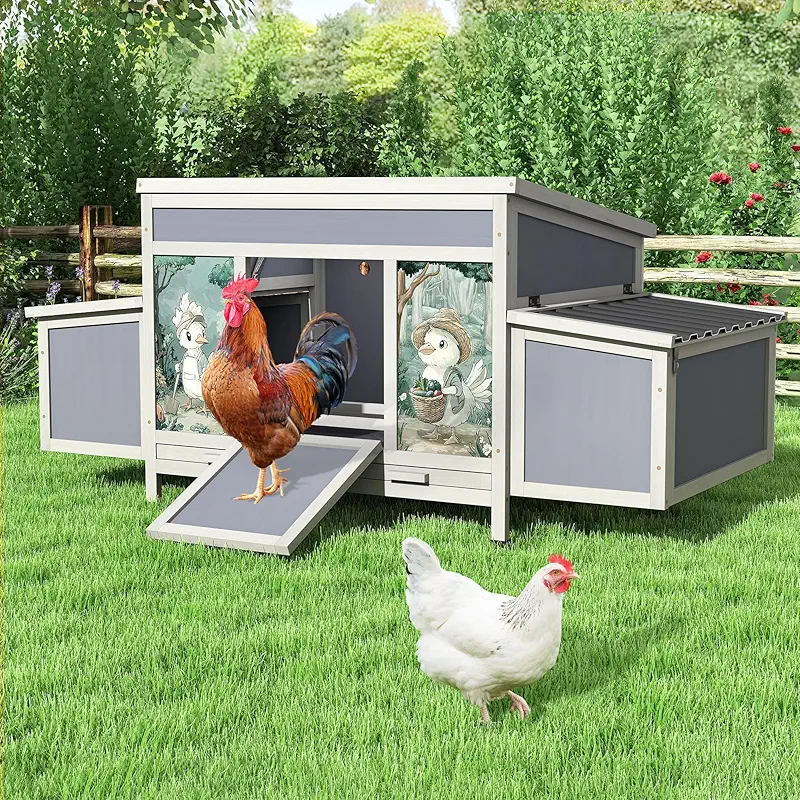
A thoughtful wooden coop can gently grow with your flock, season after season.
Wooden coops are forgiving. You can add a small extension, raise the roof, or attach a new run. With a bit of creativity and a few spare boards, your simple first coop can become something much more over the years. I often say that my coops age along with my hens and with me. They carry the marks of every winter, every storm, and every batch of curious chicks.
FAQs about building a wooden chicken coop
How many hens can I keep in a small wooden coop?
For a small wooden coop, I like to stay around three to four standard hens if the indoor space is roughly 12–16 square feet and they have an outside run. You can sometimes fit more on paper, but in real life, crowded birds bicker and stress each other. I always watch their behavior: if tails are held low, feathers get plucked, or birds avoid corners, it usually means they need more room.
Do wooden coops stay warm enough in winter?
Yes, a well-built wooden coop can keep hens comfortable through winter, even in cold areas. The key is dryness, ventilation above roost height, and protection from drafts at bird level. I do not usually add heavy heating. Instead, I focus on deep, dry bedding, solid walls, and a windbreak around the coop. Healthy adult hens handle cold much better than damp, still air.
How high should the roosts be in a wooden coop?
In most of my coops, the lowest roost is about 18–24 inches off the floor, with any upper roosts a bit higher. That gives hens a clear sense of safety without making the jump too hard for heavier breeds. I always make sure there is a steady path up and down: a ladder, a ramp, or staggered perches, so no one has to leap blindly in the dark.
How often should I clean a wooden chicken coop?
That depends on your bedding style, flock size, and climate. With a thin layer of shavings, I usually remove droppings from under the roosts every few days and refresh all bedding weekly. With deeper bedding, I turn it often and do a full clean every month or two, with small touch-ups in between. My rule is simple: if it smells sharp or feels damp, it is time to clean, even if the calendar says otherwise.
Can beginners manage building a wooden chicken coop?
Yes. I have helped many people who had never held a drill before build honest, sturdy wooden coops. Start with a simple design, measure twice before cutting, and do not worry about beauty. The hens care more about dry bedding, fresh air, and a calm routine than perfect corners. If building from scratch feels heavy, a wooden coop kit that you assemble and gently improve can be a kind first step.