
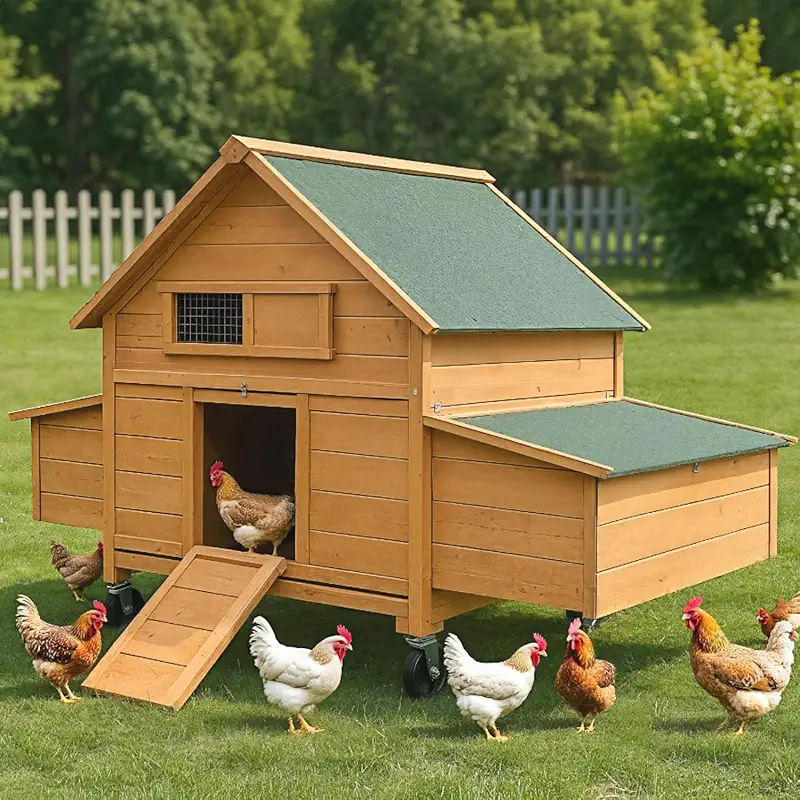
Why a wooden chicken coop with no run can be a good idea
When I built my first wooden coop, I tried to add everything at once: big run, many doors, fancy windows. It became heavy, hard to clean, and my hens did not seem happier. Years later, I bought a small wooden chicken coop with no run. It surprised me how calm the flock became.
A coop without a built-in run is just a clean, simple house. The run or free-range space is handled separately. This can make your life easier:
- You can place the coop where the ground is driest and most level.
- You can change or move the external run later without rebuilding the house.
- You focus first on safety, dryness, and airflow inside the coop.
- Cleaning is often faster, because you are dealing with a compact space.
When I walk into my yard early in the morning, I listen for the soft clucking from the coop. A good wooden coop feels dry, smells fresh, and has enough light for the birds to see each other gently. That feeling matters more than any extra feature.
Key things I look for in a wooden coop with no run
Over the years, I have made almost every mistake possible. I bought a coop that was too low to stand near, one with a roof that leaked, another with poor latches. So now I use a simple checklist whenever I look at a wooden chicken coop with no run.
1. Size and real space per hen
On paper, many coops say they hold more birds than they truly should. My rule is gentle: I imagine my calmest hen sitting on a perch with her wings relaxed. She needs space far enough from the next bird so they do not shove each other all night.
For standard breeds, I try to keep at least 3–4 square feet of indoor floor space per hen. For small bantams, you can go slightly lower, but more room is nearly always better. I also look at perch length: around 20–25 cm (8–10 inches) per hen is my starting point.
2. Solid roof and dry floor
I remember one winter when a cheap coop roof started to drip over the nest boxes. The eggs got damp, bedding turned cold, and my girls complained every evening. Since then, I look very closely at the roof design.
A good wooden coop should:
- Have a sloped roof so rain runs off quickly.
- Use roofing felt, shingles, or another weather layer over the wood.
- Keep all joints sealed so water does not creep in.
- Stay slightly raised off the ground to avoid damp floors and rot.
Dryness is kindness. Wet, cramped birds get sick faster and rest poorly.
How I use a wooden chicken coop no run in my own yard
In my flock, the coop is the bedroom and the nest room, nothing more. The “living room” is outside. During most of the day my hens either free range in a fenced yard or stay inside a separate walk-in run. At dusk, they walk into their wooden house on their own.
Here is how a normal day looks here:
Early morning, I open the main coop door. I check the bedding with my hand. If it feels dry and a bit springy, I know their night was comfortable. I collect eggs from the nest boxes. I also look at the droppings under the perches; they quietly tell me if any bird might be unwell.
Then I guide them into their run, which is just a secure wire area built nearby. The coop stays open for air. If it rains hard or the wind cuts through the yard, many of them will walk back into the wooden coop to rest. It is their safe cabin in the storm.
Because my coop has no attached run, I could set the run fence wherever it fit best, around trees and shrubs. I even moved the coop once to a slightly higher spot when I noticed water pooling after heavy rain. That would have been much harder with one big fixed structure.
Ventilation, safety and quiet: the three pillars
My grandfather used to say, “Chickens forgive many things, but not a bad night’s sleep.” Over time I learned that three simple things make the biggest difference in a wooden chicken coop with no run: air, safety, and quiet.
Gentle airflow without drafts
Hens breathe out a lot of moisture at night. Without ventilation, the air becomes damp, and damp air is the friend of frostbite and respiratory issues. Still, cold drafts blowing directly over the roost are also harmful.
So I look for:
- Vents high in the walls, above the perches, not at perch level.
- Windows that can be closed in a storm but opened on mild days.
- Small gaps under the eaves protected by wire mesh to keep predators out.
Firm latches and strong wire
I lost my first hen to a fox that learned how to lift a weak latch. That night changed how I look at doors forever. Now, on any coop I choose, I test in my mind how a clever raccoon, fox, or dog would try to open it.
Metal slide bolts with a place for a clip are much safer than simple turn latches. If there are vents, I like to see sturdy hardware cloth, not thin chicken wire alone. Chicken wire keeps birds in, but not always predators out.
Quiet, dim roosting space
At night, my yard becomes still. Only a faint rustle from the coop reminds me that my girls are shifting on their perches. Hens rest best when the roosting area is slightly darker and calmer than the nest boxes and door.
I prefer a coop layout where:
- Perches sit higher than the nest boxes so birds do not sleep in nests.
- Nest boxes are off to the side, in a slightly dimmer corner.
- The main door is not directly under the perches, to reduce drafts and noise.
Wood care, cleaning, and making the coop last
Wood feels warm and natural, but it also needs a bit of care. When I first painted a coop, I used a strong-smelling paint inside and learned quickly that my hens hated it. Now I treat wood more gently.
Outside, I like a good outdoor wood preserver or safe paint to keep the rain out and the sun from cracking the boards. Inside, I keep things simple: smooth surfaces, non-toxic finishes, and easy-to-sweep corners.
My weekly routine looks like this:
- Scrape droppings from boards under the perches or from the floor.
- Add a thin layer of fresh dry bedding where it looks worn.
- Check for any sign of mites around perch ends and cracks.
- Open doors and vents wide for a few minutes to let air change completely.
Every few months, I do a deeper clean. I remove all bedding, sweep, and, on a dry day, wash surfaces lightly and let everything dry fully before the birds go back in. With this habit, my wooden coops have lasted years longer than I first expected.
Matching a wooden chicken coop no run to your hens and your life
When friends ask me which coop to choose, I do not start with measurements. I start with questions about their days. Are they home most of the time? Do they leave before sunrise? Do they come back after dark? The right coop should fit the rhythm of your life as much as the shape of your yard.
If you are often away, a slightly larger coop can give hens more comfort when they must stay inside because the weather is harsh. If you are present morning and evening, a smaller wooden coop with no run, combined with a good fenced area, might be enough and easier to manage.
I also like to leave some margin for the future. Many of us start with four hens and somehow end up with eight. So whenever I look at a coop, I imagine it with two more birds than I plan today, just to see if it would still feel calm and not crowded.
At the end of the day, if you can stand beside the coop at night, listen to the soft, steady breathing inside, and feel at peace yourself, then you chose well.
I’ll browse options