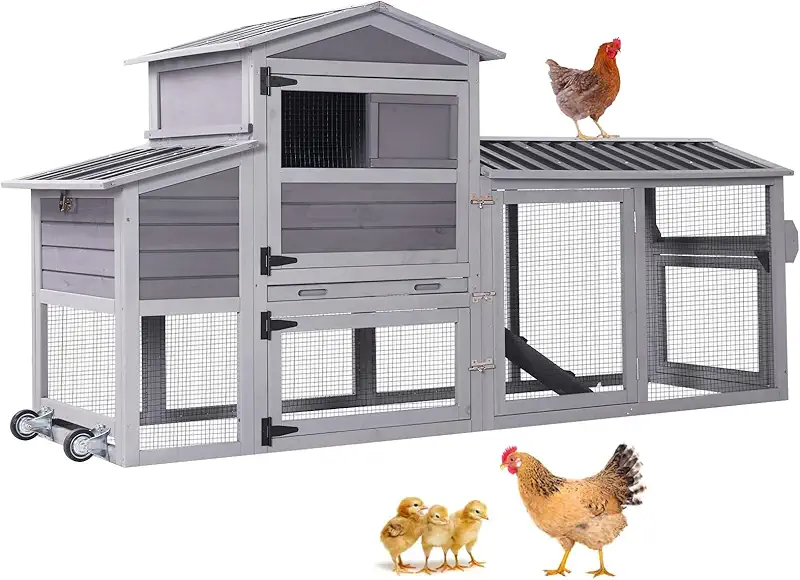
Small wooden chicken coop
Small wooden chicken coop
Quiet, safe spaces for gentle hens
I have lived with chickens for so many years that I count my seasons not by the calendar,
but by the sound of little feet on dry straw. A small wooden chicken coop has always been
the heart of my backyard – warm in winter, cool in summer, and close enough that I can
hear their soft evening clucks from my kitchen window.
If you are thinking about a small wooden chicken coop for your own flock, I would like
to talk to you as I would to a neighbor over the fence. No big words, no pressure.
Just honest advice, simple checks, and the quiet wisdom of many muddy boots and early
mornings with sleepy hens.
In this page I will walk you through how I choose a coop, how I arrange the inside,
and what I wish someone had told me before I brought my first three hens home.
My smallest flock was just two little rescues, Daisy and Ginger. They thrived in a compact,
wooden coop only a few steps from my back door. That tiny house taught me that “small”
can feel very safe – for hens and for humans.
Let me see options
I often browse a few designs, then come back with a cup of tea and think about what my hens would enjoy most.
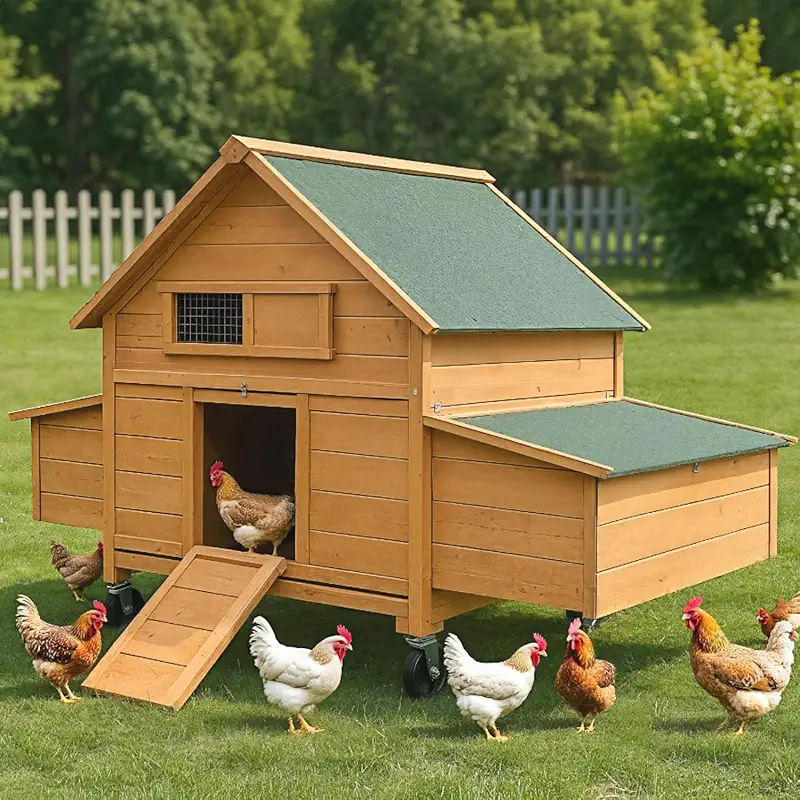
Why a small wooden chicken coop feels like home
When people visit my backyard for the first time, they are often surprised at how modest my
coops are. No big barns, no complicated systems. Just small wooden chicken coops, tucked
under trees, with simple ramps and doors. The hens are calm. I am calm. Everything feels
close and easy to care for.
A small coop is not about doing the minimum. It is about giving your hens a space that fits
them and fits your life. Here are a few reasons I have come to love smaller wooden coops.
Closer to your daily life
With a small wooden chicken coop, you can keep your hens close to your house without the
feeling that a giant structure is taking over your yard. I like to place the coop where I
naturally walk every day: near the garden path, close to the tap, not too far from the
kitchen door.
This makes it easier to notice small changes in your hens – a quieter cluck, a slower step,
a pale comb. Many problems are solved just because I see them early while carrying a bucket
or hanging laundry next to the coop.
Simpler to clean and keep dry
Bigger is not always better when you are the one holding the shovel. A small coop is quick
to clean, which means you are much more likely to do it often. Clean, dry bedding is one of
the best gifts you can give to your flock.
I like coops with easy access: big back doors, removable trays, and roofs that open without
a fight. When I look at a new small wooden chicken coop, I imagine cleaning it on a cold,
windy day. If I can picture myself doing it without grumbling, it is usually a good design.
If you ever hesitate between two coops, choose the one that looks easier to clean. Your future
self will thank you, and so will your hens.
Wood breathes with the seasons
Wood is gentle. It softens sounds, keeps a more stable temperature, and ages in a way that
somehow matches feathers and straw. My wooden coops smell faintly of pine, herbs, and clean
bedding. In summer they do not feel harsh and hot like some metal structures.
Of course, wood also needs respect: good treatment, tight joints, and a roof that keeps out
the rain. When you are choosing a small wooden chicken coop, take a close look at how the
boards meet each other, and how the roof is built. A little care in the beginning saves a
lot of water problems later.
How many hens can a small wooden chicken coop hold?
People often ask me, “How many chickens can I keep in a small coop?” I always smile and say,
“Less than the box claims, and more than you think, if they have space to roam during the day.”
Let me share the simple rule I use at home. It has served me better than any label or picture.
- Inside the coop at night: at least 3–4 square feet (0.28–0.37 m²) per hen.
- Outdoor run space: at least 8–10 square feet (0.74–0.93 m²) per hen.
This is my gentle minimum, not a strict law. Some breeds are smaller, some are calm, and some
are very active. When in doubt, imagine your hens on a rainy day when they all stay inside
the run. If they can move without bumping and pecking, you are close to the right number.
With a typical small wooden chicken coop and attached run, I find that 3 to 5 hens
is a sweet spot. Enough eggs, enough company, and still easy to keep an eye on each little
character.
My experience with flock sizes
When I started, I made the common mistake of trusting the “up to 6 hens” note printed on a
small coop. The truth came on the first week of heavy rain. They could all squeeze in, yes,
but they were not relaxed. The lower hens in the pecking order had no quiet corner.
I reduced the flock in that coop to four hens. The change was visible in a few days: less
feather damage, more gentle clucking, better sleep. Since then, I always think of the quiet
ones at the bottom of the pecking order when I read those numbers.
So when you see a small wooden chicken coop and read the capacity, I suggest planning for
one or two hens fewer than the label says. Your girls will thank you with
calm behavior and steady eggs.
A look at different small wooden chicken coop styles
Not every backyard, and not every flock, needs the same type of coop. Over the years I have
tried different shapes and layouts. Each has its own charm and its own little quirks. Here
are some of the most common types you will find when you explore small wooden chicken coops.
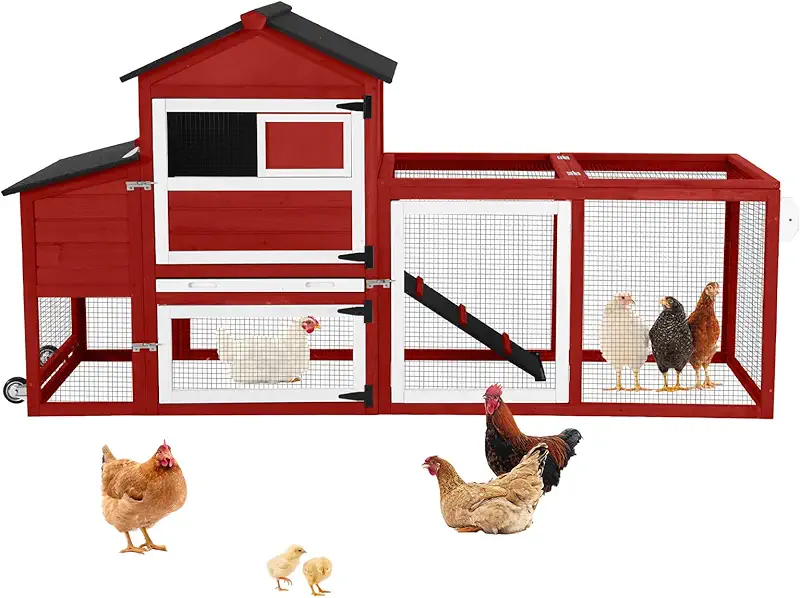
Compact coop with attached run
Good for 2–4 hens
Easy access
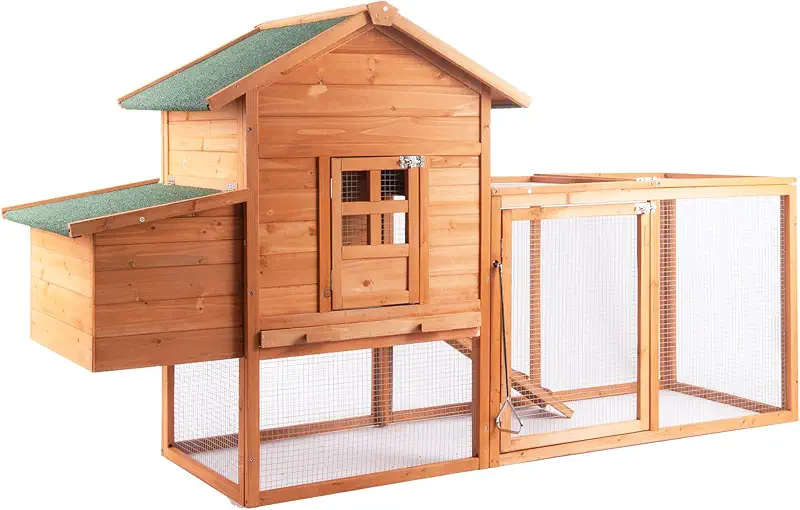
This style is a favorite for small gardens: a raised sleeping area with nesting boxes and
a run underneath or in front. I love it when the roof lifts, the trays slide out, and the
side door opens wide enough for me and a bucket.
Gentle on space and routine
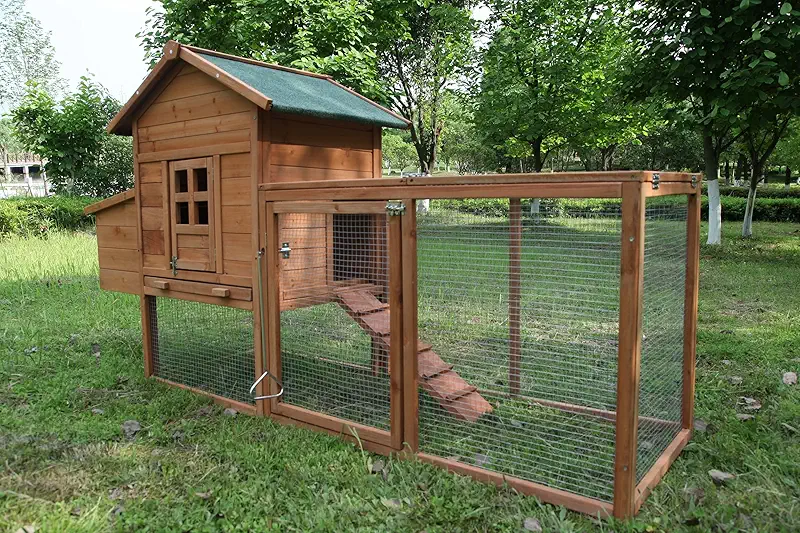
Cottage-style wooden coop
Pretty in view
Extra nesting space
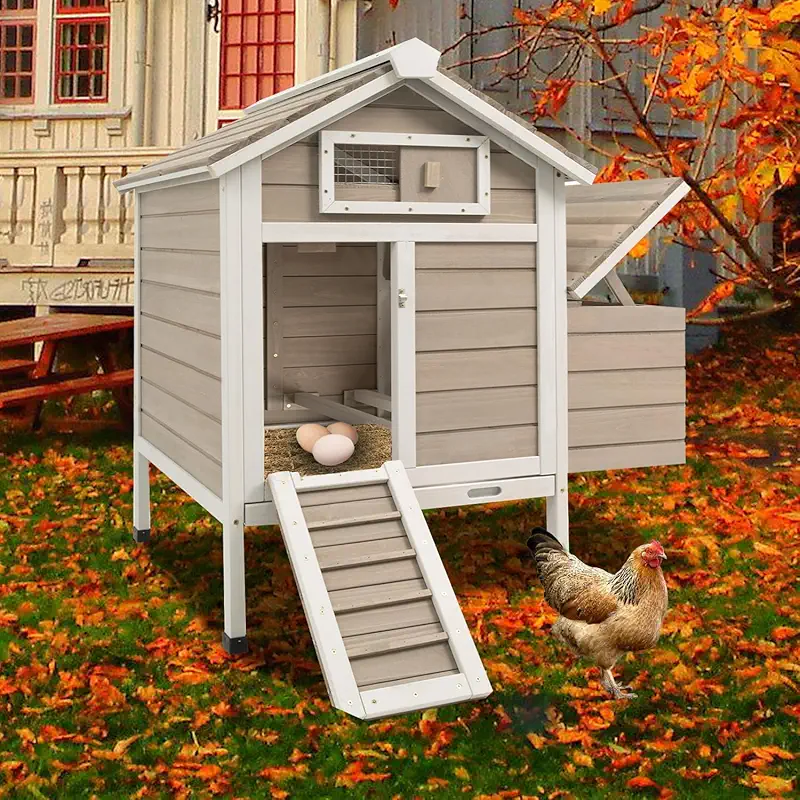
These coops look like tiny houses with windows and trim. I like them near patios or
garden paths where they become part of the view. The charm is nice, but I still always
check: roof quality, ventilation, and how easy it is to reach every corner.
More joy in daily visits
Mobile small wooden coop
Moveable
Fresh grass
A lighter small coop with wheels or handles lets you move your hens to fresh ground.
It is gentle on the lawn and fun for the chickens, who wake up to new bugs and grass.
This style requires you to check the frame and wheels for strength and stability.
Best with 2–3 friendly hens
No matter which style you choose, imagine yourself bending, lifting, and reaching inside.
Picture cold mornings, heavy bedding, and a hen who prefers the farthest corner for her eggs.
A beautiful small wooden chicken coop becomes truly wonderful when it is also kind to your back.
Key things I check before choosing a small wooden chicken coop
When I stand in front of a new coop, I try to see it through three pairs of eyes: my own,
my most timid hen, and the worst predator in my area. This simple game helps me notice
details I might otherwise ignore.
From my own point of view
- Cleaning access: can I reach every corner without crawling inside?
- Doors and latches: do they open smoothly and close tightly?
- Weight and sturdiness: does it wobble when I press on the corners?
- Space around the coop: is there room to walk, collect eggs, and carry buckets?
From my hen’s point of view
- Perch comfort: are the roosts rounded, not sharp, and set at a calm height?
- Nesting boxes: are they dim, cozy, and easy to enter without crowding?
- Ventilation: can fresh air move through without direct drafts on the roost?
- Noise and light: is the coop in a peaceful corner, not next to a bright light or loud door?
From a predator’s point of view
- Wire strength: is the run made of strong mesh, not thin chicken wire alone?
- Burrowing risk: can a fox or dog dig under easily, or is there a skirt or buried wire?
- Gaps and corners: are there holes at the roof line, doors, or hinges?
- Locks: can a clever raccoon open the latches, or do they need two steps to undo?
I always run my hand along the edges and corners. If I can feel sharp nails, loose boards,
or soft spots in the wood, I know I will have repairs sooner than I want.
Taking five extra minutes to check these points often saves years of frustration. The right
small wooden chicken coop will feel safe, solid, and simple from the moment you touch it.
Let me quietly compare
I like to keep this list in mind while I scroll, and notice which coop makes me breathe easier.
Arranging the inside of your small wooden chicken coop
Once your coop arrives and the wood smell fills the air, the fun begins: turning that empty
little house into a real home for your hens. This is where small details make a big
difference in comfort and cleanliness.
Perches: where they sleep and whisper
Chickens sleep on perches, shoulder to shoulder, like children sharing secrets in the dark.
In a small wooden chicken coop, the roost space is precious. I prefer perches that are:
- At least 2–3 inches (5–7.5 cm) wide, with rounded edges.
- Placed higher than the nesting boxes, so hens choose them for sleeping.
- Set with enough space between them so a lower hen can pass without being pecked.
I also like perches that I can remove easily for cleaning. A quick scrub on a sunny day and
they are as good as new. One coop I loved had sliding roost bars: I could take them out with
one hand while holding a sleepy hen with the other.
Nesting boxes: quiet corners for precious eggs
Nesting boxes are where your hens retreat when they want peace. In a small coop, I usually
aim for:
- One box for every 3 hens, though they often share favorites.
- Low light and a solid wall on at least one side.
- A lip at the front to keep bedding and eggs from falling out.
To make nests cozy, I use a mix of straw and soft shavings. Sometimes I add a few dried
herbs, like lavender or mint, which seem to calm both hens and humans.
Bedding and flooring
The floor of a small wooden chicken coop is a busy place: scratching, dropping, dust, and
the occasional spilled water. I like a strong, easy-to-clean base – often a tray or
flat floor lined with a layer of absorbent bedding.
In my smallest coop, a removable tray under the roosts changed my morning routine. Instead
of deep cleaning each time, I could slide the tray out, tip it into the compost, and slide
it back with fresh shavings in just a few minutes.
Placing your small wooden chicken coop in the yard
A coop can be perfect on paper and still not work if it stands in the wrong place. Hens are
simple souls, but they care deeply about shade, wind, and how often you pass by to say
hello.
Sun, shade, and weather
In my climate, summers can be hot and winters can be sharp. I like to place my small
wooden chicken coop where it gets morning sun (to dry the dew and warm the birds) and
afternoon shade (to keep them comfortable in the heat).
Trees, shrubs, or even a simple shade cloth over part of the run can make a big
difference. I avoid low spots where water collects, and I check where rain blows in
during storms. A little time watching the weather before you choose the exact spot is
never wasted.
Close enough to care, far enough to rest
I like to place coops so that I can hear my hens but not have them under my bedroom window.
Early morning egg songs and the occasional excited alarm are part of their nature. Being a
few steps away keeps everyone content.
I also think about winter. When the wind is cold and the ground is hard, will I still be
happy to walk out twice a day to check on them? If the answer is yes, the coop is close
enough.
Predator paths and neighbor peace
In some areas, foxes, raccoons, or stray dogs follow the same paths every night. If you
notice tracks or droppings, avoid placing your coop directly in those lines. Good fences
and clear views help.
For neighbors, I find that a neat, wooden coop with clean bedding and a tidy run is rarely
a problem. The smell comes from neglect, not from the chickens. A small coop makes it easy
to keep everything fresh and friendly.
Daily and weekly care for a small wooden chicken coop
Caring for chickens does not have to feel heavy. With a small wooden chicken coop and a
simple routine, it can become a quiet rhythm that shapes your mornings and evenings.
My gentle daily routine
- Open the coop, greet each hen by name, and check their eyes and combs.
- Change water, rinse the drinker, and top up feed.
- Quickly look at droppings on the coop floor for anything unusual.
- Collect eggs and thank the girls (they may not understand, but I feel better).
This takes me less than ten minutes most days, but it keeps me close enough to notice
problems early.
My weekly wooden coop check
- Remove used bedding and add fresh, dry material.
- Wipe perches and nesting boxes, especially corners.
- Check the wood for damp patches, mold, or soft spots.
- Look over the roof, mesh, and latches for any new damage.
When you keep up with this, even a very small coop stays sweet and dry. The wood
will serve you for many years.
Sometimes I sit on an upturned bucket beside the coop while the hens scratch and murmur.
Taking this quiet time has taught me more about my flock than any book. A small coop keeps
them close enough that I never forget to simply watch and learn.
Common mistakes with small wooden chicken coops (and how to avoid them)
I have made most of these mistakes myself at some point. If you can sidestep them, your
life with chickens will be softer from the beginning.
1. Trusting capacity numbers too much
As I mentioned earlier, I do not treat “up to 6 hens” as a promise. It is more like the
top of a range under perfect conditions. Think about your climate, your breed, and how
much time they spend inside the run.
2. Forgetting about ventilation
People worry about cold, but damp air is usually the real enemy. In a small wooden chicken
coop, even a little moisture from droppings and breathing can build up overnight. I always
look for vents high above the roosts so warm, moist air can escape without chilling the
birds.
3. Ignoring the roof and base quality
Pretty wood and trim mean nothing if the roof leaks. I gently press on roof panels and
check joints where water might sneak in. A solid roof and a raised or protected floor are
what keep your coop dry season after season.
4. Choosing a coop that is hard to clean
If you have to crawl inside or twist your body to reach the back corners, the coop will
quietly become a burden. I learned this the hard way with my second coop. Now I only choose
designs where I can easily reach every corner with a brush or scraper.
Whenever I am unsure about a coop, I ask myself one simple question: “Will this make it
easier or harder to be kind to my chickens every single day?” The right coop always makes
kindness easier.
Frequently asked questions about small wooden chicken coops
1. Is a small wooden chicken coop enough space for my hens?
It can be, if you are honest about flock size and outside space. For most small coops,
I feel comfortable with 3–5 medium hens, as long as they have a run or garden space
to explore during the day. The inside of the coop is mainly for sleeping and nesting,
not for all-day confinement.
If your hens will stay inside the run for long periods, aim for fewer birds in the
same coop. I always prefer to see a little unused space rather than one hen with nowhere
to move away from trouble.
2. How long will a small wooden chicken coop last?
With gentle care, good paint or stain, and dry bedding, a small wooden coop can serve
you for many years. The first thing to wear out is often the roof material or the areas
where rain hits hardest. I check these places every season.
Keeping the coop off wet ground, fixing small cracks before they grow, and cleaning
regularly all help the wood stay strong. I have one “small” coop that is over ten years
old now. It may not be perfect, but it is still safe and loved.
3. Do small wooden coops get too hot in summer?
Any coop can get too warm in full sun on a very hot day, but wood usually stays more
comfortable than metal. The key is good ventilation and smart placement. Shade in the
afternoon, gentle airflow above the roosts, and cool, clean water all help.
On very hot days I sometimes hang a damp cloth over part of the run or set up a simple
shade. I also like to choose light-colored roofs when I can, so they reflect more heat.
4. Are small wooden chicken coops hard to clean?
They do not have to be. A well-designed coop with removable trays, wide doors, and
simple corners can be cleaned in minutes. The trouble comes from cramped designs
where you cannot reach the back or under the perches.
When you are looking at small coops, imagine yourself with a brush, a bucket, and
maybe a sore back. If the design still looks manageable, that is a good sign. I
prefer coops where cleaning feels like a short, familiar task, not a major project.
5. How do I introduce new hens to a small wooden coop?
I like to give new hens a few quiet hours in the coop and run by themselves, with
food and water, before mixing them with an older flock. If I am adding them to
existing hens, I often divide the run with a simple wire panel for a few days so
they can see and hear each other without touching.
In a small coop, space is limited, so I pay extra attention to pecking order. I
add extra bowls of food and a second waterer so lower hens can eat and drink in
peace. Most flocks settle in within a week or two if we give them time and a
little patience.
Listening to your hens and choosing with peace
In the end, a small wooden chicken coop is more than a product. It is the little
house where your hens will sleep, dream, grow new feathers, and lay the eggs that
brighten your mornings. When you choose one, you are not just fitting a space in
your garden. You are shaping the daily rhythm of your flock and of your own life.
My advice is simple: listen to your hens, even before they arrive. Picture them in
the coop you are considering. Can they stretch, dust bathe, and nap without fear?
Can you reach them when they are sick, and keep them dry when the weather turns?
If the answer feels like a quiet yes in your chest, you are close. Take your time,
trust your gentle instincts, and remember that you and your hens are building a
small, shared world together.
Let me see what fits
You know your yard, your climate, and your birds-to-be. Let those small truths guide your choice.