
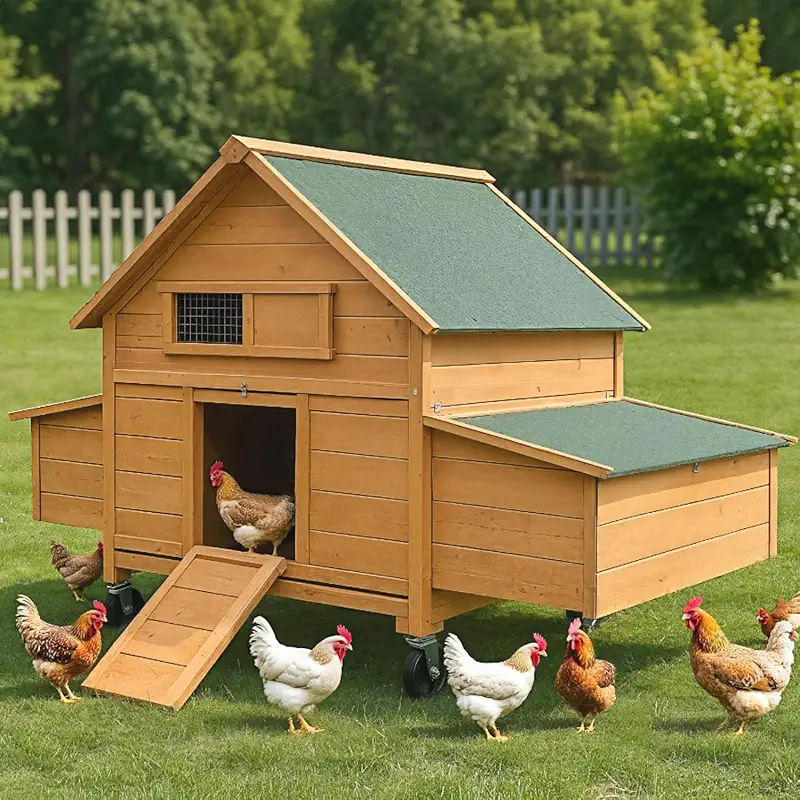
Why a large wooden chicken coop changes everything
When I started with chickens, I made the classic mistake: a nice little coop that looked fine in the photo, but was too small once the hens grew and the flock got a bit bigger. They started to quarrel at roosting time, some slept on the floor, and I could feel their stress as soon as I opened the door in the morning.
A large wooden chicken coop changed that. With more space to move and rest, my birds calmed down. The bossy hen stopped pecking the shy one off the perch. I could walk inside more easily to clean and check them. The air felt fresher, and the whole flock looked healthier within a few weeks.
What “large” really means for your flock
People often ask me how big a coop should be. My gentle rule is simple: give more space than you think you need. Hens are living souls, not numbers on a box label. A large wooden chicken coop usually offers:
- Enough roosting bar length so every hen sits comfortably without pushing.
- Room for you to reach every corner with a brush or shovel.
- Separate nesting area, away from the busy traffic of the entrance.
- Good height so the air moves above the birds, not straight on them.
If your hens can stretch their wings without bumping each other, turn around easily, and lie down in a quiet corner, you are on the right path.
I remember one winter when seven of my hens had to share a coop that was meant for four. It was my fault, I had delayed the upgrade. They still laid eggs, but they slept tightly packed and some lost feathers on their backs from constant rubbing and pecking. When I moved them into a larger wooden coop, they spread out on the roosts like children who finally have their own beds. The pecking stopped almost overnight. Since then, I never hesitate to go bigger.
Key things I look for in a large wooden chicken coop
When you look at a large wooden chicken coop, try to imagine a cold rainy night, or a hot still afternoon. Will your hens feel safe, dry and calm inside? Here is how I check that, step by step.
1. Solid, kind wood
I call it “kind wood” because good timber treats your hens gently. It keeps warmth in, breathes a little, and does not get burning hot or freezing cold as fast as metal or plastic. On many ready-made wooden coops, I pay attention to:
- Boards that are thick enough not to flex when you press them with your hand.
- Joints that line up well, without big gaps where drafts or rain can sneak in.
- Smooth edges, so no sharp splinters near where hens climb or roost.
I like to add a natural, safe wood treatment every year, especially on the outside. It keeps the wood from swelling and splitting, and it makes the coop smell gently of oil and fresh boards.
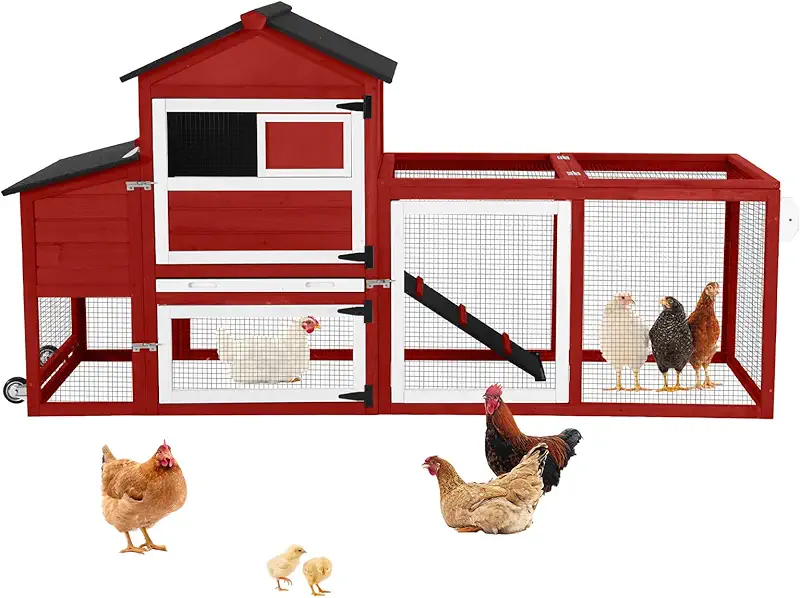
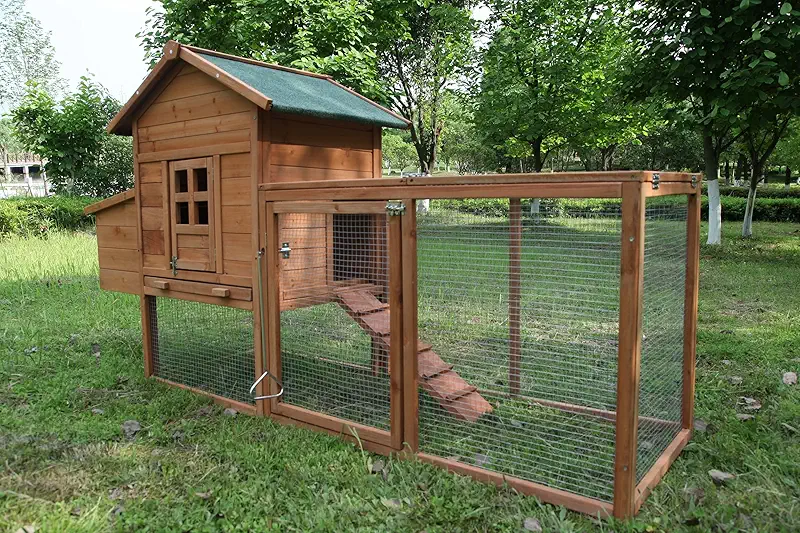
2. Enough doors and human-friendly access
A large wooden chicken coop is only helpful if you can actually reach all corners with your hands and a shovel. I look for:
- A main door that opens wide enough for a bucket and a broom.
- Separate access to the nesting boxes, so I can collect eggs without disturbing sleepy hens inside.
- Removable trays or floors where possible, to make mucking out fast and gentle.
At first, I bought a coop with a small side hatch and no floor tray. Cleaning was a long, twisting job, and I often bumped my head. Now I choose models where I can stand or at least kneel comfortably and not feel trapped inside with the straw.
3. Calm, dark, soft nesting spaces
Hens like to lay where it is dim, quiet and private. In a large wooden chicken coop, you usually have space for several nesting boxes. I make sure they:
- Are slightly raised off the floor, safe from drafts.
- Have a little lip at the front so eggs do not roll out.
- Can be reached easily by hand, even if a hen is still sitting there.
I line mine with soft straw or wood shavings, and I always smile when I see two old hens sharing the same box, gently talking while they wait for their eggs to arrive.
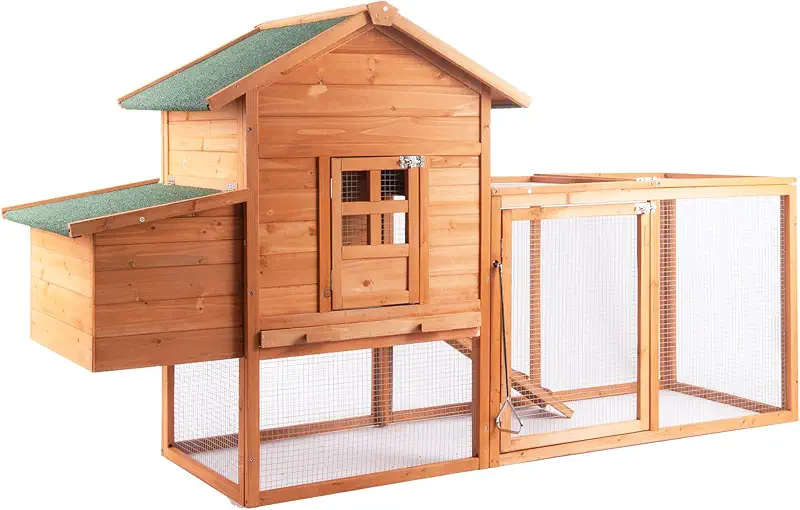
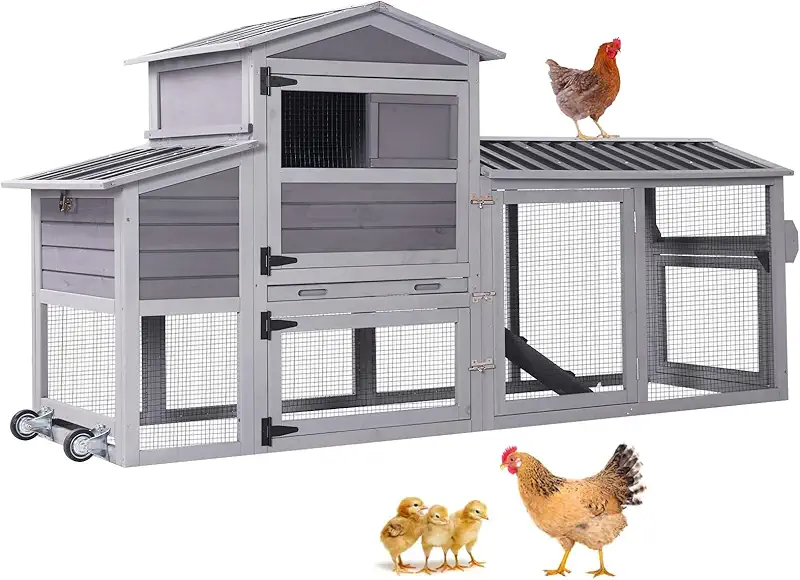
How a large wooden coop keeps hens safe and peaceful
For me, the most important job of any coop is safety. A large wooden chicken coop lets you build layers of protection while still giving your birds room to breathe. The space itself becomes part of the safety system.
Predator protection without fear
My farm has foxes, martens and hawks. I respect them, but I do not want them near my sleeping girls. That is why I check:
- Strong mesh on windows and runs, small enough that paws and snouts cannot get through.
- Secure latches that cannot be opened by raccoons or clever animals.
- A solid floor or buried wire, so nothing digs in during the night.
In a larger coop, hens can sleep higher up, away from the ground, and they do not crowd close to outer walls. This makes them less of a target and gives them a feeling of distance from the outside world when they rest.
Ventilation without drafts
Chickens handle cold better than damp air. A large wooden chicken coop lets air move up high, above their heads. I look for:
- Vents near the top of the walls, which can be partly closed in hard winter.
- Windows that bring in fresh light but are covered with strong mesh.
- A roof that does not leak and has a little overhang to keep rain off the openings.
On warm evenings, I often stand by the coop door just after closing time. When the coop is well ventilated, the air smells like dry straw and warm feathers, not like ammonia. That smell tells you a lot about how your birds are living.
Quick checklist before you choose
- Enough floor space for the flock you have now and the few extra hens you may add later.
- Thick, stable wood that feels solid under your hand.
- Easy access for cleaning, feeding and checking on a sick hen.
- Separate, calm nesting area with enough boxes.
- Good roof and dry interior, even in strong rain.
- Safe ventilation high up, never blowing directly on roosting birds.
Living with a large wooden chicken coop day by day
A coop is not just a product you set up once and forget. It becomes part of your daily rhythm, like your kitchen or your porch. When I move around my large wooden chicken coop in the morning and at dusk, there are a few simple habits that keep everything gentle and smooth.
Morning routine with quiet hands
I like to open the coop at roughly the same time each day. Hens love routine. I slide open the door, say a soft “good morning, girls”, and listen to the different sounds they make. If one hen is unusually quiet or slow to come out, I check her more closely later.
In a large coop, I can step inside without pushing birds aside. I remove any very wet spots, top up the feed and water, and gather the first eggs from the nests. I quickly scan the wood for any new damage or damp patches. Catching a small problem early is one of the nicest gifts you can give your flock.
Cleaning without stressing the flock
Deep cleaning a large wooden chicken coop does not have to be a big drama. I usually:
- Do small tidy-ups often, rather than huge cleanouts rarely.
- Use a light shovel and brush with calm, slow movements.
- Talk quietly to the hens if they are nearby, so they know I am not a predator.
A big coop means you can move your body freely, you do not bang your shoulders against the walls, and you can take care of details: under the roosts, behind the nests, along the edges of the floor.
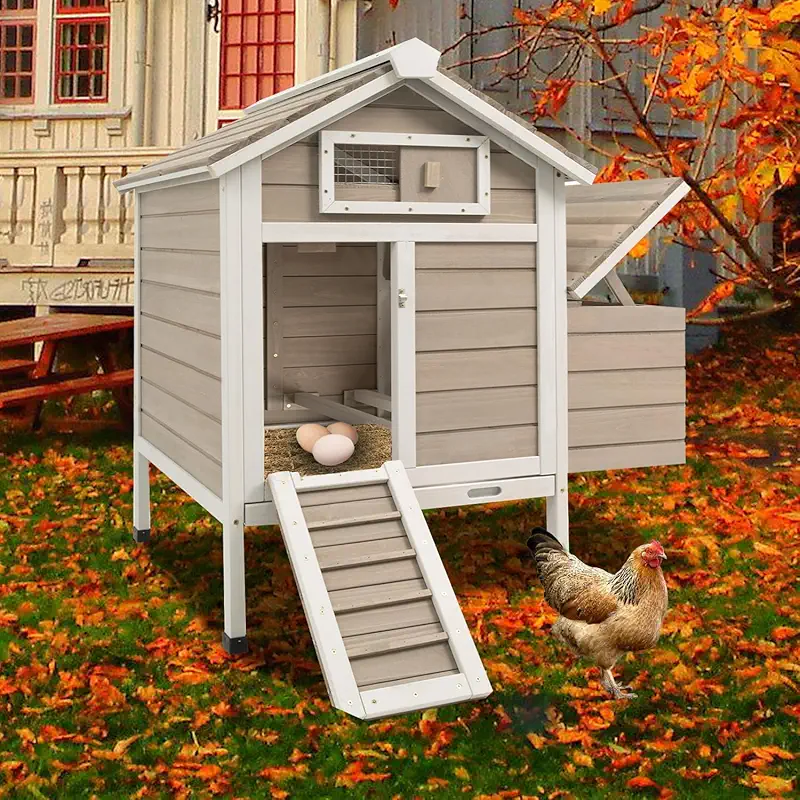
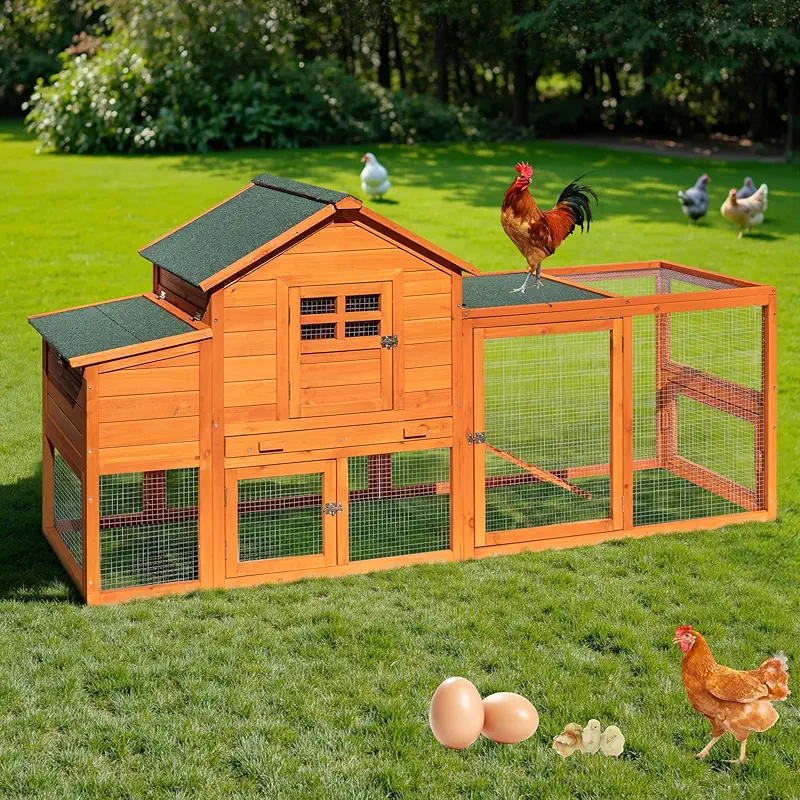
Growing your flock safely in a large wooden coop
One hidden joy of a large wooden chicken coop is that it lets you welcome new birds slowly and safely. I often raise a few young pullets each year, or rescue an older hen who needs a calmer home. Extra space lets you separate and observe without pushing anyone too hard.
Gentle introductions
Chickens have their own social order. When I bring in new hens, I like to:
- Let them see each other through mesh for a few days first.
- Offer several feeding spots inside or near the coop, so no single hen can guard all the food.
- Add an extra perch or two, giving everyone choices at bedtime.
In a cramped coop, new birds have nowhere to escape if an older hen is rough with them. In a large coop, they can step aside, choose another roost, or find a corner where they feel safe. You can watch from the doorway and know you have given them space to figure things out without panic.
Some time ago, I took in a shy, thin hen from a neighbor. She was always chased away from the feeder in her old flock. In my big wooden coop, I put an extra feeder at the far corner and added another perch on the wall. Within a week, she had chosen that corner as “hers”. No one disturbed her there, and slowly her feathers filled out and she began to sing a little when I came with treats. That was thanks to space, not only kindness.
Why I keep coming back to the large wooden chicken coop style
Over the years I have tried different styles of housing: metal sheds, small plastic coops, and homemade boxes. Still, I keep returning to the large wooden chicken coop for my main flock. It feels right for them and right for me.
Wood has a gentle way of aging. It holds warmth, it muffles sharp outside noises, and it can be fixed with simple tools. When I open the wooden door at dusk and see my hens already lined up on their perches, eyes half closed, I know they are at ease. That calm is the true measure of a good coop.
If you want your own hens to feel the same quiet safety, it can be helpful to look closely at the details of any large wooden chicken coop you consider and imagine your daily routines inside it. Picture yourself in muddy boots, with a tired back after work, still able to care for your birds easily because the coop is on your side, not against you.