
Compact starter wooden coop
Simple wooden chicken coop
Simple wooden chicken coop
I have been raising hens for many years now, and again and again I come back to the same truth: a simple wooden chicken coop is often the calmest, safest home a flock can have. Wood feels warm, it smells gentle, and it breathes with the birds.
On this page I want to sit with you, almost like we are on a hay bale together, and share what I have learned about choosing and using a simple wooden chicken coop. I will tell you what worked in my yard, what mistakes scared my hens, and how I slowly found a setup that keeps them relaxed and laying well.
Gentle chicken care
Real backyard experience
Simple wooden designs
Let me see coops
I may earn a small commission if you follow this link, at no extra cost for you. I only point to options I would calmly place my own hens in.
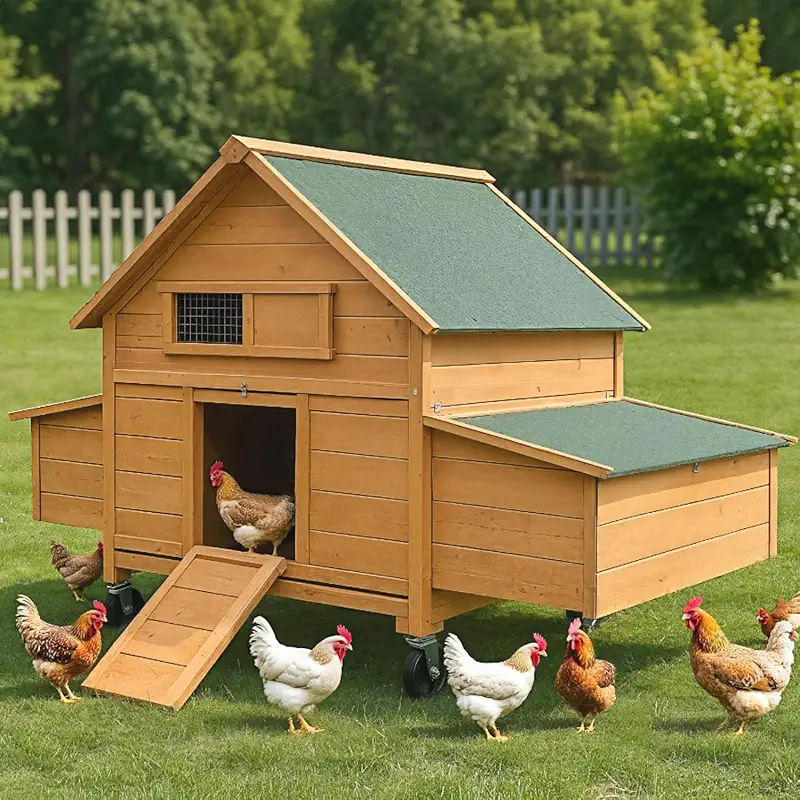
A simple wooden chicken coop style that keeps hens close to the garden and close to your heart.
Why a simple wooden chicken coop feels right for hens
When I built my first coop, I tried to make it fancy. Too many doors, too much decoration, too much going on. The hens did not care about any of that. They only cared about feeling safe, dry, and able to rest in peace. That is why now I always look for a simple wooden chicken coop design.
Wood is quiet. When the wind blows, it does not rattle like thin metal. When rain falls, the sound on a wooden roof is soft and steady. My older hen Daisy used to panic in a tin shed, but the first night in a wooden coop she settled on the perch and made that slow, sleepy clucking that tells me she is content.
A good simple wooden chicken coop does three things well:
- It protects your birds from foxes, raccoons, dogs, and rats.
- It keeps them dry, with gentle airflow but no drafts on their backs.
- It makes your daily work easy, so you actually enjoy caring for them.
After all these years, I have learned to look past the paint colors and cute decorations. Instead I ask, “Will my hens feel safe in there at night?” and “Will I still be happy to clean this when it is cold and dark?” A simple wooden chicken coop is often the best answer to both questions.
In my own yard, the coops that lasted the longest and caused the least trouble were always the plain wooden ones. The birds do not need luxury, they just need honest shelter and a calm human who shows up every day.
Key things to check before you choose a simple wooden chicken coop
When I walk up to a new coop design, I follow almost the same little ritual every time. I imagine my smallest hen and my biggest hen in there, I imagine a winter storm, and I imagine myself with a bucket and a sore back. Only after that do I look at the price.
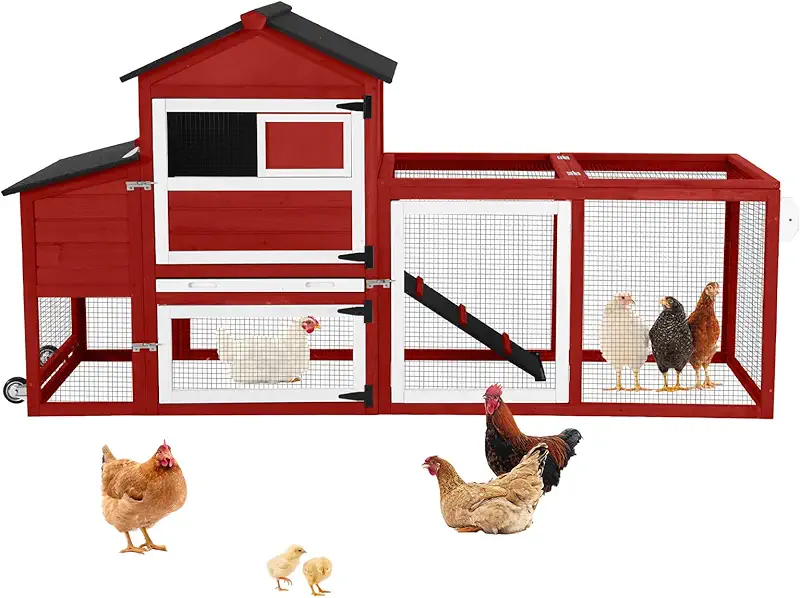
Side doors and wide openings make daily chores faster and gentler for both you and your flock.
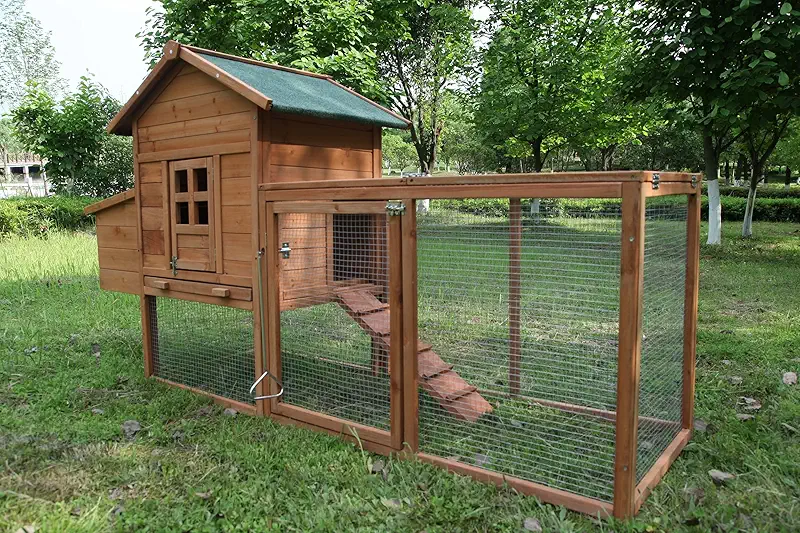
A raised simple wooden chicken coop keeps the floor dry and gives hens a shaded spot underneath.
Enough room for each hen
Crowding is one of the quickest ways to create trouble in the flock. When hens have too little space, they start pecking each other, bothering the smaller birds, and even chasing them away from food. It breaks my heart when I see bald backs and stressed eyes, because it is so easy to avoid.
Inside a simple wooden chicken coop, I aim for at least:
- 2–3 square feet (0.2–0.3 m²) per hen inside the sleeping area.
- 8–10 square feet (0.75–1 m²) per hen in the run, if they are not free-ranging.
If the math feels confusing, picture it this way: every hen should be able to turn around, flap her wings once, and lie down without touching another bird. If that cannot happen, the coop is too small, no matter how cute it looks.
Ventilation without icy drafts
Moist air hurts chickens more than cold air. Their breath and droppings give off a lot of moisture. In a tight coop, that dampness sits around the birds and makes frostbite and illness more likely. That is why I always look for small vents high up in the walls of a simple wooden chicken coop.
What I do not want is a straight line of air that blows across the perches. My test is simple: I stand where the hens will sleep and feel with the back of my hand. If I feel a strong draft at that height, I know I need to block or adjust something. Gentle movement of air is good, but a cold wind on their combs is not.
Strong mesh and solid latches
Many people worry about foxes, but in my yard the biggest problem has been patient raccoons. They have clever hands and they work at a door for a long time. So when I look at a simple wooden chicken coop, I spend extra time on the hardware: the mesh and the locks.
- Look for welded wire mesh, not thin chicken wire, on any open sides of the run.
- Check that the mesh is fixed tight with staples or screws, not just a few weak nails.
- Make sure doors have solid latches that cannot be flipped open with curious little hands.
One night I lost a young hen because an old coop had a simple hook-and-eye door fastener. A raccoon figured it out. Since then, I use latches that require at least two motions to open. It is such a small change, but it lets me sleep easier.
My everyday routine with a simple wooden chicken coop
The right coop turns chores into a quiet, almost meditative routine. When I walk out to my hens in the morning, I feel my shoulders drop and my mind slow down. A practical layout makes that time feel gentle instead of tiring.
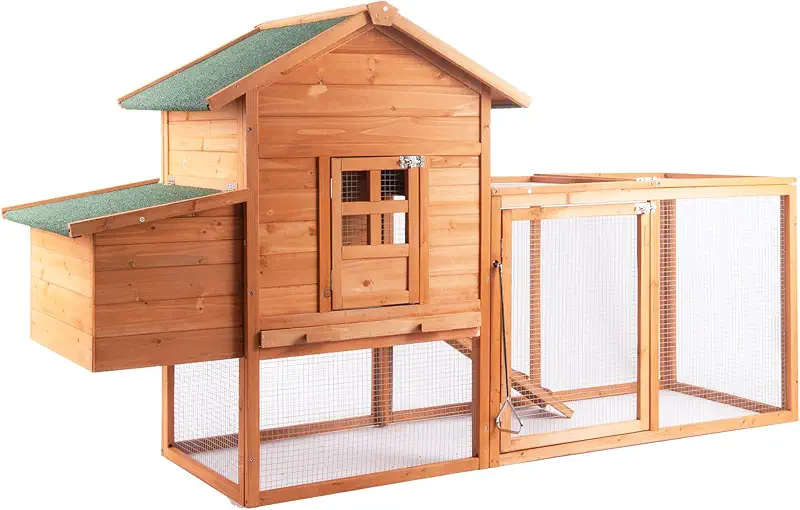
Large doors and pull-out trays help you keep the coop fresh without wrestling with the structure.
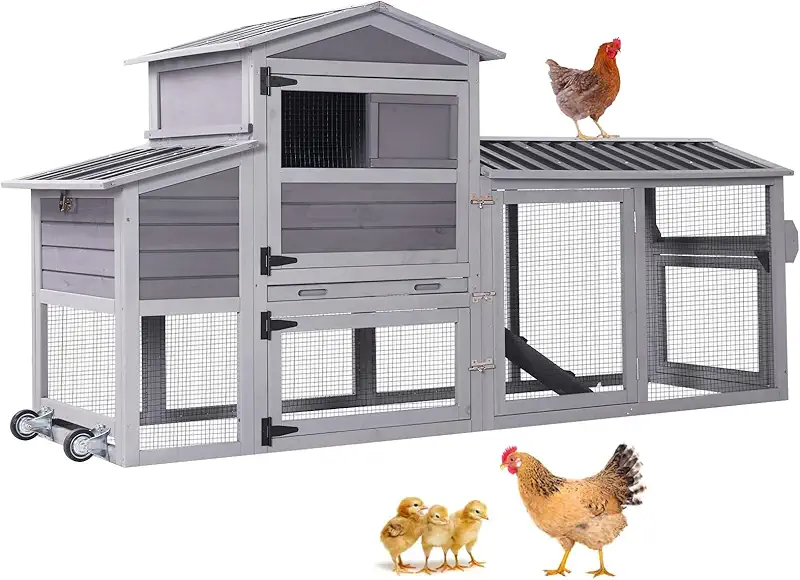
A simple nesting box on the side makes egg collection gentle and calm.
Morning checks
Most days, my morning with the coop takes less than ten minutes, but I try never to rush emotionally. I open the pop door, say a soft “Good morning, girls,” and watch how they come out. A calm flock walks down the ramp slowly. Nervous birds burst out all at once, and that tells me something is off.
I quickly:
- Check the bedding for damp spots or strong smell.
- Glance at the perches for droppings building up.
- Top up water and feed, and remove any wet feed.
A simple wooden chicken coop with a big door on the side makes this easy. I can step close, look around, and close it again without bending into strange angles. My back and knees are thankful for that.
Evening routine
At dusk I close the coop. This is when I really appreciate a simple, clear layout. I count the hens on the perches. I listen to their breathing. If one bird is standing instead of sitting, or if her tail is down, I take a note. These tiny signs often warn me days before a real illness shows up.
In winter, I feel the walls with my hand. They should feel cool but not wet. If I see condensation on the inside of the roof, I know I need a bit more airflow. It is much easier to open a small vent on a simple wooden chicken coop than to fight with complicated systems and fans.
Simple wooden chicken coop styles I find helpful
Over time, I have tried several layouts, from heavy walk-in sheds to small mobile coops. Each simple wooden chicken coop style has its own rhythm. What works for you depends on your yard, your weather, and how you like to spend time with your hens.
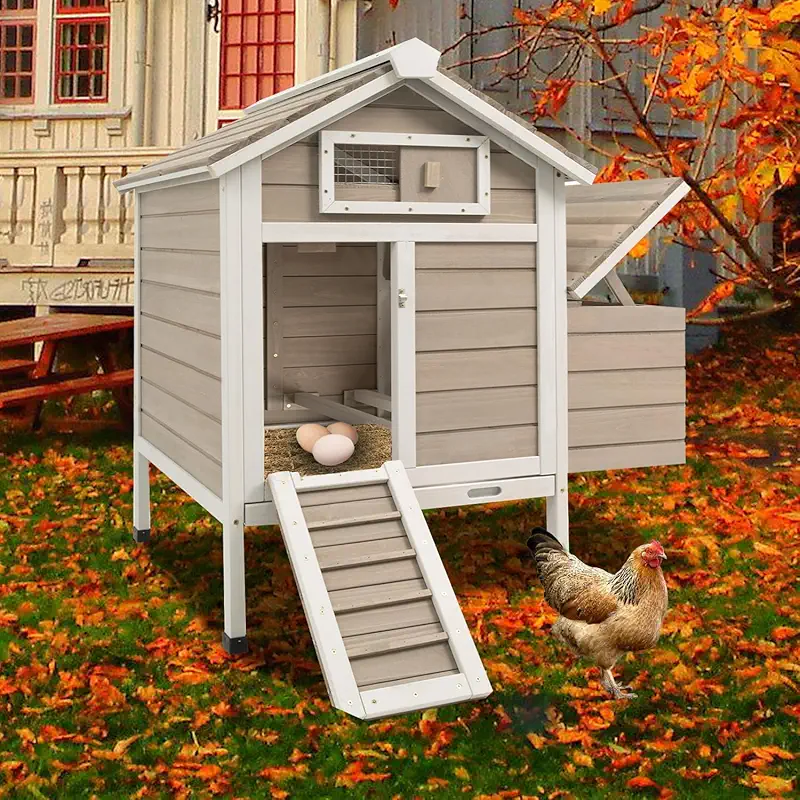
Compact coops with attached runs suit small gardens and beginner flocks of three to six hens.
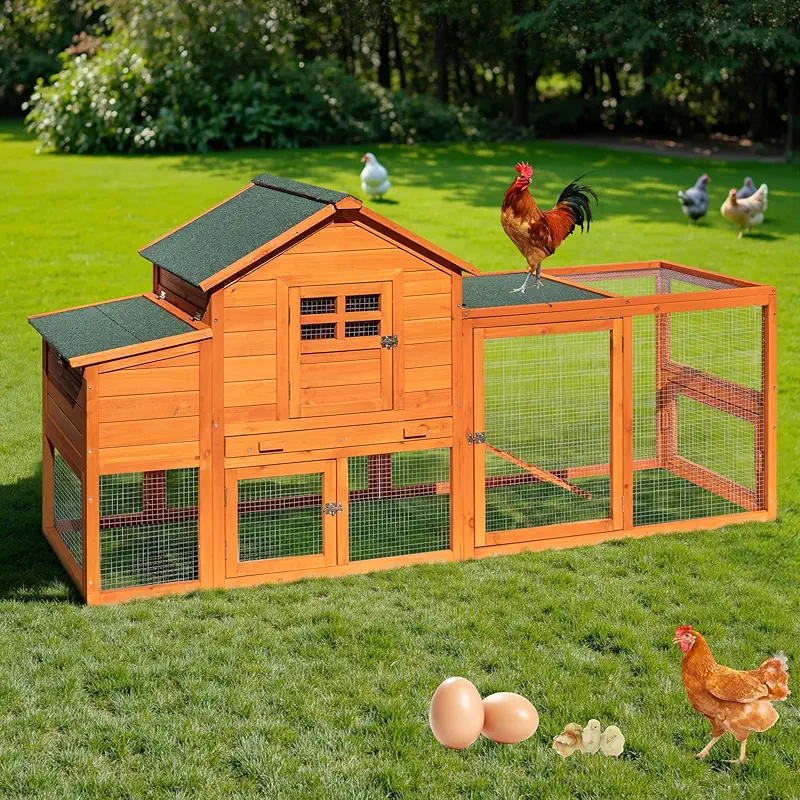
Larger simple wooden chicken coop frames can be adapted as your flock slowly grows.
Small backyard coops with attached runs
For many people starting out, a compact simple wooden chicken coop with a built-in run is enough. These are tidy, they fit nicely against a fence, and they let you see your hens from the kitchen window. I like them for flocks of three to six birds.
The main thing to check is height. Even in a small coop, hens like to roost up high. If the inside is too low, they end up crouching and their tails rub the ceiling. I gently touch the highest perch spot and imagine my tallest bird there; if there is not at least a hand’s width above her head, I look for another design.
Raised coops with shade underneath
One of my favorite designs is a simple wooden chicken coop raised on legs, with a little sheltered area under the house. The floor stays dry even in heavy rain, and the birds have a cool place to dust bathe on hot days. I often scatter a bit of scratch under there as a small treat.
Walk-in wooden sheds
As my flock grew, I moved to a walk-in style wooden coop. Being able to stand up inside changed everything. Cleaning is easier, checking feet and feathers is calmer, and I can sit on a small stool inside with a cup of tea while the birds settle at dusk. It feels almost like a quiet, feathery chapel.
If you have space, a simple walk-in wooden chicken coop with a solid roof and a fenced run is one of the kindest setups you can give your birds and your own body.
If you feel unsure, start small. Choose a modest simple wooden chicken coop that feels safe and easy to handle. You can always grow your setup later as you and your hens learn together.
Thoughtfully chosen simple wooden chicken coop ideas
I often get messages from friends and neighbors asking, “Can you just point me to some coops like yours?” With that in mind, I spent time looking at different simple wooden chicken coop options that follow the same values I use at home: calm design, honest materials, and practical doors and trays.
These are not the only good choices out there, but they give you a sense of what to look for when you explore more options through the same link.
To see these kinds of ideas and more variations in size and style, you can follow this path of coops:
Again, if you decide to pick a simple wooden chicken coop through this link, I may receive a small thank-you from the seller, but I would not risk my flock’s peace for any commission. I look for the same calm and safety I expect in my own yard.
Taking care of a simple wooden chicken coop so it lasts
A wooden coop can serve you and your birds for many years if you give it small, regular care. I think of it almost like grooming an old, loyal farm dog: a bit of brushing and checking from time to time keeps it comfortable and ready for every new season.
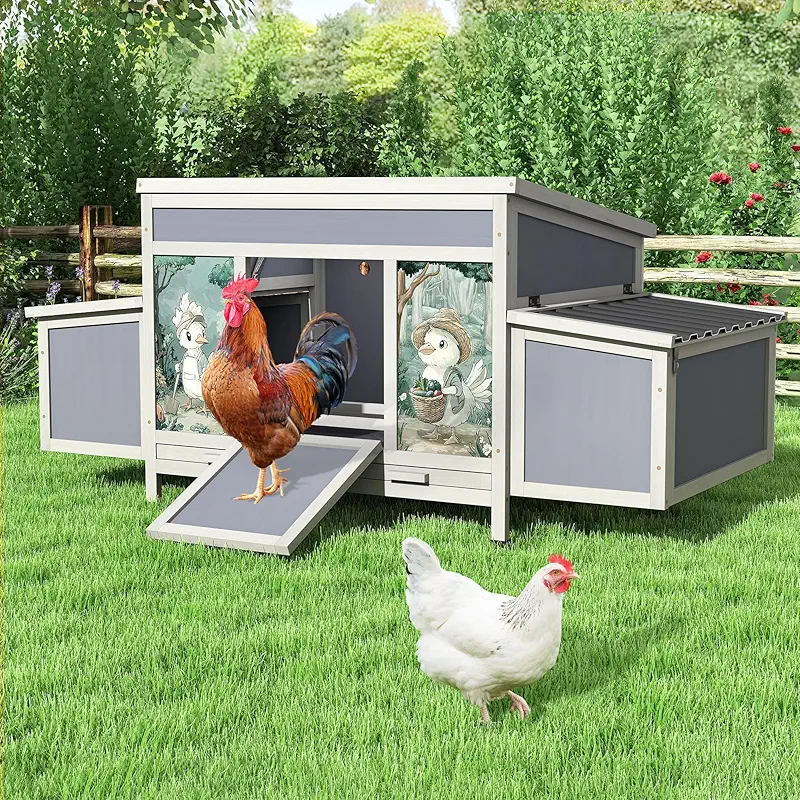
Sturdy wooden panels and a gentle roof angle help rain slide off and keep the interior dry.
Cleaning rhythm
There is no single right schedule, but this is what works for me:
- Spot-clean droppings under the perches every few days.
- Do a light bedding refresh once a week.
- Do a deeper clean with a mild, safe cleaner every month or two.
In a well-designed simple wooden chicken coop, this does not feel like a heavy job. Wide doors, slide-out trays, and removable roosts make everything smoother. While I work, the hens usually stand nearby, scratching and softly chatting as if they are supervising.
Protecting the wood
Sun and rain are gentle in one day but harsh over years. I like to protect the outside wood with a safe, exterior-grade finish or paint. Light colors reflect heat, which keeps the coop cooler in summer. I avoid strong chemical smells on the inside, because chickens breathe so close to the walls.
Once a year, usually in early spring, I walk slowly around the coop with a cup of coffee and look for:
- Soft spots in the wood, where moisture may be creeping in.
- Loose screws, latches, or hinges that need tightening.
- Gaps where rodents or insects might try to enter.
Fixing these tiniest problems early keeps the coop strong and reassuring, both for the flock and for my own heart.
Frequently asked questions about a simple wooden chicken coop
How many hens can I keep in a simple wooden chicken coop?
It depends on the exact size, but more often people try to keep too many rather than too few. As a calm rule, I like at least 2–3 square feet per hen indoors, and more if you can manage it. I would rather have four relaxed hens in a coop than six birds who are always pushing and pecking. When in doubt, choose fewer hens and more space, and your flock will reward you with quieter days and steadier eggs.
Is a wooden coop warm enough in winter?
Yes, in most climates a simple wooden chicken coop with dry bedding and good ventilation is warm enough. Chickens wear natural feather coats and handle cold better than damp. My own birds stay comfortable in below-freezing weather as long as there are no drafts directly on the perches. The walls should breathe, but the wind should not whistle past their faces. Deep, dry bedding and a solid roof do more for warmth than fancy heaters in many cases.
Do I need to treat the wood with anything special?
I like to seal the outside with a weather-friendly finish or paint to keep rain from soaking in. On the inside, I prefer to keep things simple and gentle. If I use any product, I choose one that is safe for animals and let it dry well before the hens move in. The goal is to protect the wood from rot while keeping the air inside fresh and soft on their lungs.
How often should I clean my simple wooden chicken coop?
I listen to my nose more than to the calendar. If I open the door and smell strong ammonia, I know I waited too long. In practice, a light tidy each week and a deeper clean once a month works well for my flock. Smaller coops may need attention more often, because droppings build up faster in a tight space. The important thing is to keep the floor dry and the air clear so their lungs and feet stay healthy.
Is a simple wooden chicken coop good for beginners?
I think it is one of the best choices for a first flock. Wood is forgiving to work with, easy to repair, and kind to the birds. A straightforward layout teaches you the basics of chicken care without extra buttons or devices. Many new keepers tell me that once they understand how a simple wooden chicken coop works, they feel far more confident and in tune with their hens. From there, they can adapt and expand as needed.
Listening to your hens and trusting simple choices
When I look back at all the coops I have used, the most peaceful seasons came when I trusted simple solutions. A sturdy simple wooden chicken coop, good bedding, clean water, and unhurried time with the birds did more for their health than any gadget I tried.
Your hens will tell you, in their own quiet ways, if the coop works for them. Watch how they settle at night. Notice if they rush in or hesitate at the door. Listen to their evening murmurs. A content flock in a simple wooden chicken coop makes a special kind of soft music, and once you hear it, you will always recognize it.
If you feel that this style of coop might suit your garden and your birds-to-be, you can look through different sizes and shapes here and let your eyes, and your heart, guide you: