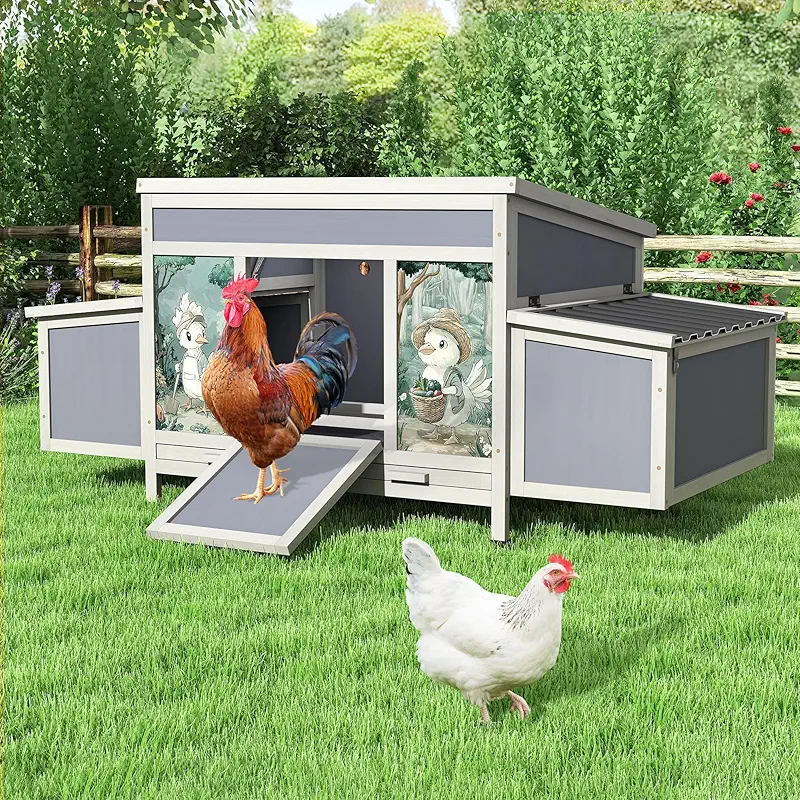
For 4 gentle hens
Wooden chicken coop 4 chickens
Wooden chicken coop 4 chickens
I have been raising hens for many years now, and the coops that gave me the calmest, happiest birds were always the simple wooden ones sized for a small flock.
A good wooden chicken coop for 4 chickens feels like a safe little cottage in the garden: dry, cozy, easy to clean, and just big enough so no hen feels pushed or forgotten in a corner.
On this page I will walk you through how I think about choosing and using a wooden coop for four hens, with the same care I use for my own flock at home.
Let me see options
You will see several wooden coops that fit small backyard flocks like ours.
What a coop for 4 chickens really needs
When people ask me about a wooden chicken coop 4 chickens, they usually talk about price and looks first.
I always bring the conversation back to the hens. Four birds are just enough to have a small, steady little flock, but still few enough that every detail of the coop really matters.
Over time I have learned that my hens do not care if the roof is fancy or the paint is trendy.
They care about dry bedding, steady air, and feeling safe when the sun goes down. If a coop gives them those three things, they lay better,
they fight less, and they live longer. The rest is decoration.
There is also something very peaceful about tending a small flock.
In the evening, when I close the coop door on my four sleepy hens, the smell of dry wood and straw feels almost like a little barn from my childhood.
That is why I prefer wooden coops: they seem to breathe with the seasons and they age alongside the flock.
Quick checklist for 4 hens
- Enough floor space so no one is shoved aside.
- Two nesting boxes so laying stays peaceful.
- One simple, comfortable roosting bar.
- Good roof and raised floor to keep things dry.
- Wire mesh tight enough to keep paws and teeth out.
- Doors large enough for your hands, not only for hens.
Tip from my yard: stand inside the run area and imagine cleaning on a rainy Monday, not on a sunny Sunday.
If it still feels manageable, the coop is sized right.
Choosing the right wooden chicken coop for 4 chickens
There are many wooden coops for four hens available when you follow the link below, and it can feel confusing at first.
To keep things simple, I look at three main things: space, structure, and daily work.
1. Space: more calm, fewer quarrels
Hens have their own quiet rules. They like to know where they sleep and where they lay.
When four birds share a small area, a few extra inches of floor space or perch length can be the difference between calm clucking and a rough peck on the head.
- Indoor floor area: I like to stay around 3–4 square feet per hen inside the coop for a small backyard setup. More is always welcome.
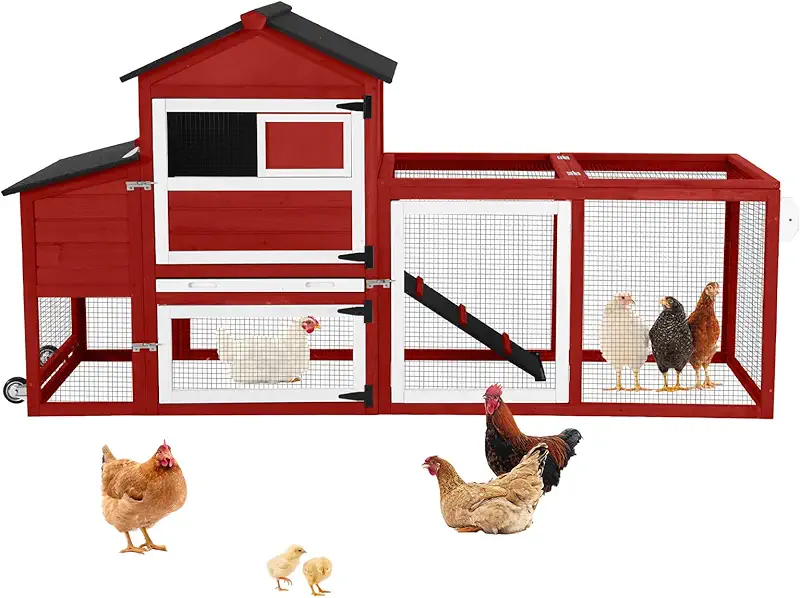
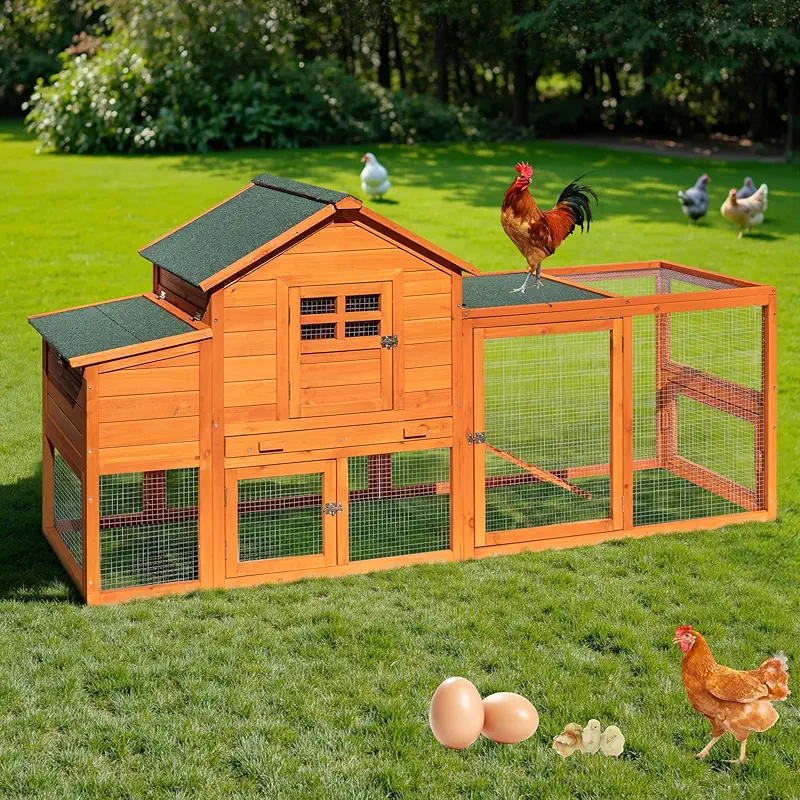
- Outdoor run: If the coop has an attached run, I prefer at least 8–10 square feet per hen. They move more, and you will notice cleaner feathers.
- Head room: Higher roofs feel less stuffy and let warm air rise above the birds on hot days.
To test it, I imagine myself trying to step inside to clean or to catch a shy hen. If I can move without bumping into everything,
four hens will have enough room to sort out their daily little dramas.
2. Structure: how the wooden coop keeps everyone safe
I remember one stormy night when the wind pushed the rain sideways for hours.
My older wooden coop, simple but well built, stayed dry inside.
The hens barely noticed the thunder. That night taught me that structure matters much more than paint colors.
- Frame and joints: Solid wood pieces that do not wobble when you push the coop gently.
- Roof: Sloped enough so water runs off, with a covering that does not absorb moisture.
- Floor: Raised a little from the ground so water and cold do not creep in.
- Wire: Strong mesh with small openings; I avoid anything that bends easily between my fingers.
With four hens, you probably know each by name. A firm structure lets you sleep at night knowing that any visitor with teeth or claws has to stay outside.
3. Daily work: cleaning and egg collecting without stress
I have built coops that looked clever on paper but were a nightmare to clean.
A coop for 4 chickens should be small, but not so cramped that your back complains every time you change the bedding.
I always look for:
- Large access doors to the main floor and nesting area.
- Removable trays or boards under the roost if possible.
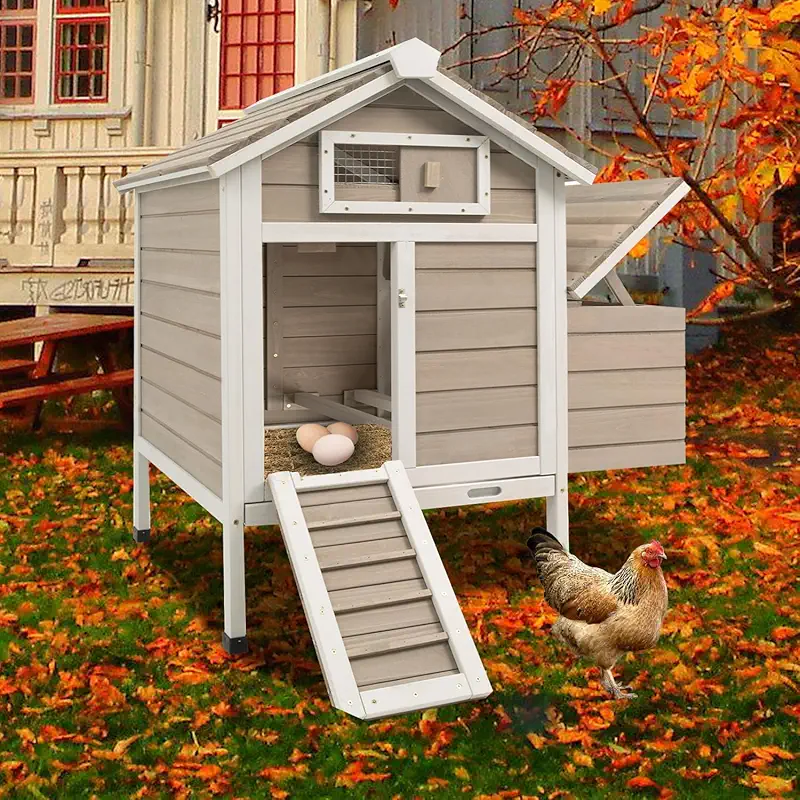
- Nesting boxes with lids that open from outside, so egg collecting stays quick and quiet.
Four hens can produce a steady stream of eggs, and that little daily walk to the coop can be a joy if everything opens and closes smoothly.
Three types of wooden coops I like for four hens
When you follow the link, you will see many shapes and styles. To make it less overwhelming, I think of them as three families.
Depending on your yard and your habits, one of these usually feels like “home” for both you and your hens.
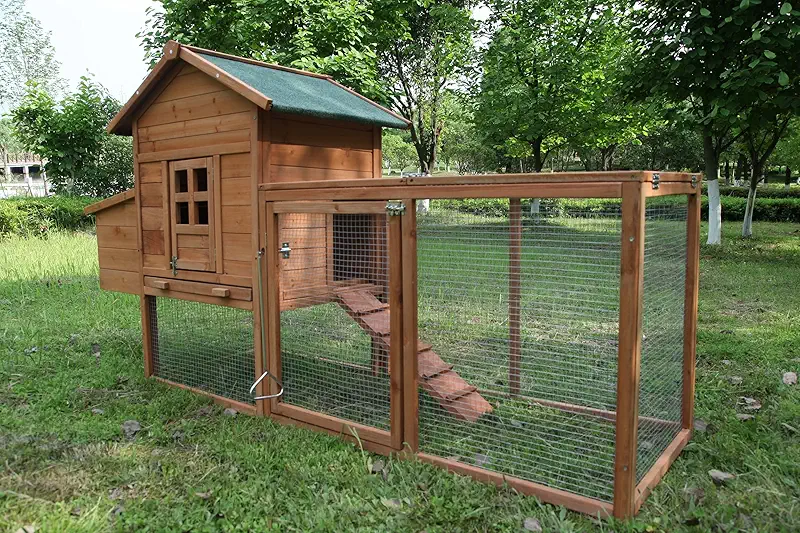
Compact cottage coop
Good for small yards, short walks from the house, and mild climates.
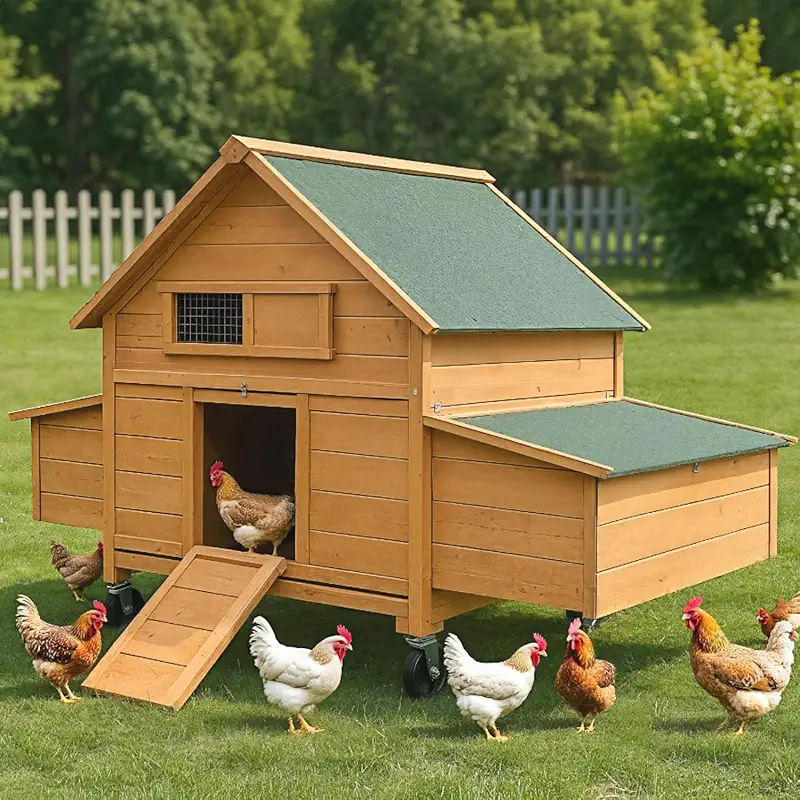
These coops look almost like small garden sheds with a run attached.
They are simple, often with one main door, a couple of nesting boxes, and a ramp.
I like them for beginners with four hens because everything is close at hand.
Small footprint
Beginner friendly
Usually among the more gentle prices.
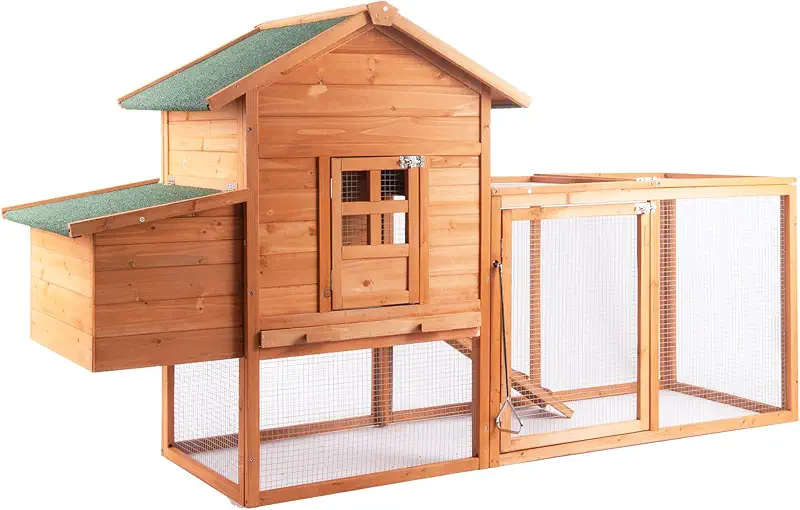
Raised coop with run under
Perfect when you want more shade and dry ground for scratching.
In this design, the house is lifted off the ground and the hens can walk underneath.
My birds love this style because they can hide from sun and rain,
and the dry patch below stays loose and dusty, perfect for bathing.
Extra shade
Easy to keep dry
Often a bit higher but kind to the flock.
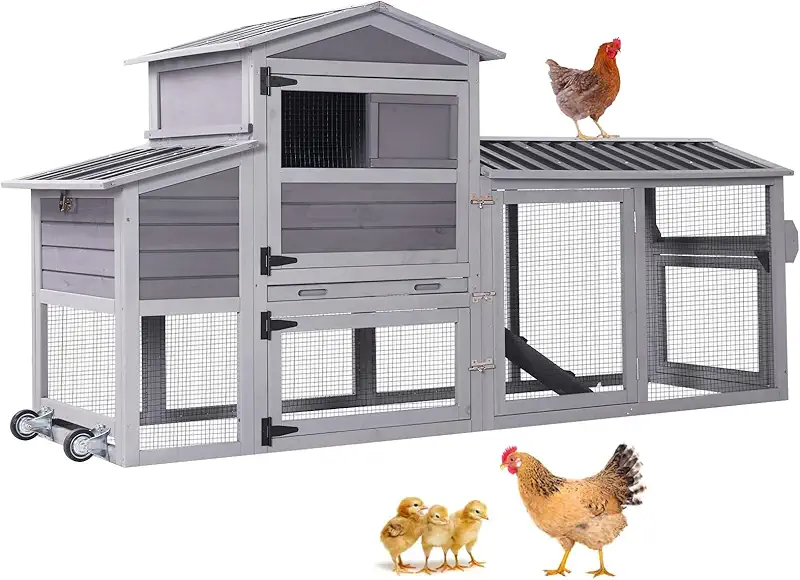
Movable wooden tractor
Best for fresh grass lovers and flexible yards.
A wooden “tractor” style coop can be moved around the yard.
Four hens do very well in this, because you can roll them to a new patch when the grass gets tired.
It keeps both the lawn and the hens’ feet happier.
Fresh ground often
Great for small flocks
Prices vary, but the freedom it gives is real.
Setting up a wooden chicken coop for 4 chickens
Once your coop arrives and the pieces are laid out on the ground, the real adventure begins.
I always take my time with this part, because a careful first setup saves me from many small annoyances later.
1. Choosing the spot in your yard
A wooden coop breathes with the weather, so the place where you put it matters a lot.
- Light shade: I prefer a place with morning sun and some afternoon shade. The hens wake up gently and stay cooler in summer.
- High and dry: Avoid low spots where water collects. Wet ground under a wooden floor makes the coop age fast.
- Near the house: With four hens you will visit the coop many times a day. A short, pleasant walk keeps the routine easy.
I like to stand there at dusk before I set the coop down and listen. If the sounds feel calm and the spot feels safe, I know the hens will settle well.
2. Inside layout for four hens
A wooden chicken coop 4 chickens does not need many things inside, but the few pieces must be in the right place.
- Roosting bar: I put it slightly higher than the nesting boxes so the hens prefer to sleep there.
- Nesting boxes: Two boxes are enough for four hens. I line them with soft straw or shavings and keep them a little darker.
- Feed and water: If there is room inside, I hang them low enough for the smallest hen to reach, high enough to keep them clean.
I always crouch down and look at the coop from the height of a hen. From there, I can see if there are drafts right at their backs or if a corner feels too tight.
3. Bedding and smell
Fresh wood and fresh bedding have a smell that makes me breathe deeper every time I open the coop.
To keep that feeling, I use absorbent materials and I do not let things go too long.
- Use dry wood shavings or chopped straw on the floor.
- Keep a deeper layer under the roost where droppings fall.
- Stir or top up lightly a few times a week.
With four hens, it is easy to keep the coop smelling like clean wood and a little warm feather, but not harsh ammonia.
If I ever smell something sharp when I open the door, I know it is time to add fresh bedding or remove the wet corner.
Living with a wooden coop and a tiny flock
Four hens in a wooden coop teach you to see small changes.
When one hen stays on the floor while the others jump to the roost, you notice.
When they avoid a corner of the run, you notice that too.
This gentle way of watching makes you a better keeper day by day.
In the early years, I sometimes worried too much about perfection.
Over time, the hens showed me that they mostly ask for consistency.
Same place, same gentle voice, door closed every night, water filled every morning.
A decent wooden coop for 4 chickens gives you a steady frame for that quiet routine.
On cold evenings I often lean on the side of the coop after closing the door and listen to their sleepy murmurs.
The wood holds a bit of their warmth, and the whole structure feels almost alive.
That is when I know the size is right: not so big that they feel scattered, not so small that they feel cramped.
If you decide to explore the different models available, move slowly through the pictures and try to imagine yourself in front of each coop at dawn,
with a mug in your hand and four hens at your feet. The one that makes that little scene feel calm and easy is often the right choice.
A gentle way to choose
When I feel unsure between two coops, I ask myself a simple question:
“Which one will make me smile at 6 a.m. on a rainy day?”
The coop that makes the routine pleasant is the one that keeps both me and the hens content.
FAQ about wooden chicken coop 4 chickens
Is a wooden chicken coop for 4 chickens big enough for my flock?
For four standard hens, a small wooden coop can be enough if the floor space, run area, and roost length are sensible.
I like at least 3–4 square feet per hen indoors and a decent outdoor run.
If your birds are large breeds or you know you tend to add “just one more hen,” lean toward coops that are slightly bigger than the minimum.
Hens rarely complain about extra room, but they do show stress when space is tight.
How often should I clean a 4-hen wooden coop?
With four hens I lightly tidy the coop two or three times a week, and I do a deeper clean every few weeks.
That usually means removing the most soiled bedding under the roost, topping up with fresh shavings, and checking the corners for damp patches.
A full clean, with most bedding removed and surfaces checked, I do at least once a season.
The goal is for the coop to smell like dry wood and straw when you open the door, not like strong ammonia.
Will a wooden coop keep my hens warm enough in winter?
A well-built wooden coop acts more like a wind shield than a heater, and that is usually enough.
Chickens handle cold better than damp drafts.
For four hens, I focus on closing gaps at roost height, using dry deep bedding, and keeping the air moving gently above their heads to remove moisture.
I almost never use heaters; instead, I make sure the coop is dry and out of the wind, and I let their feathers and shared body heat do the rest.
Is wood hard to maintain compared to plastic coops?
Wood does ask for a little attention, but it rewards you with a natural feel.
Once in a while I check for soft spots, flaking paint, or little cracks.
If I see bare wood starting to take in moisture, I give that area a gentle, animal-safe protective coat.
For a small wooden chicken coop for 4 chickens, this usually turns into a quiet afternoon project once a year, not a constant chore.
Can I start with 4 chickens and later keep more in the same coop?
It is tempting, because hens are easy to love, but I try to be honest with space.
If the coop is clearly designed for four hens and I add more, I usually see more pecking, messier bedding, and a heavier smell.
What you can do is start with a wooden chicken coop 4 chickens and later add a second small coop or an extension when you feel ready.
I have done this in my yard, and the birds settled into the new arrangement much more peacefully than when I tried to squeeze extra hens into the same space.