
Wooden chicken coop shed
If you dream of a warm, dry little house where your hens feel safe and calm, a good wooden chicken coop shed is the heart of that dream. Let me share what I have learned, often with muddy boots and a torch in my hand at night, so your birds can rest better than mine did in the early days.
When I brought home my very first little flock, I thought a simple box and some straw would be enough. I soon learned how wrong I was. A solid wooden chicken coop shed is not just a box. It is a safe room, a bedroom, a hospital, a nursery and a winter shelter, all in one.
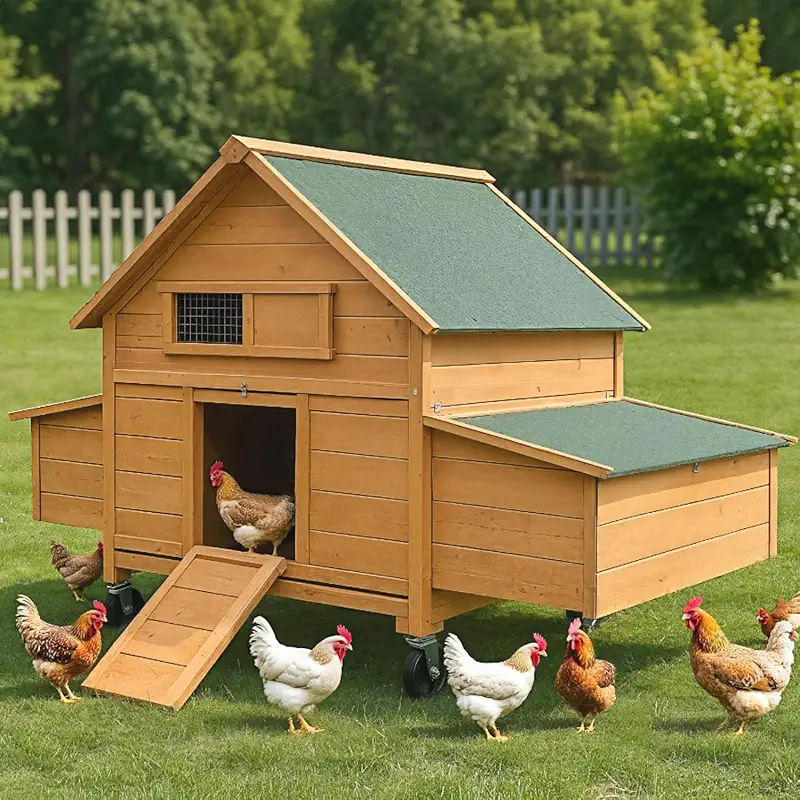
I still remember one cold, windy evening, kneeling in the coop with my old hen Daisy on my lap, listening to the rain drum on the roof. Inside the shed it was calm, only the soft sound of beaks clicking on the roost as the others settled down. That is when I realized: the coop is where worry stops, for you and for them.
In this guide I will walk you through what really matters when you choose a wooden chicken coop shed, how to set it up, and how to keep it clean without feeling like you live inside it. I will also show you how I use ready-made wooden coops when I do not have time to build one from scratch.
What your hens quietly need
Every good wooden coop should give:
- Dry floor and roof, even in heavy rain.
- Fresh air without cold drafts at roost level.
- Reliable doors and latches that keep predators out.
- Enough perch space for every bird to sleep without pushing.
- Easy daily cleaning so you do not dread going inside.
A ready-built shed can do all of this, if you choose wisely and set it up with care.
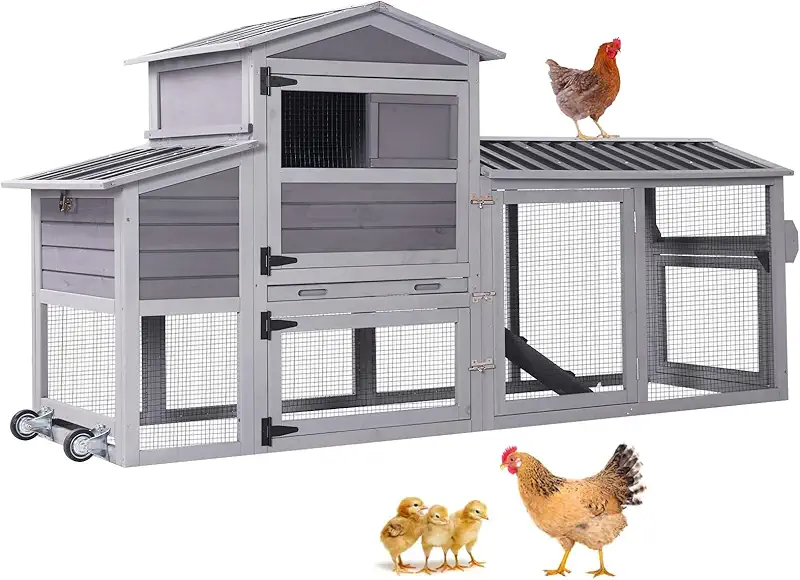
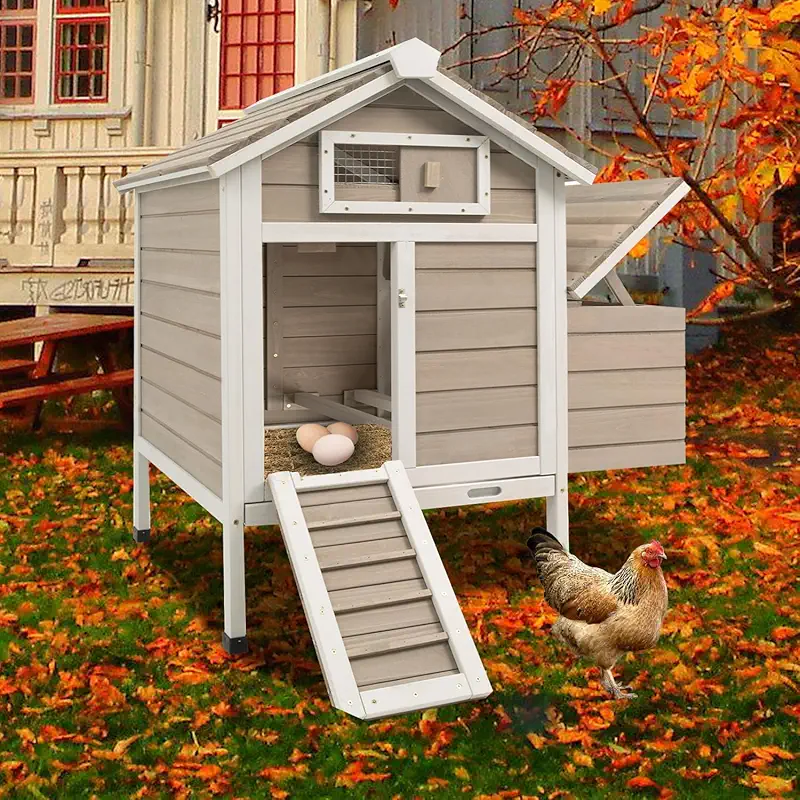
Let me see someWhen I need a new coop fast, I prefer solid wooden sheds with real hinges, removable trays and roofs that do not leak the first winter. There are several models that match this idea very well.
Browse different sizes, shapes and roof styles in one place, then choose what feels right for the number of hens you have now (and maybe a couple more).
Many sturdy options for small flocks
I want to compareHow many hens fit in a wooden chicken coop shed?
This is the first mistake people make: we think birds are small, so they do not need much space. But hens like a bit of distance, like we do on a crowded bus. Too little room means stress, feather pecking and dirty feathers from sleeping in droppings.
For a simple rule, I use at least 4 square feet (about 0.4 m²) of indoor floor space per standard-size hen, and more for big breeds like Orpingtons. If your climate is very cold or very wet, where birds have to stay inside often, I add another 25–50% space.
Small shed (backyard start)
A compact wooden chicken coop shed that offers around 12–16 square feet inside is cosy for 3–4 hens, especially if they can roam outside most days.
- Perfect for learning the basics.
- Easier and quicker to clean fully.
- Fits into small gardens or corners.
Medium shed (family flock)
For 5–8 hens I look for 20–32 square feet. This amount of room lets bossy hens keep space and quiet birds hide a bit when needed.
- More roost choices for the flock.
- Room for a small feed area in bad weather.
- Space for a broody hen in a corner box.
Large shed (serious keeper)
If you plan 10 or more hens, a bigger wooden shed gives you comfort and flexibility. It also means you can divide space if someone gets sick or bullied.
- Separate corner for feed and tools.
- Room for quarantine or chicks.
- Better air volume in hot summers.
I have never regretted choosing the slightly bigger wooden chicken coop shed. Chickens have a way of multiplying, especially when you fall in love with one more colour or comb shape at the market.
What makes a wooden chicken coop shed safe?
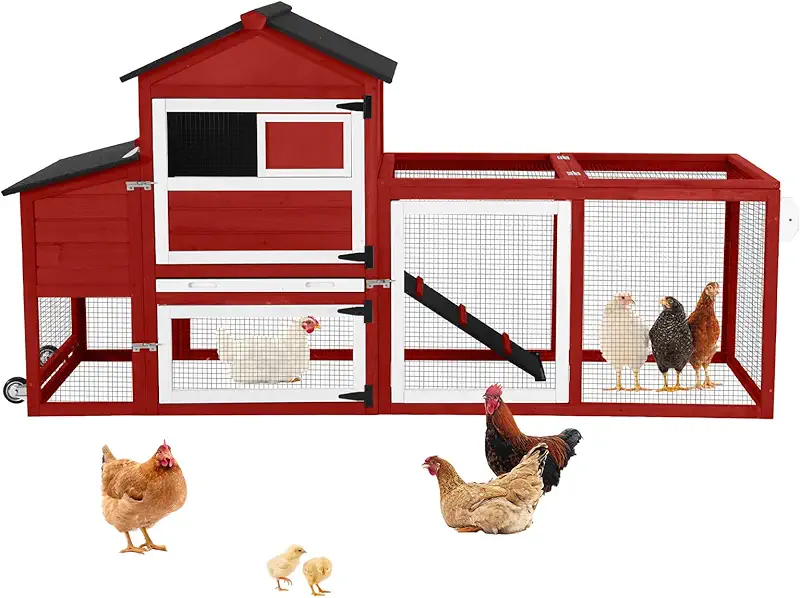
Wood feels warm and friendly, but predators see your coop as a food box. I learned this the hard way when a clever fox opened a simple twist catch on my first coop. Since then I look at every shed through a fox’s eyes.
Strong structure and wood quality
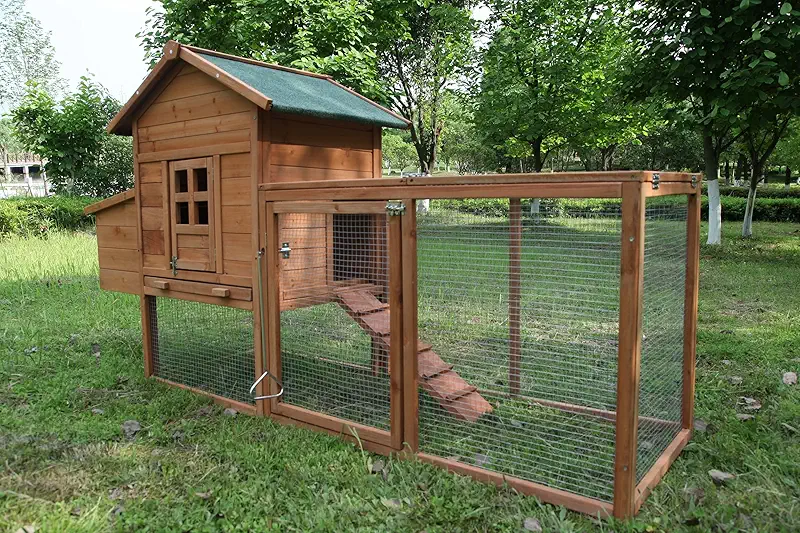
I prefer thicker wood panels because they hold screws better and keep their shape in damp weather. Thin, bendy panels can warp, and gaps appear where cold air and rats sneak in. Look for:
- Sturdy frame pieces that do not wobble when you push the wall.
- Wood that feels solid, not like soft cardboard.
- Good fit where walls meet the roof, without wide gaps.
Predator-proof doors and windows
A safe wooden chicken coop shed closes like a toolbox. Everything should shut firmly and stay shut, even if a raccoon hangs from it.
- Locks that need your fingers to open, not simple turn hooks.
- Wire mesh with small squares, not thin chicken wire that tears.
- Windows high enough that foxes cannot jump in if a latch fails.
One night I went out with my torch and caught a raccoon hanging from the run door, testing every corner. The only reason he gave up was the strong latch on the wooden frame. Since then, I double-check every lock before I go to bed.
Dry, raised floor
Your hens’ feet stay healthier when they sleep above a dry floor. A wooden chicken coop shed raised a few inches off the ground keeps damp soil away from the wood, and also makes it harder for rats to chew in from below.
Some sheds come with legs or a base frame. If they do not, I like to place them on concrete blocks, bricks or a simple gravel bed, so rainwater flows away and the wood lasts longer.
Ventilation, light and comfort inside the wooden shed
When I open my coop at dawn, I first smell the air. If it smells sharp and strong, I know I need more ventilation. Hens breathe out moisture and ammonia, and a closed wooden box can fill up fast.
Fresh air without chilling drafts
Good ventilation in a wooden chicken coop shed usually means small vents high up on opposite walls, sometimes covered with mesh. Warm, damp air rises and escapes, while fresh air comes in from the other side.
What I try to avoid is a direct wind crossing right at roost height in winter. Chickens can handle cold, but they do not like wind on their combs while they sleep.
Natural light and calm behaviour
A small window or clear panel in the door changes everything. When the first soft light comes through, hens wake slowly and start to murmur, instead of shouting in the dark for you to open the door.
Natural light also helps them lay better and keeps their inner clock in balance. I like sheds where the nest boxes are in a slightly dim corner, but the main area is bright enough to see what I am doing without a torch.
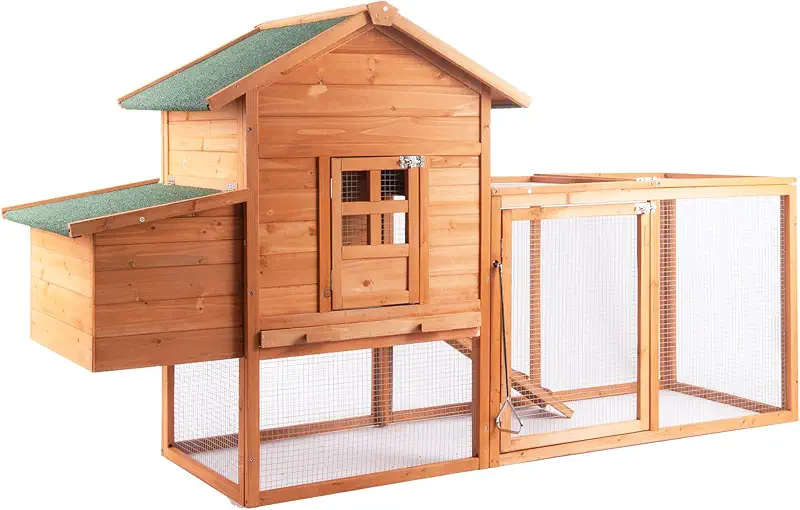
A simple way to test a coop’s light and air: go inside, shut the door, and sit quietly for a minute. If you can read a feed bag label and breathe easily, your hens will probably feel fine too.
Perches and nest boxes in a wooden chicken coop shed
Inside the shed, hens want two different things: a high, safe place to sleep, and a soft, quiet spot to lay. These needs shape how I set up every coop.
- Perches higher than nest boxes, so hens choose them at night.
- Round or slightly rounded edges on perches for comfortable feet.
- About 8–10 inches of perch space per bird, more for big breeds.
- Enough nest boxes so they do not queue for hours (one for every 3–4 hens).
I line nest boxes with a thick, clean layer of straw or shavings and change it often. It keeps eggs cleaner, but it also seems to make my hens relax when they settle down with that little satisfied wiggle.
Cleaning and daily care of your wooden chicken coop shed
I will be honest: a coop that is hard to clean will eventually be neglected. Life gets busy. That is why I now only use wooden chicken coop sheds that respect my back and my time.
Features that make cleaning easier
When I look at a new shed, I imagine carrying a full shovel of bedding out the door. If I cannot picture doing it without bending like a question mark, I pass.
- Big main door or panel that opens wide enough to step inside.
- Removable droppings tray under the roosts, if possible.
- Smooth, sealed surfaces that do not trap dark, damp corners.
My favourite coop has a side wall that opens like a cupboard. I can brush everything straight into a wheelbarrow. It turned cleaning from a dreaded chore into a 10-minute habit with a cup of tea waiting at the end.
My simple cleaning routine
Over the years I have settled into a rhythm that keeps the wooden shed fresh without taking all my Sunday.
- Daily: Scrape droppings under the roosts, check water and feed, pick up any wet bedding.
- Weekly: Change bedding in nest boxes, add a new top layer on the floor, wipe perches with a mild cleaner.
- Seasonally: Empty everything, scrub wooden surfaces, let them dry fully in the sun, and check for damage.
Wood is alive in its own way; it swells and dries, it smells of warm boards in summer. If you keep it clean and let it breathe, a good wooden chicken coop shed will last for many flocks.
Placing your wooden chicken coop shed in the yard
The place you choose is as important as the coop itself. I have moved sheds more than once, and my hens always told me clearly when I had made a better choice.
Sun, shade and wind
Chickens enjoy sunshine, but a metal roof in full sun can turn into an oven. Wooden roofs handle heat better, yet I still try to give at least some afternoon shade, from a tree or a taller building.
Think about wind too. In my yard the cold winter wind comes from the north, so I put the solid back wall of the shed facing that way. The pop door and windows face east and south, catching soft morning light instead of harsh storms.
Access for you and for them
One of my early mistakes was placing the coop too far from the house. In nice weather it was fine. But when the rain turned the path into a muddy slide, I dreaded every visit.
- Keep a clear path you can walk even with a wheelbarrow.
- Think about winter snow and where drifts might build up.
- Leave room around the shed to walk and to check the walls.
Combining the shed with a run
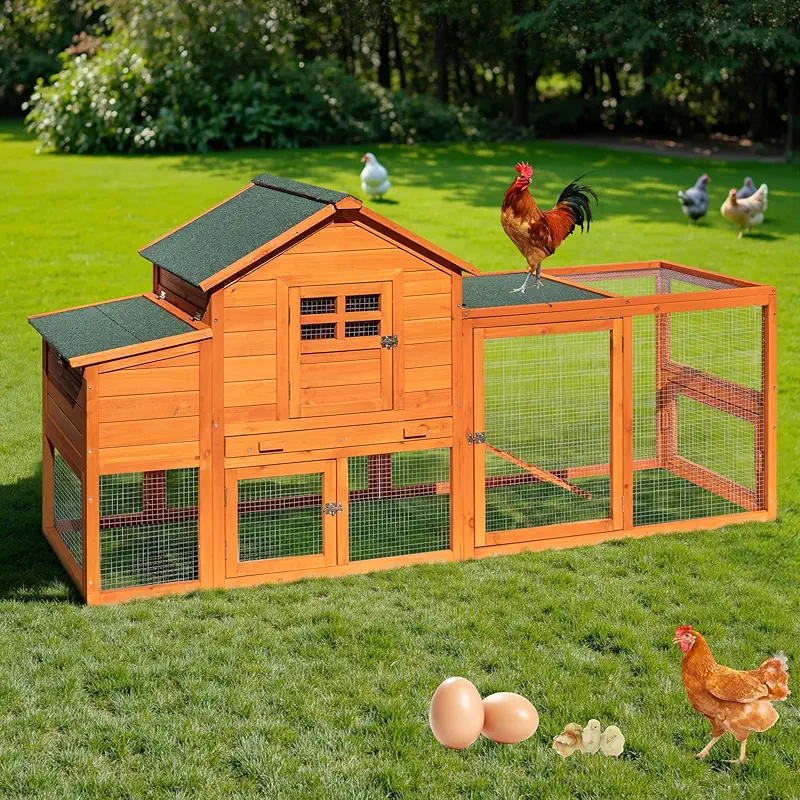
Many wooden chicken coop shed designs come with an attached run. That can be very handy, especially when you need to travel or keep the birds safe from dogs or cars. But runs can get muddy and tired if they are too small.
I like to:
- Add a dry area with sand or fine gravel under a roofed section.
- Move a mobile run around the yard when grass starts to disappear.
- Give extra outside time whenever I am home to watch them.
When hens have a secure wooden shed to sleep in and a decent area to scratch outside, they show it with bright eyes, glossy feathers and that content little sound as they settle at dusk.
Ready-made wooden chicken coop sheds vs building your own
People often ask me which is better: a factory-built wooden chicken coop shed or a fully homemade one from scrap lumber. I have used both, and each has a place.
Why I like ready-made sheds
When you are new to chickens, a well-designed ready-made shed gives you a safe starting point without needing tools or building skills.
- All pieces are sized to fit; no measuring.
- Instructions show where to put perches and boxes.
- You can see reviews and pictures from other keepers.
Where DIY still shines
Building your own can be cheaper if you already have materials and tools. It lets you design a shed that fits exactly in your corner of the yard.
But it also takes planning, time, and some mistakes along the way. I still enjoy it, but not everyone has that freedom.
My middle path
These days I often use a solid ready-made wooden shed as the “core” and add small touches: extra vents, a small overhang, or a homemade bigger run.
That way I get the speed and structure of a kit, and the personality of a DIY project.
What matters most is that your hens end up with a wooden chicken coop shed that is safe, dry and peaceful. How you reach that point is less important than how they feel once they are inside.
Quiet signs your hens give you about their coop
Chickens do not write reviews, but they do give feedback every day with their behaviour. I often tell new keepers to look at their flock, not just at the wooden walls.
Some good signs:
- Hens walk calmly into the shed at dusk without coaxing.
- They settle on the perches with soft murmurs, not loud arguments.
- In the morning the bedding is mostly dry and the air does not sting your nose.
- Feathers look smooth and clean, even around the vent area.
Worry signs include birds sleeping in nest boxes all the time, crowding near the door for air, or refusing to go in until it is almost dark. When I see that, I check for red mite, damp spots, drafts or bullying.
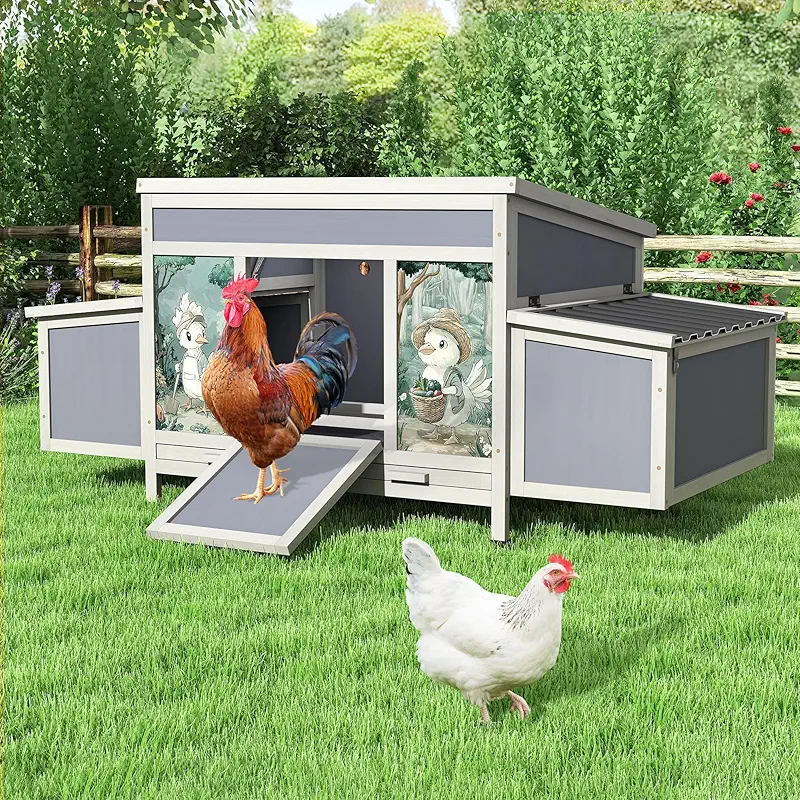
A wooden chicken coop shed can always be improved a little. A new vent here, extra bedding there, a different perch height. The birds will tell you, gently but clearly, when you are moving in the right direction.
FAQ about choosing a wooden chicken coop shed
Take a quiet moment, think about how many hens you truly want, and how much time you can give them each day. Then look at a few sturdy wooden sheds and imagine your flock sleeping inside on a stormy night.
Your birds will never thank you with words, but they will show their comfort in the way they greet you each morning.
Many wooden sheds, one calm flock
I’ll browse quietly