Wooden chicken coop for sale
wooden chicken coop for sale
wooden chicken coop for sale: a warm home for calm, happy hens
When people hear I raise chickens, they often imagine a noisy, messy corner of the yard.
My days actually start very quietly. I walk out with a warm mug in my hands, open the wooden coop,
and hear soft clucks and gentle wing stretches. A good coop turns chaos into calm.
Over the years I have tried wire runs, old sheds, and one wobbly DIY project I still laugh about.
Nothing beats a solid wooden chicken coop that feels safe, dry, and cozy. If you are looking for a
wooden chicken coop for sale right now, I want to help you choose one that your hens will trust and
you will not have to fight with every winter.
On this page I will share what I have learned in my own yard: what really matters in a coop,
what usually breaks first, and how to match the coop to the flock you dream of. I will also show
you some wooden coop styles you can explore quietly in your own time.
Let me see options
Browse different wooden coops, sizes and styles, and imagine where your hens will sleep tonight.
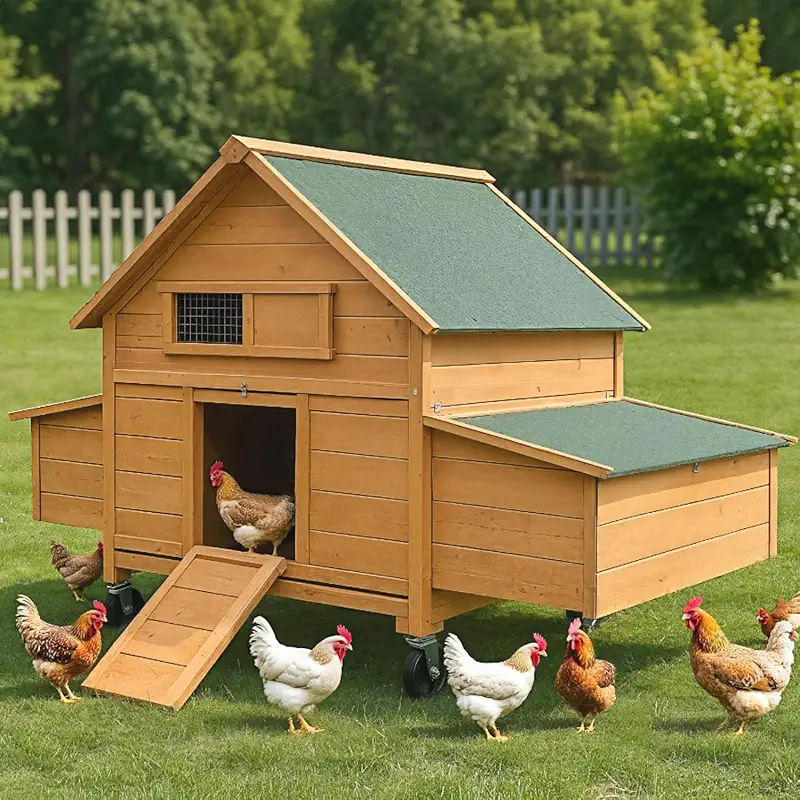
What I look for when a wooden chicken coop is for sale
I still remember my first wooden coop. It was pretty from a distance and terrible up close.
Thin wood, loose latches, and a roof that dripped right over the roost bar. My hens were patient with me,
but I promised them I would do better next time.
Now, whenever I see a wooden chicken coop for sale, I quietly go through the same mental checklist.
It is simple, but it has saved my birds from drafts and predators more than once.
1. Size that respects how chickens actually live
Chickens do not like to sleep crowded. They may squeeze together in winter, but they still need
space to move, stretch, and step away from a bossy hen. I never go below these simple numbers inside the coop:
- 4 square feet per standard hen
- 3 square feet per small or bantam hen
- At least 8 inches of roost bar per bird, more if you can
If a product listing says “good for 6 chickens”, I ignore that and do my own math.
In my flock, five hens that can sleep without bumping each other are calmer, lay better,
and fight less than four hens crammed into a tight box.
2. Wood that can stand a few hard seasons
Wood feels warm to the touch, and hens instinctively seem to trust it more than metal.
But not all wood is equal. When I look at photos of a wooden chicken coop for sale, I try to notice:
- Is the frame thick enough, or do the boards look like fruit-crate slats?
- Are edges protected from rain, especially roof edges and the base?
- Is the coop raised off the ground, or will the floor sit in damp soil?
Thin wood warps, twists, and leaves gaps. Chickens are forgiving, but raccoons and rats are not.
A coop that feels a little heavier and sturdier in photos is usually worth the extra patience and money.
3. Ventilation without drafts
This is where many people, including my younger self, get confused. Fresh air is not the enemy.
Direct wind on roosting hens is. When I look at a coop, I want:
- Vents high up, under the roofline, where the warm moist air can escape
- Windows or openings that can be closed or partly closed in storms
- Wire-covered gaps, so the air moves but predators stay out
One winter after I improved ventilation in my coop, I saw less frost on combs and fewer chest issues.
The air smelled lighter, and cleaning was easier. Good ventilation is like quiet guardianship;
you barely see it, but it keeps everyone safe.
A little habit of mine: I kneel inside every new coop, shut the doors, and sit for a full minute.
If the air already feels heavy, I know my hens will not be happy there on a wet week.
Three wooden coop styles I see people choose again and again
When you search for a wooden chicken coop for sale, it can feel like standing in front of a whole forest.
Let me walk you through three common shapes that show up often, and when each one tends to work best in real life.
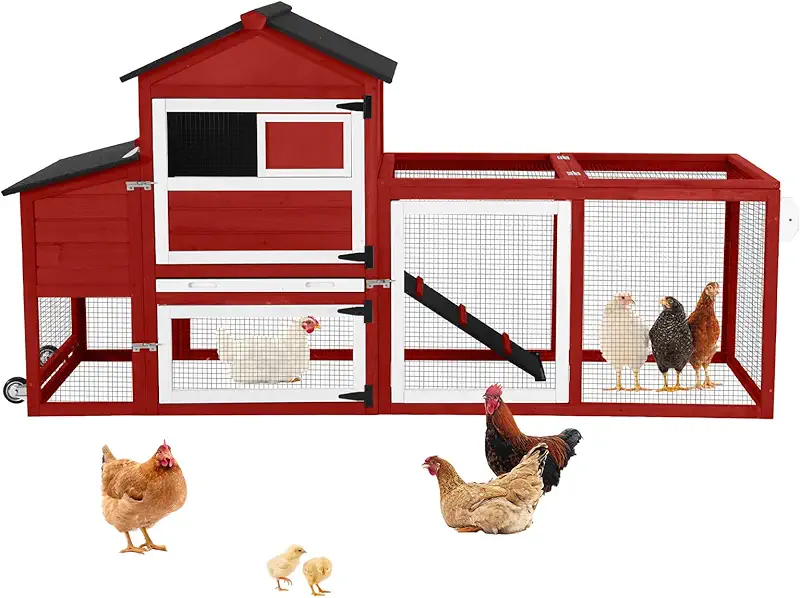
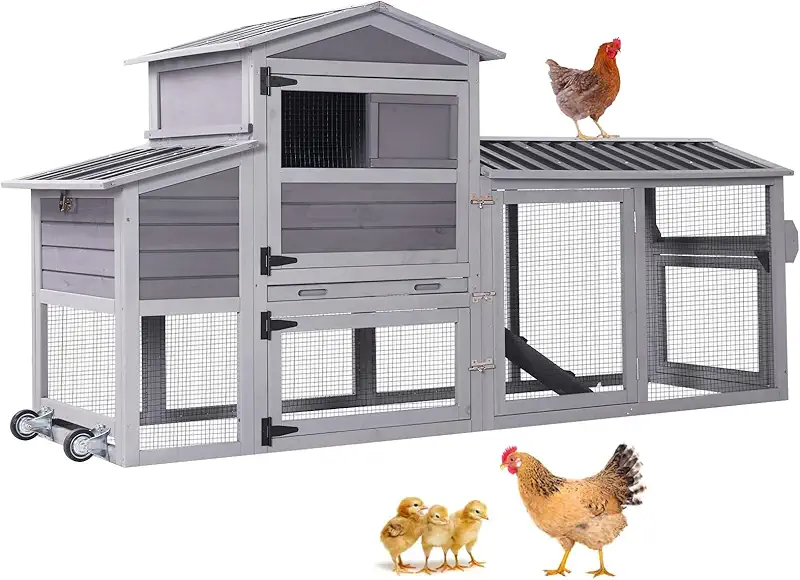
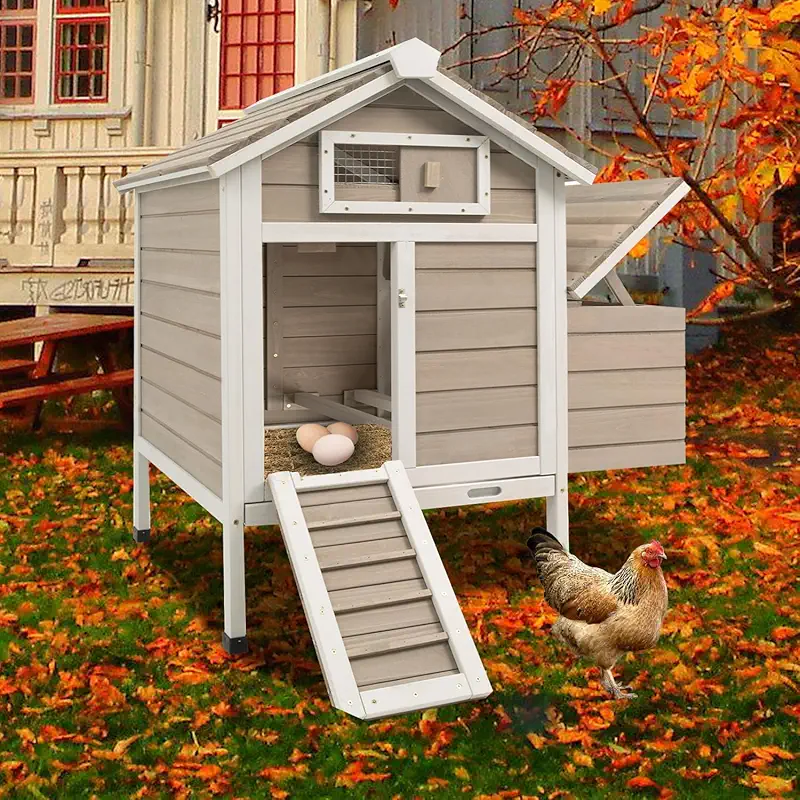
Compact starter coop
Good for 2–4 hens
Small coops with a simple house and a short run are gentle first steps.
They fit into tidy gardens and do not feel overwhelming. I like these for families who are just
meeting their first hens and want to learn slowly.
Typical price: low to moderate
I suggest this style if you picture a small flock more like pets than farm animals.
This size feels right
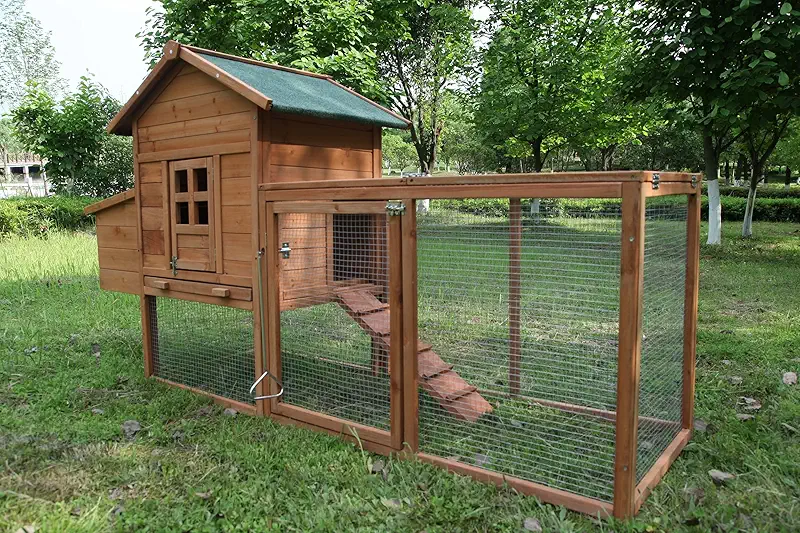
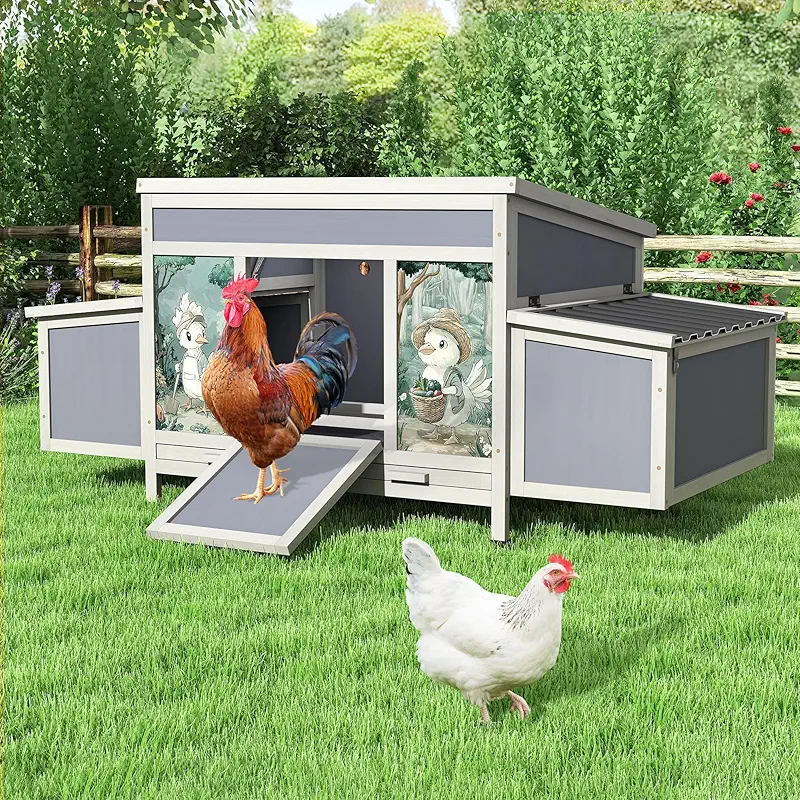
Walk-in family coop
Good for 6–10 hens
Walk-in coops are my own favorite. Being able to stand up next to your hens and clean
without crawling on your knees changes everything. These coops work for people who want
enough eggs to share with neighbors and maybe keep different breeds together.
Typical price: moderate
If you see yourself out there every morning, chatting with your birds, this style feels very natural.
I like this idea
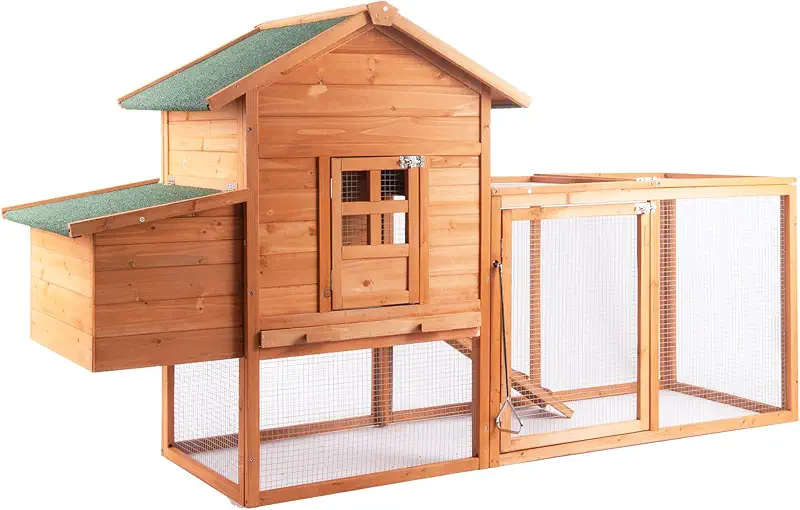
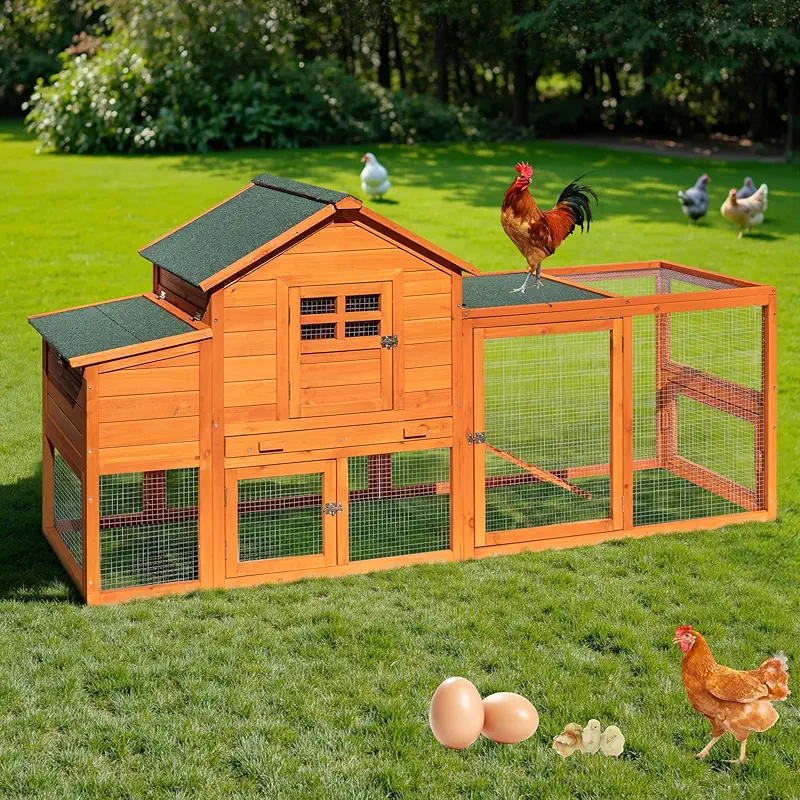
Large raised coop with long run
Good for growing flocks
Bigger raised coops with long covered runs are for people who know the chicken bug has bitten them.
There is room for more hens, extra perches, and sometimes even a separate space if one bird needs
some quiet time.
Typical price: moderate to higher
I use this type when I hatch chicks or bring in new breeds. It lets me separate groups
without anyone feeling punished.
Maybe this is me
How to match a wooden coop to your climate and yard
A wooden chicken coop for sale that looks perfect in a picture might behave differently in your yard.
I live where summers are warm and winters are damp rather than brutally cold.
So I always ask myself two quiet questions before I bring a new coop home.
Question 1: What does my weather really feel like?
Think about the worst week of your year, not the average day.
Does the wind cut sideways? Does rain pool on the ground? Does snow stack up high?
- In rainy places, I like steep roofs and raised floors.
- In hot places, I want generous shade and wide vents.
- In snowy places, I value strong roofs and easy access for shoveling paths.
Once you know your “worst week”, you can look at any wooden chicken coop for sale
and imagine that week happening around it.
Question 2: Where will this coop sit for years?
Coops are easier to move on a sunny afternoon than on a stormy night.
So I plan as if the coop might stay in the same spot for a long time.
- Is there morning sun to dry dew but afternoon shade in summer?
- Is the ground slightly higher than the rest of the yard?
- Can you reach the coop easily in mud, ice, or deep snow?
A coop in the right place is almost as important as the coop itself.
My birds taught me that when they started choosing certain corners to dust bathe and rest.
When I help friends pick a wooden chicken coop for sale online, we usually start by looking at
the spot in their yard first, then we go to the listings. That way we see the coop through the hens’ eyes,
not just the camera’s.
A simple day in a wooden coop: what really matters
Let me walk you through a quiet day with my hens and the coop they live in now.
It might help you notice details when you look at your own options.
In the morning, I open the pop door and listen. Happy hens hop out one by one,
maybe grumbling if I am late. The floor is dry, even when it rained all night.
The roost bars are smooth, and feathers on the floor tell me everyone slept well.
During the day, the run gives them space to scratch, dust bathe, and gossip.
On hot days they hide under the shaded side of the coop. On windy afternoons
they tuck themselves behind the solid wall. At dusk, they walk back up the ramp on their own.
The coop is not a prison; it is a bedroom they trust.
At night, I check latches, listen for any rattling panels in the wind,
and make sure there are no gaps around doors. A small sound might mean
a loose hinge or a board that needs tightening before a curious raccoon finds it.
When you look at a wooden chicken coop for sale, try to imagine this full day with your own hens.
Picture little feet on the ramp, backs against the roost, soft chirps in the dark.
Does that particular coop make that picture feel calm and safe?
Practical checklist before you choose a wooden chicken coop for sale
To make things simple, here is the exact checklist I use with friends before they decide.
You can keep it beside you while you browse.
Space and comfort
- Enough floor space for the number of hens you truly plan to keep.
- Sturdy, rounded roost bars at least 8 inches per bird.
- At least two nest boxes for small flocks, more for larger ones.
Safety and strength
- Solid wood frame that does not look flimsy or twisted.
- Strong wire on windows and run, not thin decorative mesh.
- Secure latches on every door, including the small pop door.
Weather and cleaning
- Roof angle that suits your rain or snow.
- Enough ventilation high up, protected by wire.
- Access doors or removable trays that make cleaning simple.
When a wooden chicken coop for sale passes most of this list, I feel at peace even before
the first hen steps inside.
Let me check these
Use this simple checklist while you look at different wooden coops and notice which ones feel quietly reliable.
FAQ about choosing a wooden chicken coop for sale
How many chickens can I keep in a small wooden coop?
For a truly small wooden coop, I usually keep 2 to 4 standard hens, or up to 5 smaller bantams,
as long as they also have a decent outdoor run. The numbers on many product pages are often
too optimistic. I always aim for comfort, not the maximum possible. A few hens with space will
lay more calmly than many hens squeezed in.
Is wood really better than plastic or metal?
For me, yes, as long as the wood is solid and protected. Wood feels warmer,
breathes a little, and blends into the yard in a gentle way. My hens seem to
settle more quickly in wooden coops. Plastic can be easier to wash,
and metal can be very strong, but they heat up and cool down faster.
A good wooden coop softens those extremes and feels more natural.
Do I need to paint or treat a new wooden chicken coop?
I almost always treat or paint the outside of a new wooden coop.
I leave the inside as gentle and natural as possible and seal only the parts
that might touch damp ground or driving rain. A simple non-toxic exterior stain
or paint helps the coop last longer and keeps the wood from soaking up water
during long wet spells.
How can I tell if a coop is easy to clean?
I look for wide doors that let me reach every corner without crawling,
and for flat surfaces that a brush or scraper can slide across.
Removable trays under roosts are helpful, but only if they slide smoothly.
Whenever I see photos of a wooden chicken coop for sale, I imagine where
droppings will pile up and ask myself, “Can my arm reach that spot without
twisting like a pretzel?”
What if my flock grows after I buy a coop?
This happens more often than people admit. Chickens are gentle, and it is easy
to fall in love with new breeds. If you think your flock might grow, consider
either choosing a slightly larger wooden coop now or planning where a second
coop could sit later. I have had seasons with two coops side by side, and it
worked well. The important thing is to respect space from the beginning so the
birds never pay the price for our enthusiasm.
Listening to your hens while you choose
When I look at any wooden chicken coop for sale, I try not to think only like a shopper.
I think like a hen who has to sleep there in a thunderstorm. Will the rain drum loudly
on the roof or be muffled? Will drafts creep along the roost, or will the air move gently overhead?
Your hens will speak to you in their own way. Calm clucks in the evening mean they feel secure.
Reluctance to go inside or loud fuss at bedtime can be little warnings. A good wooden coop
should make them walk in with quiet confidence.
If you are ready to start looking with their comfort in mind, you can take your time
and compare different styles, sizes, and shapes.
I’ll look with them
Explore several wooden chicken coops for sale while picturing your birds sleeping safely inside each one.