
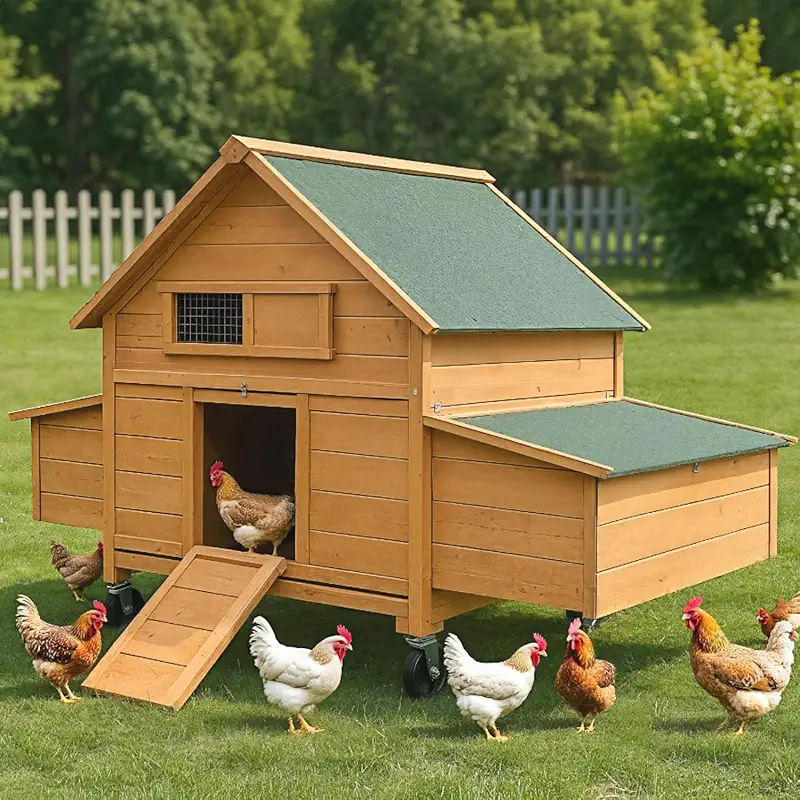
Why a mobile wooden chicken coop changed my routine
When I started with chickens, my first coop was fixed in one corner of the garden. I thought it was easier: one place for the house, one path for me. After the first winter I learned my lesson. The run became bare, muddy, and sad. The hens still sang in the morning, but they were walking in dirty puddles, and I could see they were not happy.
Moving to a mobile wooden chicken coop brought back what chickens love most: fresh ground, little bugs to hunt, and soft grass under their feet. It also brought back something I needed: the quiet feeling that I was giving them a better life, day after day, without exhausting myself.
Wood also made a big difference. Metal feels cold and harsh. Plastic can sweat and trap moisture. A well-built wooden coop breathes a little, holds warmth, and smells like a barn, not a storage box. The hens settled more quickly at night, and the coop felt like a small, safe cabin instead of a cage on wheels.
What “mobile” really means in daily life
On paper, every mobile wooden chicken coop can move. In the real world, with mud under your boots and a basket of eggs in one hand, only some of them truly feel mobile. When I choose a new coop, I always think of the worst day of the season: cold wind, heavy rain, or deep summer dust. Can I still move it then without hurting my back?
- Wheels wide enough not to dig into wet soil.
- A handle that fits your hands with gloves on.
- A weight you can drag slowly, even uphill.
- Enough height so it rolls over small bumps and stones.
With a good mobile design, I can shift my flock to a fresh patch of grass in less than five minutes. I open the nest boxes, collect the warm eggs, close the doors, and then pull the coop like a quiet garden cart. The hens simply walk along as the scenery changes, curious but calm.
How a mobile coop keeps the ground healthy
Chickens are wonderful gardeners, but they do not know how to stop. Leave them long enough in one place and they will turn rich soil into a dusty yard. With a mobile wooden chicken coop, you become the one who sets the rhythm. Move them often and the land has time to rest and grow back.
I like to think in small squares. Imagine your yard divided into patches. The coop and run stay a few days on one patch, then move to the next. The droppings that would have piled up into a smelly corner become a gentle layer of fertilizer spread across the garden. The grass thanks you, and the hens follow the green carpet.
Key things to look for in a mobile wooden chicken coop
When friends ask me what to look for in a mobile wooden chicken coop, I try to keep it simple. Your hens do not need perfection; they need safety, dryness, and space to live like chickens. And you need something you can manage even on a busy, tired evening.
Size and space for your flock
The first question is always the same: how many hens do you have, and how many are you dreaming about? I always tell people to leave room for one or two more, because new hens have a way of arriving in our lives. A tight coop leads to pecking, stress, and damp air at night.
- Inside the coop, give each hen enough space to roost without touching her neighbors too much.
- In the run, aim for room to walk, scratch, and stretch wings without bumping into each other all the time.
- Remember that heavy breeds need a bit more room than tiny, light hens.
Ventilation and warmth
Wood keeps warmth better than metal, but fresh air is still the best friend of a healthy flock. Moist air inside the coop in winter is much more dangerous than dry cold. In my mobile wooden chicken coop, I look for vents high on the walls, under the roof line, where drafts will not blow on the hens’ backs.
At night I want to smell clean dry wood, not ammonia. If I open the door in the morning and my eyes sting, I know the coop is too closed or the bedding is too old. Good ventilation helps both.
Easy cleaning: learning from sore knees
I have cleaned enough coops on my knees to know how important access is. A mobile wooden chicken coop that is easy to clean saves your joints and also keeps the flock healthier. I like:
- Drop-down doors or large side panels that give full access.
- Removable trays under the roosts to collect droppings.
- Smooth wooden surfaces that do not trap dirt in deep grooves.
With a good design, I can scrape, sweep, and replace bedding in a few minutes. The less I struggle, the more often I am happy to do it, and the better the coop smells all year.
My way of using a mobile wooden chicken coop through the seasons
A mobile wooden chicken coop is not only about moving; it is about moving with the seasons. My hens and I follow a quiet yearly rhythm, and the coop rolls along with us.
Spring: fresh grass and strong legs
In spring, the hens are full of energy. The ground is soft, the bugs are waking up, and every new patch of grass is a feast. I move the coop more often in this season, sometimes every two or three days. The droppings melt into the damp soil, and the grass grows back greener behind them.
A mobile wooden chicken coop also lets me keep them away from delicate seedlings. I can park the coop near the garden beds, where they can hunt pests on the edges, while the tender plants stay safe inside their fences.
Summer: shade, airflow and cool nights
In the hottest weeks, movement is not only about new grass, it is about shade. I shift the coop to follow the trees. A few hours of deeper shade in the afternoon can make a big difference for a panting hen.
This is where a wooden roof and walls help. Wood warms more slowly than thin metal, and with good ventilation at the top, heat can escape at night. On very hot days I sometimes open extra vents or crack the nest box lids for a bit more air, always making sure predators cannot slip in.
Autumn and winter: dry feet and quiet evenings
In autumn, I start parking the mobile coop on higher, better-drained parts of the yard. If I know a week of rain is coming, I move ahead of time. Wet ground is hard on chicken feet and brings worms and smell; being able to roll the coop to firmer soil is a blessing.
In winter, I move less often, but I still move. Even a small change of position helps keep the area around the door less muddy. I also like to park the coop with its back to the wind and use straw bales as windbreaks if needed. The hens roost inside their wooden house, tails towards the breeze, and the coop feels like a tiny warm barn in the dark.
How I choose a spot for the mobile coop
Many people ask where to place a mobile wooden chicken coop. After years of trying, I use a simple checklist in my mind every time I park it.
- Is the ground fairly level so the coop sits steady and doors close well?
- Will there be shade at the hottest part of the day?
- Can I reach it easily in the dark with a flashlight?
- Is the area safe from flooding or standing water?
- Will the neighbors be okay with morning songs from the hens?
If I can answer “yes” to most of these, I know the hens will be fine there for a few days. The beauty of a mobile coop is that no place has to be perfect forever. You can always roll a little further and try a new patch.