
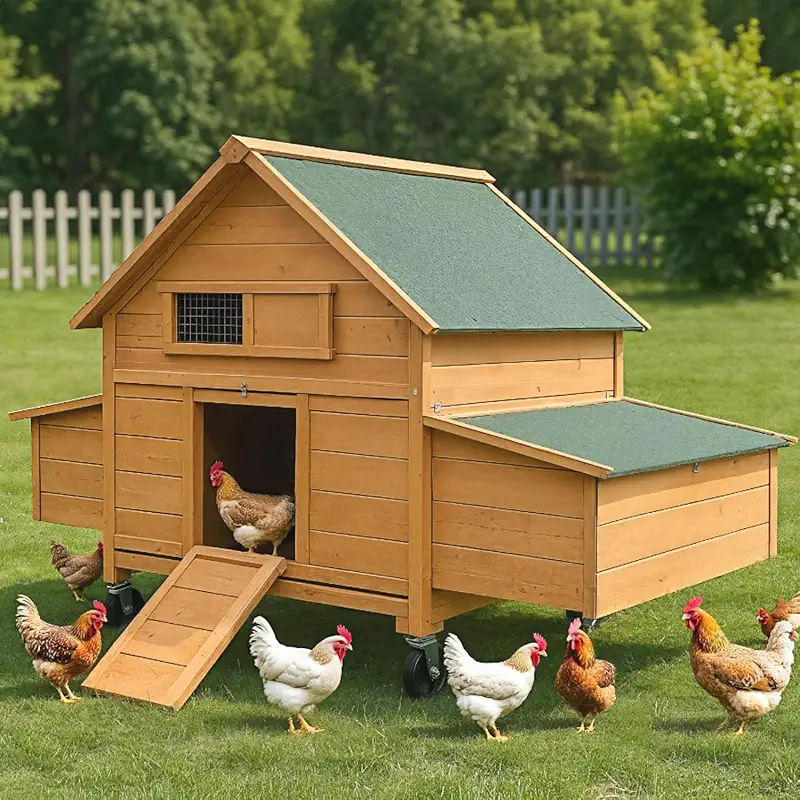
What six hens really need from a coop
When people ask me about the right wooden chicken coop for 6 chickens, they often start with the same questions: “How many square feet?” or “Is this model big enough?” Those are good questions, but my hens have taught me to think a bit differently.
Your six birds need enough space, yes. But they also need peace. They need dry bedding, strong ventilation without drafts, and a layout that lets the shy hen slip away when the bossy one gets grumpy. A coop can look nice in pictures and still feel stressful for the flock.
I remember when I tried squeezing seven hens into a small secondhand coop “just for one winter”. Every evening there was the same noisy quarrel at roosting time. Within a week, the lowest hen in the pecking order started sleeping on the floor, shivering alone. That is when I learned: space in the description is not the same as peace in the coop.
For six standard-size hens, I like at least 18–24 square feet inside the coop, plus a generous run. More matters when they are locked in for longer periods, like winter or stormy weeks. Wood feels warm and familiar to them, but it must be arranged with care.
Choosing a wooden chicken coop for 6 chickens without regrets
Reading product pages can be confusing. One “large” coop can feel very small in real life. I always imagine my own flock walking through the door before I judge any model. Here is how I look at a coop for six hens.
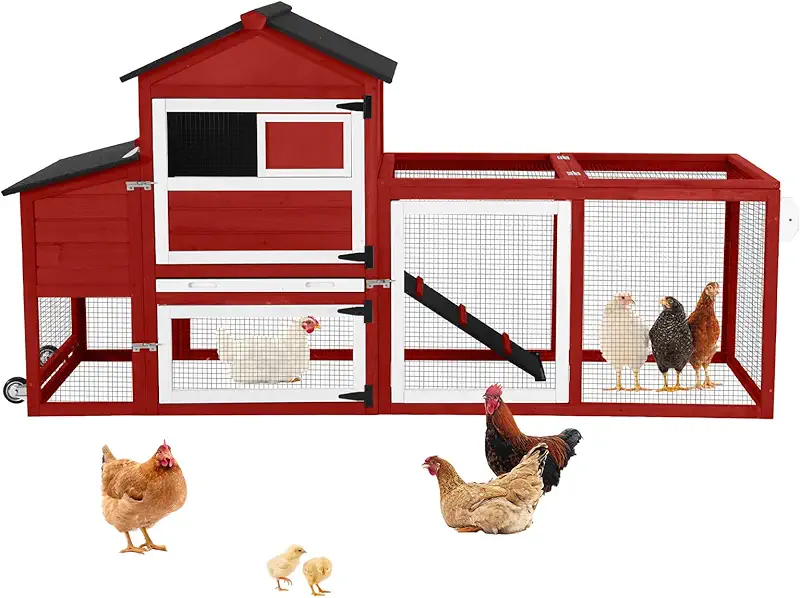
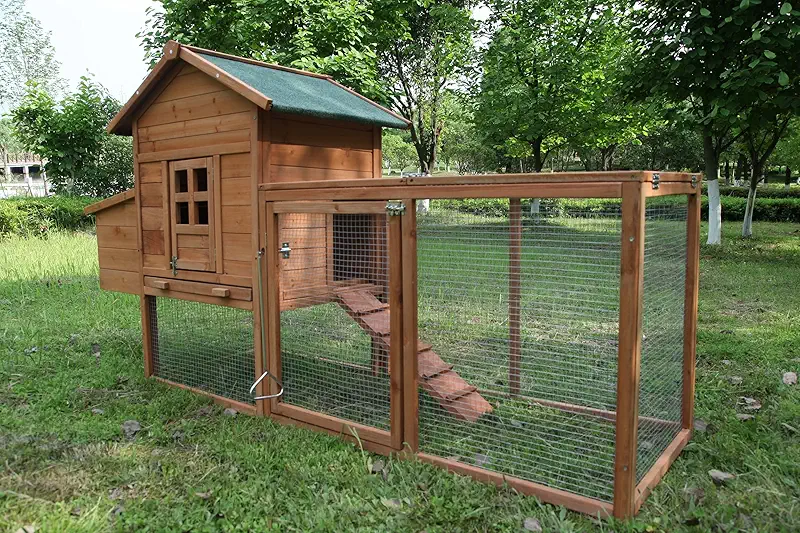
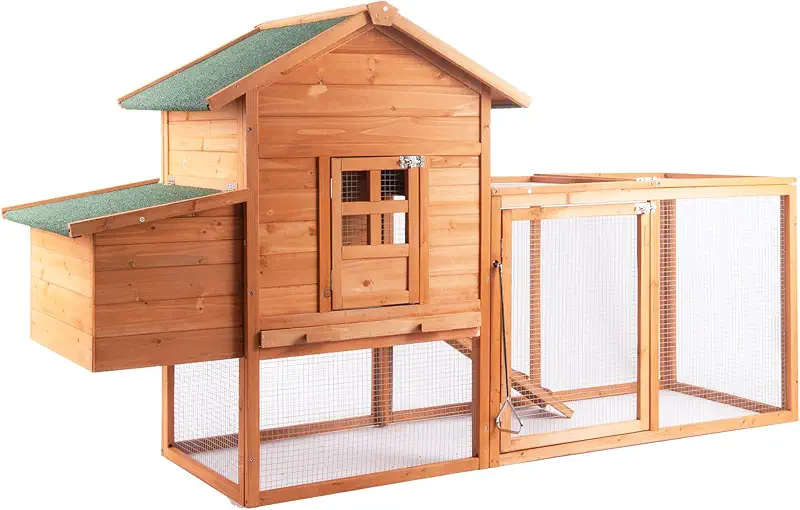
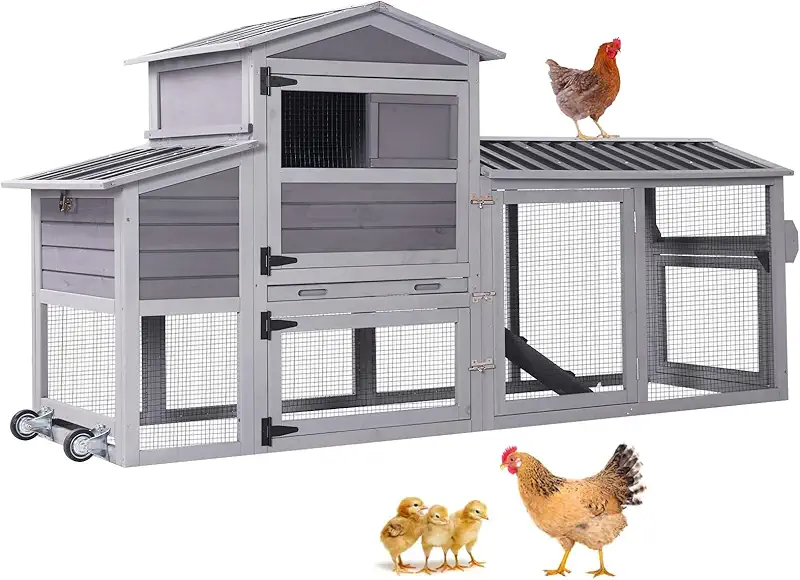
1. Honest interior space
Ignore the big words like “large”, “luxury”, or “villa”. Look at the numbers. For six hens, I prefer a coop that offers:
- At least 3–4 square feet per hen inside the coop.
- A run that lets all six walk, scratch, and dust bathe without bumping each other all the time.
- Head room so you can bend and clean without crawling on your knees.
Remember that the nesting boxes and ramps steal some of the floor space. The number on the box is usually the outside footprint, not the “walkable” inside area.
2. Wood that can face real weather
A wooden chicken coop for 6 chickens should protect them from rain, snow, and summer sun. Look for solid panels, not thin little boards with big gaps. Treated or painted wood lasts longer, but you still need to help it.
- Raise the coop a few inches off the ground so the wood does not sit in wet soil.
- Give the roof extra care: I love when there is a real waterproof layer, not just bare plywood.
- Once assembled, I like to seal edges and screw holes where water might sneak in.
3. A layout that fits chicken habits
Hens prefer to sleep high and lay eggs in quiet, darker corners. If the coop layout fights these instincts, you will be forever correcting them. I made that mistake once when a roost bar was lower than a nesting box. Two weeks later, I was cleaning dirty eggs every morning.
Your coop will feel more peaceful if:
- Roost bars are higher than nesting boxes and at least a few inches from the walls.
- You have 3 nesting boxes for six hens (they will still share their favorite one).
- The ramp is gentle, not a steep slide that scares pullets.
How I set up a wooden chicken coop for 6 chickens step by step
Let me walk you through exactly how I would set up a new coop for six hens, using the kind of models you see above as a starting point. This is the routine that keeps my girls calm and my mornings quiet.
1. Choosing the right spot in the yard
Before you even open the box, look at your yard the way a chicken would. They do not like harsh wind or burning afternoon sun. My best coop spot ended up not being where I first imagined. Over the years I learned:
- Morning sun is wonderful. It dries the coop and wakes the flock gently.
- Afternoon shade is a blessing, especially in summer.
- Slight slope for drainage helps keep the run dry and smell-free.
My first coop stood in a low, damp corner of the yard. The grass looked green and pretty, but rain turned the run into sticky mud. The hens were always standing on one leg to escape the wet. Moving the coop just a few meters to a higher spot changed everything.
2. Assembly with chickens in mind
When you assemble a wooden coop, take your time with each screw. I know it is tempting to rush, but every small gap invites drafts or red mites. I keep a small container of wood sealer or exterior paint next to me and touch up cut edges as I go.
I also double-check:
- All latches close firmly and cannot be opened by a curious raccoon or dog.
- Ventilation holes are covered with sturdy wire mesh, not simple chicken wire.
- The floor is sturdy enough to hold deep bedding without sagging.
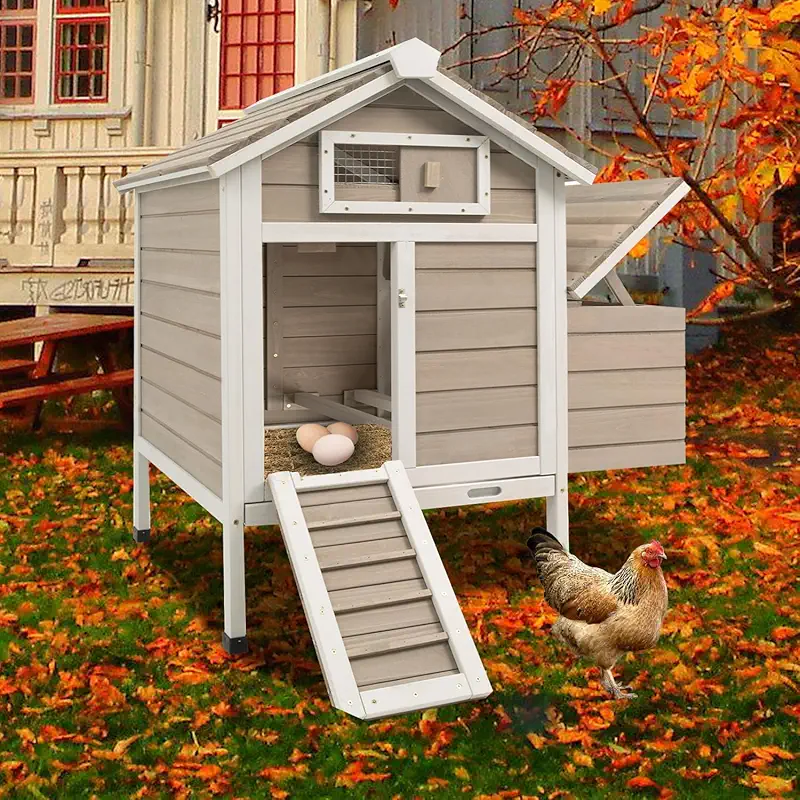
3. Bedding that feels like a soft forest floor
Bedding is not just to catch droppings. It is the mattress your hens walk and sleep on. In a coop for six, I like a mix that stays fluffy and dry:
- A deep layer of dry pine shavings or chopped straw on the floor.
- Extra soft material in the nesting boxes, like straw or hay (changed often).
- A sprinkle of fine sand in high-poop areas under the roosts for easy cleaning.
A dry coop does not smell “like chickens”. If you smell strong ammonia when you open the door, your bedding is too wet or too thin. Six hens in a wooden coop can still smell like clean wood and straw when you keep things dry.
4. Roosts and nests that avoid nightly fights
In a wooden chicken coop for 6 chickens, the roost is your most important piece of furniture. I like wooden bars about the width of my thumb and first finger together, with the edges slightly rounded. Chickens sleep more peacefully when their toes can wrap comfortably.
For six hens I use:
- At least 6–8 inches of roost space per hen, more if you can spare it.
- Two levels of roost, but not too far apart, so weaker hens are not bullied off the top.
- Nesting boxes tucked away from direct light, with a little “lip” to keep bedding inside.
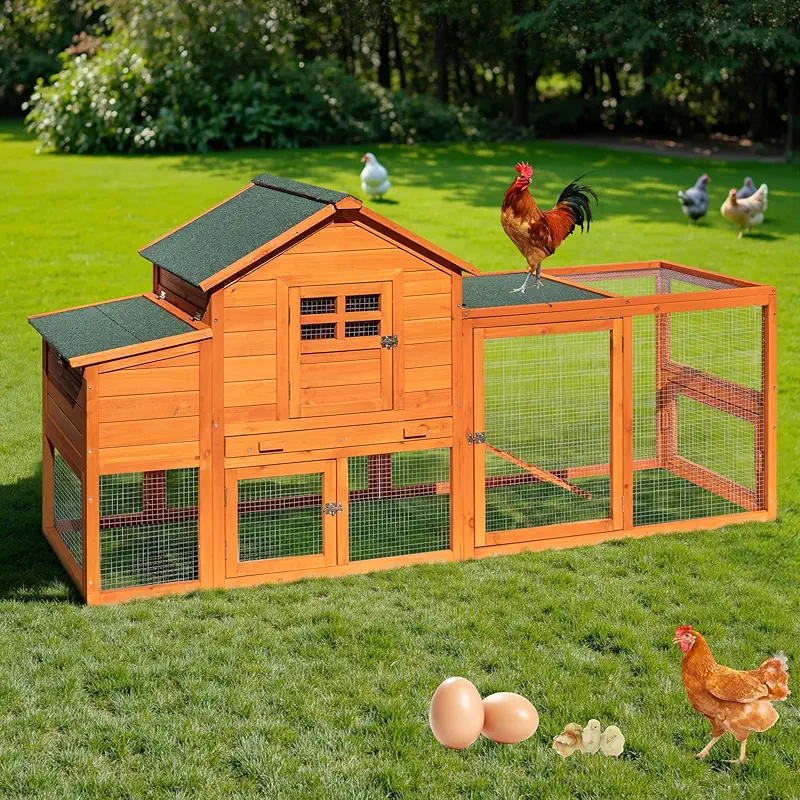
Daily life around a wooden coop for six hens
Once the coop is built, life settles into a simple rhythm. That rhythm is what makes chicken keeping comforting. My routine may help you imagine how your days could feel with a solid wooden coop and a flock of six.
Morning routine
I like to reach the coop just as the light softens the sky. Before I open the door, I listen. Calm clucking is a good sign. Loud empty cries usually mean something is wrong.
- Open the pop door and watch how they come out. Limping or slow hens need checking.
- Glance at the bedding under the roost. Too much wetness tells you ventilation or density is off.
- Top up feed and water, and check that the drinker is clean.
My old hen Daisy used to greet me at the door every morning. If she stayed on the roost looking small, I knew to pause my day and find out why. The coop talks to you, if you give it a moment.
Evening check
At dusk I close the coop with the same short list in my head:
- Count: can I see all six hens on the roost, eyes half closed?
- Check latches and the edges of doors for any new gap a predator could work on.
- Look up. Condensation on the inside roof means poor airflow.
A wooden coop holds warmth nicely, but you must give humid air a way out. That is why I always prefer models with higher vents as well as windows I can shut against sideways rain.
FAQ about a wooden chicken coop for 6 chickens
Sometimes yes, often not. Many labels are optimistic. For six hens I look beyond the marketing number and measure the actual floor and roost space. If the coop will only keep them inside at night with a big run outside, a tight 4–6 model can work. If they will spend long winter days in the coop, I choose something clearly larger than “for six”.
Three boxes are perfect for most flocks of six. You will still find all of them queuing for the same favorite box on some days, but that is normal. More boxes do not hurt, but they take floor space. I prefer three roomy, well-bedded boxes over six tiny ones.
In many climates, a well-built wooden coop with deep dry bedding is enough. Chickens cope better with cold than with damp wind. I focus first on blocking drafts at perch height and keeping bedding dry. In very cold regions, some keepers add simple foam boards on the outside walls, protected with extra wood, but I never seal everything so tight that air cannot move.
With six hens, I do a quick “poop scoop” under the roosts every day or every second day. Once a week I stir the bedding and remove any obviously wet spots. Every month or two, depending on weather, I do a deeper clean and add fresh material. A little, often, keeps it easy and keeps the coop smelling like wood and straw instead of ammonia.
You can, but I encourage you to think about the calmest future, not the fullest. Overcrowding brings pecking, feather loss, and disease. If you know you will want more birds soon, choose a slightly larger model now. Your flock will reward you with quieter behavior and better laying.