
Wood chicken coop roof
Wood chicken coop roof
When people ask me how my hens stay dry, calm and healthy through wild rain and bright summer sun, I always start from the same place: a good wood chicken coop roof that you can trust.
I have raised hens for many years, and I have seen what happens with weak roofs: dripping corners, cold drafts, and sadly, stressed birds. With a solid wooden roof, life in the run becomes quiet and safe, both for the flock and for the human who loves them.
Let me show you what I have learned about choosing and caring for a wood chicken coop roof. I will share the simple checks I do each season, the mistakes I made in my first years, and the little habits that keep my hens warm and dry even when the weather turns rough.
You do not need fancy tools or complicated skills. You only need a bit of patience, a kind eye for your birds, and a roof that has been built with them in mind.
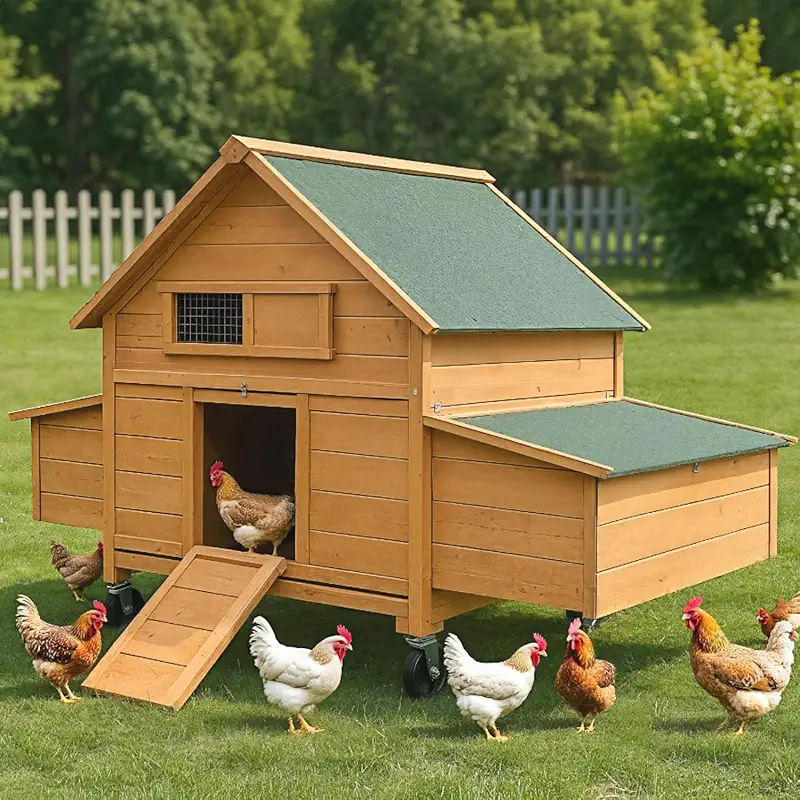
A sturdy wooden roof, raised off the ground, has kept my oldest hens comfortable through many winters and very hot summers.
Why the roof matters more than you think
Many people focus on cute nesting boxes or wide runs. Those are important, of course, but the wood chicken coop roof quietly does most of the hard work. It carries the snow, breaks the wind, catches the first drops of rain, and shields your flock from strong sun.
I still remember one autumn storm when I had two coops in the yard. One had a thin, poorly sealed roof I had thrown together in a hurry. The other had a solid wooden roof with good slope and firm joints. By morning, the first coop had wet litter, damp nesting boxes, and shivering pullets. The second coop smelled dry, and the hens were already scratching for breakfast as if nothing had happened.
That bad storm taught me more than any book. I saw how just one weak corner in a wood chicken coop roof can ruin all your careful work with bedding, feeding and cleaning. Since then, I never ignore a small drip.
Main jobs of a wood chicken coop roof
- Keep litter and nest boxes dry so hens do not sit in damp bedding.
- Block direct drafts from above, especially over roosts at night.
- Let stale, moist air out without letting rain in.
- Offer shade and cooler air in summer heat.
- Carry snow and heavy rain safely away from the coop.
Wood vs. other roof materials for chickens
Over the years I have tried plastic panels, metal sheets and different kinds of wood. I always come back to a well–built wooden roof, often with an extra protective layer on top. Wood feels calmer inside the coop: less echo, less sudden heat, and a more gentle smell for the birds.
| Roof type | Comfort for hens | Noise in rain | Heat in summer | Notes from my flock |
|---|---|---|---|---|
| Wooden roof, bare | Good | Soft | Moderate | Fine if you keep it sealed and painted; needs regular checks. |
| Wood + felt or shingles | Very good | Very soft | Good | My favorite setup for small backyard coops; cozy and quiet. |
| Metal sheet alone | Fair | Very loud | Can get hot | Works better when mounted over wooden boards with air gap underneath. |
| Plastic or polycarbonate | Mixed | Medium | Can overheat | Best when only used over runs, not over the closed sleeping area. |
A wood chicken coop roof gives you a strong base. You can leave it simple or add a top layer like shingles, felt or metal. I like to think of the wood as the bones and the outer layer as the coat. Together they keep the little bodies underneath safe and comfortable.
What I look for in a good wood chicken coop roof
When I help friends choose a new coop, I walk around it slowly and look at a few simple but important details. You do not need special knowledge; you only need to know what to watch for.
- Roof slope that clearly sends water away and does not let it pool.
- Solid boards with no large gaps where rain or wind can slip in.
- Edges that hang a bit past the walls to protect them from dripping lines.
- Secure hinges if the roof opens, so it does not slam in strong wind.
- Wood that has been treated or protected from rot, but safe for animals.
Looking for a ready‑made coop with a wooden roof?
When I wanted a small extra coop for new pullets, I chose a simple wooden model with a sloped roof and easy access for cleaning. I liked that I could lift the roof, check every corner, and add my own sealant where I felt it needed a little extra care.
Many wooden coops with sloped roofs and nest boxes are grouped together here, so you can compare shapes and sizes in one place. You will see light roof designs for mild weather and stronger builds for places with rain and snow.
Let me compareEveryday care for your wood chicken coop roof
Taking care of a wood chicken coop roof is not hard if you stay ahead of problems. I set small habits through the year instead of waiting for big repairs. The hens do not thank me with words, but I can see the result in dry straw and calm roosting at night.
My simple seasonal routine
This is the routine I follow on my own coop. You can adjust it for your climate and the size of your flock.
- Early spring: I check for any lifted corners, rotten spots or cracked sealant after winter.
- Late spring: I make sure there is no standing water on top and that shade is enough for the coming heat.
- Late summer: I clear leaves, seeds and dust that might block small gaps for ventilation.
- Autumn: I gently press along the boards to feel for softness that might mean rot.
- Before deep winter: I look for hidden drips during a rain or by using a hose for a short test.
On heavy rain evenings, I sometimes go out with a small lantern, open the coop door a crack, and just listen. If the roof is doing its job, I hear the soft sound of rain on wood and the low clucks of sleepy hens. When the roof was leaking in the past, I heard dripping in one corner and a restless shuffling on the roost bar.
Wood protection: paint, stain and sealant
Bare wood can look pretty and natural, but for a roof that will face sun, rain and snow, I like to give it an extra layer of care. A good finish keeps the roof stronger for longer, and your hens will enjoy a coop that does not shed dust or small splinters inside.
What has worked well for my roofs
- Light‑colored outdoor paint on the top side, to reflect summer heat and slow down sun damage.
- Soft stain or oil on the under side of the roof, to keep the wood from drying and cracking.
- Flexible sealant along joints, so small movements from temperature changes do not create gaps.
When you browse wooden coops, I suggest looking closely at the pictures of the roof. I like to see clean edges, even color and no raw cuts that look forgotten. A well finished wood chicken coop roof feels like someone cared at the building stage, and that spirit of care continues through your own maintenance.
Where I search for new wooden roof ideas
From time to time I look at new coop designs, mainly to learn. Different builders solve the same problems in many ways: vents placed under the eaves, double‑layer roofs, clever overhangs above nest boxes. Seeing these details helps me improve my own old coop without rebuilding everything.
You can look through many models with wooden roofs gathered on one page and note down little ideas that would fit your yard.
I want ideasShape and slope: how the roof guides water and air
The shape of your wood chicken coop roof decides how water leaves and how air moves. I used to think “a roof is just a roof,” but now I pay close attention to slope and overhang.
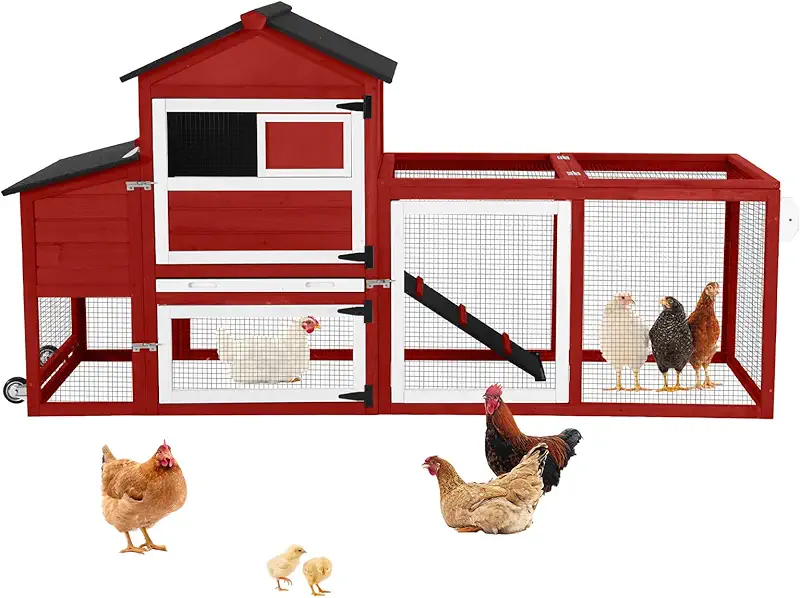
A simple single‑slope wooden roof sends rain to the back, away from the door and feeders.
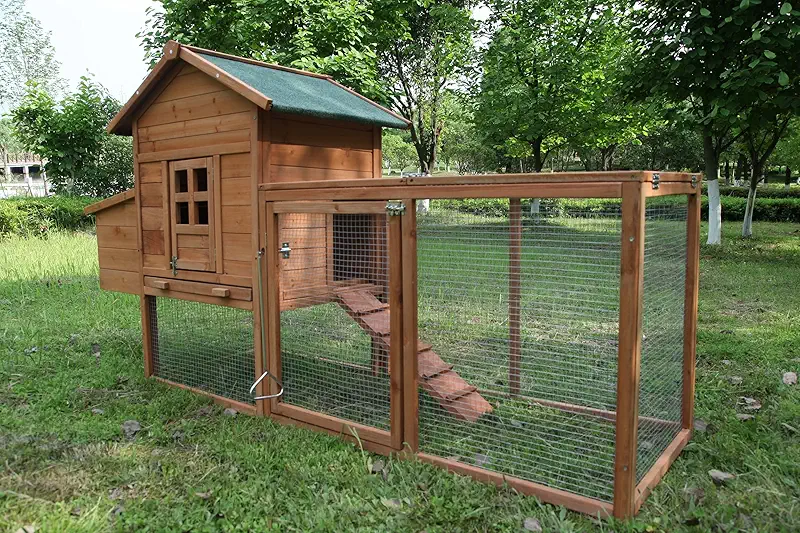
A peaked roof gives more headroom and space for warm air to rise above the roosting bars.
Single slope vs. peaked roof
In my own yard I use both. The small grow‑out coop has a single sloping roof that is very easy to clean and inspect. The main layer coop has a peaked roof, which lets warm, moist air rise above the sleeping hens before it leaves through vents.
- Single slope roof: Simple, light, easy to inspect. Good for small flocks and milder weather.
- Peaked or gable roof: More space inside and better for heavy rain or snow, but a bit more complex to build.
Whatever shape you choose, try to picture a strong wind and a long rain. Ask yourself: where will the water go, and where might it try to sneak in? A little mental walk like this can save you from wet bedding later.
Ventilation under a wooden roof
A good wood chicken coop roof keeps rain out, but it must also let warm, moist air escape. Chickens breathe out a lot of moisture when they sleep close together. If that air cannot leave, it turns into dampness, and dampness brings smell, frost and sickness.
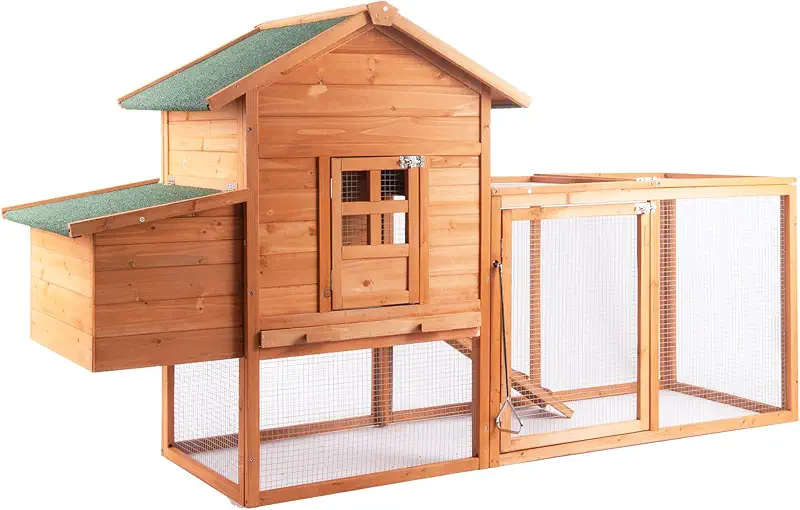
Small vents high under the roof let moist air out while hens sleep in calm air below.
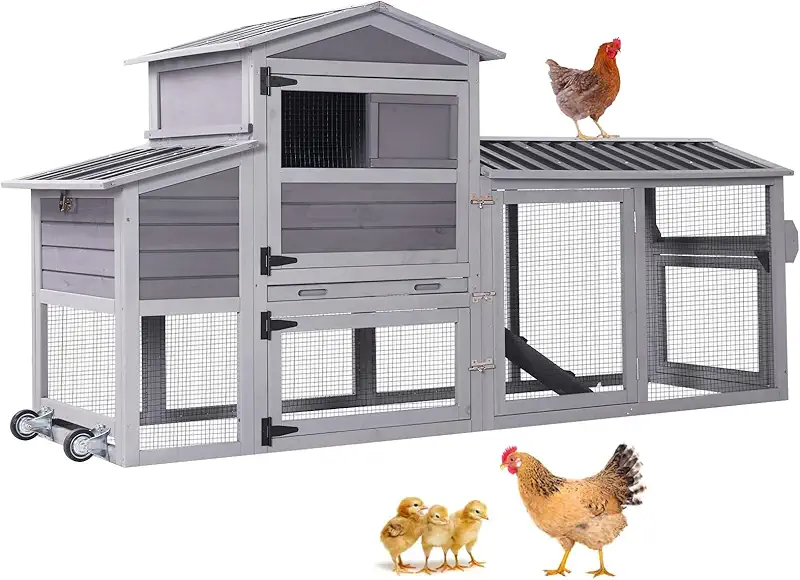
Overhangs protect vents and walls from direct rain, even in windy storms.
I like to keep small, secure openings along the highest line of the coop, just under the roof. They are covered with fine wire, not plastic, so no predator can chew through. The hens sit lower, in calmer air, while moist air slowly finds its way out at the top.
On a cool night, I sometimes step into the coop, close the door behind me for a moment, and breathe through my nose. If the air feels heavy or sharp, I know I must improve ventilation. A good wood chicken coop roof supports this by giving space above and safe spots for vents.
Snow, wind and strong sun: how the roof protects the flock
Not all climates ask the same from a wood chicken coop roof. Some of my friends live where snow loads are heavy. Others face strong sun almost all year. I have learned a lot from listening to them and watching how their birds behave.
In snowy areas
- Choose a stronger roof frame with thicker wood and good support beams.
- A steeper slope helps snow slide off instead of piling up.
- Keep roof edges strong so they do not crack under mixed loads of snow and ice.
- Check after each big storm for bending or strange sounds when you push gently from below.
In hot, sunny areas
- Light‑colored or well‑insulated wood roofs stay cooler inside.
- Generous overhangs create shade near doors and dust‑bath areas.
- Ventilation near the roof line becomes more important than perfect warmth.
- Roof material should not turn the coop into an oven; wood helps soften temperature swings.
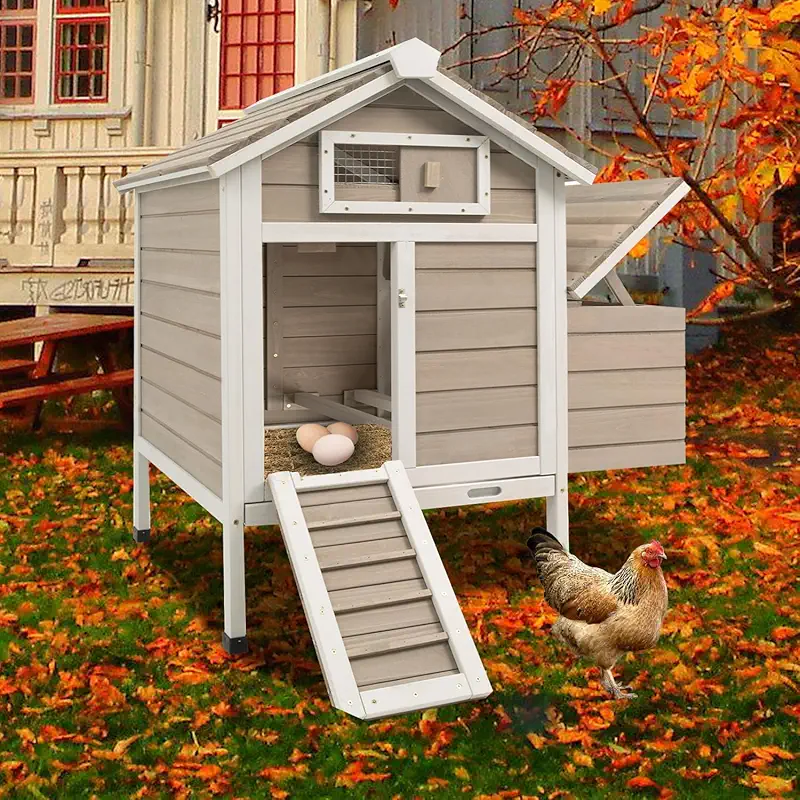
A wooden roof with shade around the run keeps the ground cooler and softer for bare chicken feet.
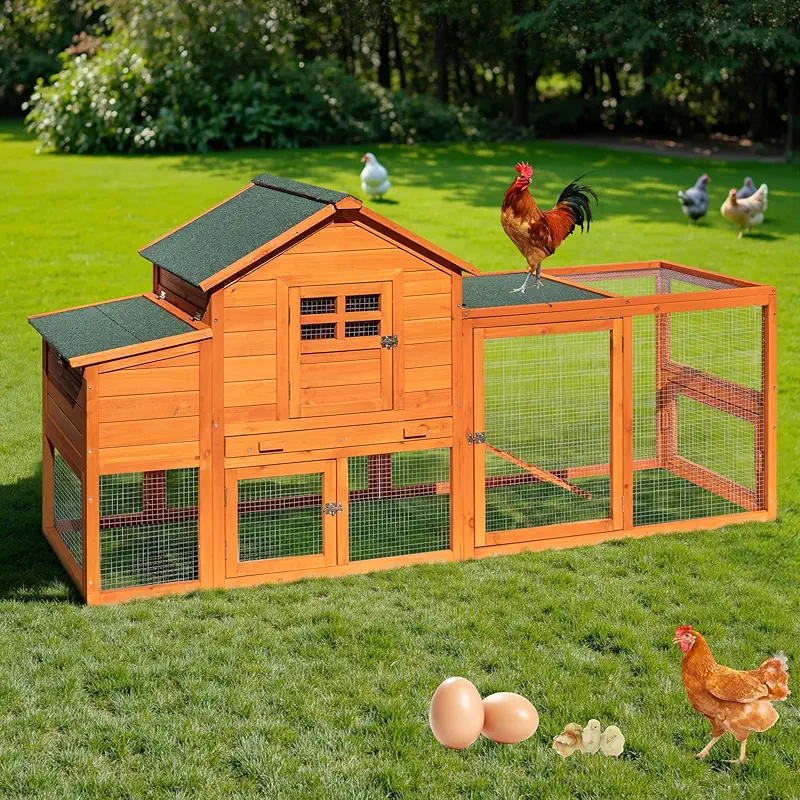
Raised roofs and dry runs help keep feathers clean and spirits high, even after long rain.
Choosing a size and layout that fits your birds
The roof does not live alone; it is part of the whole coop body. When you select a wood chicken coop roof, you are also choosing the space under it. Hens need enough room to move, stretch wings and get away from each other when they feel like it.
I like roofs that match the ground plan well: not too small, not dramatically bigger than the walls below. A balanced roof looks steady and is easier to keep sealed along the edges.
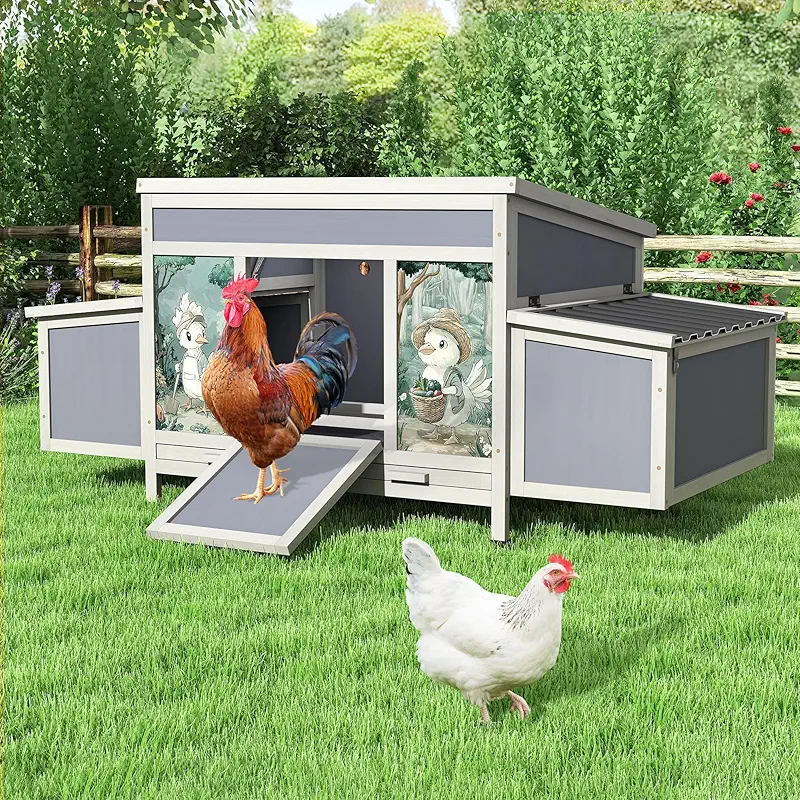
A compact wooden roof above a sheltered run gives hens a dry corner in every season.
When you browse coops and their roofs, try to picture your own flock inside: how many hens, how they like to roost, and where sun and wind come from in your yard. The right wood chicken coop roof is not just good on paper; it fits your birds’ little habits.
See different roof shapes together
It can help to look at several wooden coop roofs next to each other: tall ones for bigger breeds, long low ones for light flocks, and compact designs for tight spaces. Having many styles in one place makes it easier to imagine what your hens would enjoy.
I often scroll through these wooden coops when planning small changes to my own setup. Even if I do not bring home a new coop, I always come away with one or two helpful ideas.
Let me browse calmlyFAQ about wood chicken coop roofs
1. How often should I inspect my wood chicken coop roof?
I like to give my roof a quick look every week when I collect eggs and a slower, careful check at the start of each season. Look for soft spots in the wood, lifted edges, rusty screws and any sign of water stains inside the coop. Short, regular checks are kinder on both you and your flock than waiting for a big repair.
2. Do I need to waterproof the roof if it is already painted?
A good outdoor paint is a strong first step, but wood can still crack over time. I suggest paying extra attention to joints, nail holes and along the ridge line. If you see tiny gaps, use a safe, flexible sealant. The goal is not to seal the whole roof in plastic, but to close the places where water wants to sneak in.
3. Will a wooden roof keep my coop warm enough in winter?
A wood chicken coop roof is part of the warmth picture, but not the only part. What matters most is dry bedding, no drafts at bird level and good ventilation high up. Wood helps by softening temperature changes, especially if you have a layer like shingles or felt on top. In my own coop, the hens stay comfortable in winter with a wooden roof, deep litter and no direct wind on the roosts.
4. Can I walk on my wood chicken coop roof to clean it?
I usually avoid standing on small coop roofs. Most backyard models are not built for a person’s weight. Instead, I use a short ladder and a long‑handled brush to remove leaves or light snow. If you need to step on the roof, make sure the structure is clearly designed for that and test very carefully at the edges first.
5. How do I choose a roof if my yard is windy?
In windy places, I prefer a lower roof profile with fewer over‑tall edges that can catch gusts. Strong hinges and latches are important, especially if the roof opens for cleaning. When I look at ready‑made coops for windy spots, I pay attention to how the roof is connected to the walls: deep screws, metal brackets and solid corner joins make me feel much calmer before the next storm.