
Wooden chicken coop for 8 chickens
Wooden chicken coop for 8 chickens
I have spent many early mornings listening to gentle clucking while the sun rises over my wooden coops. If you want a wooden chicken coop for 8 chickens that feels safe, dry, and peaceful, let me share what has worked for my own little flock.
When you look at different coops, imagine your hens on a stormy night: room to sit without crowding, dry wood, good air. If you want to see options that match what I describe here, you can look at a hand‑picked selection.
Let me check theseThis page contains affiliate links. If you choose something through them, it won’t cost you more, and it helps me keep sharing small, honest tips from my coop.
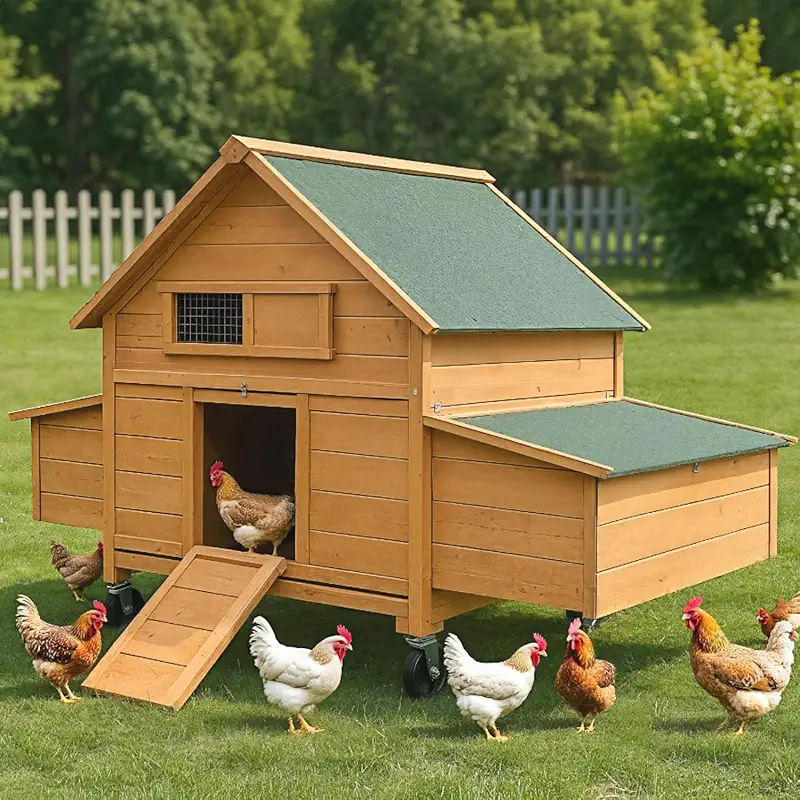
What a good wooden coop for 8 hens really feels like
When people ask me about a wooden chicken coop for 8 chickens, they often talk about measurements first. I understand that, but the truth I learned over many years is this: a good coop is not only about numbers, it is about how it feels inside on the worst day of the year.
On a cold, wet evening, I open the coop door and listen. If the birds are calm, breathing quietly, not panting, not shuffling to escape drafts, I know the coop is doing its job. That is the feeling I want you to have too.
For eight grown hens, I like a solid wooden coop where each bird can settle on the perch without touching sides, and still have a little space if a bossy hen wants distance. It does not need to be fancy. Simple, dry, strong wood with good air is kinder than any decorative roof that leaks.
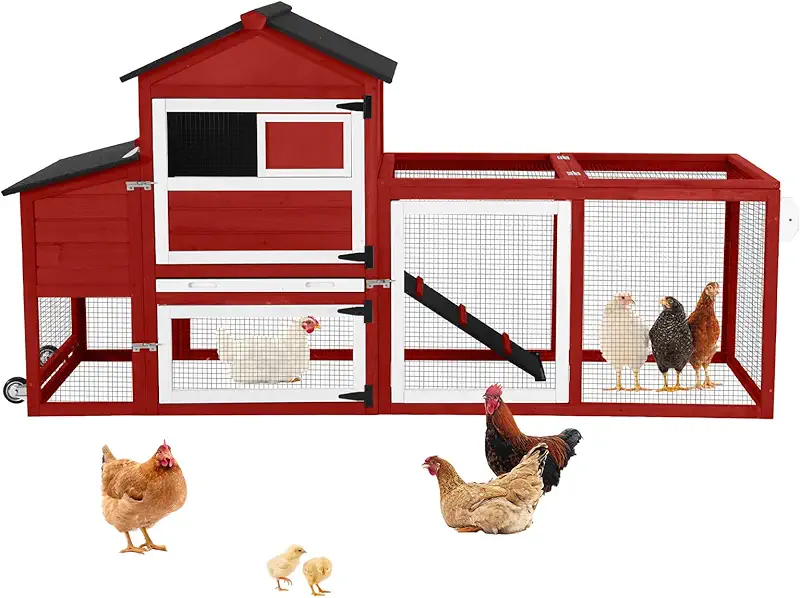
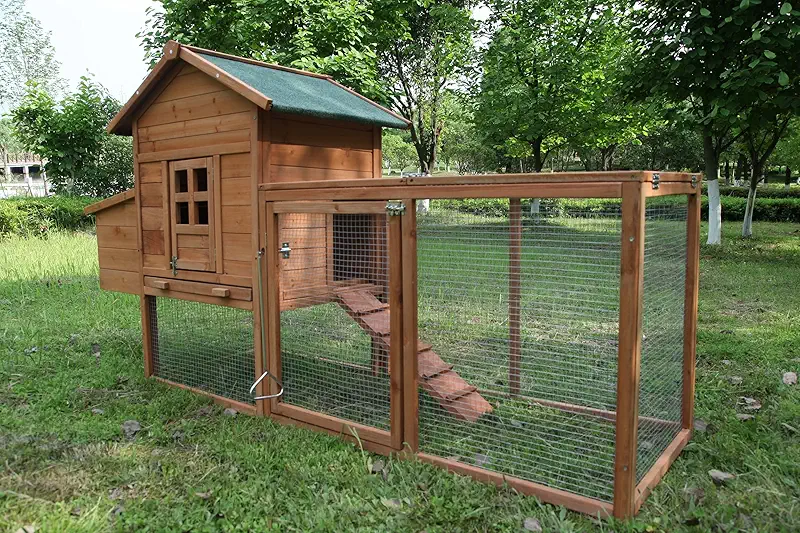
Many product pages will list how many birds “fit” in a coop. I always smile sadly at that word. My rule is simple: if a coop says it is for 10–12 chickens, I see it as right for 6–8 happy hens. Using a coop a little under capacity gives your birds space to stretch, flap, and shuffle without stress.
Space and layout: what 8 hens truly need
Let me share the way I plan space inside a wooden chicken coop for 8 chickens, based on mistakes I made years ago. My first coop looked big to me, but on hot nights the birds argued for the breeziest corner, and some slept on the floor. That is how I learned to think bird‑first, not human‑first.
Floor space inside the coop
Inside the sleeping area, I like at least 4 square feet per hen if the outdoor run is attached and generous. So for eight hens, 32 square feet of interior space feels kind. This might be, for example, a 4 ft by 8 ft coop. If the run is smaller or they spend long days indoors in winter, more space is always better.
I also leave a clear walking path for myself. You will need to bend in there, clean, and check vents. If you have to twist sideways around the drinker every time, cleaning will be harder, and hard jobs get postponed.
Perches and nest boxes
Chickens love to sleep as high as they comfortably can. For eight hens, I like at least 8–10 linear feet of perch, using 2–3 staggered bars. The wood should be wide enough for them to cover their toes with their feathers in winter. Rounded edges but a flat top are ideal.
Nest boxes can be simple wooden cubes. You do not need one per hen. Four nests for eight birds is more than enough, as they take turns and all swear that one corner is the “best” anyway. The key is to keep nests slightly lower than the perches so they do not sleep in them and soil the eggs.
Outdoor run considerations
A wooden chicken coop for 8 chickens is not complete without a safe run. If they cannot free‑range, think of at least 10 square feet per bird outside. Hens that can scratch, dust‑bathe, and wander a little will be quieter and more relaxed at night.
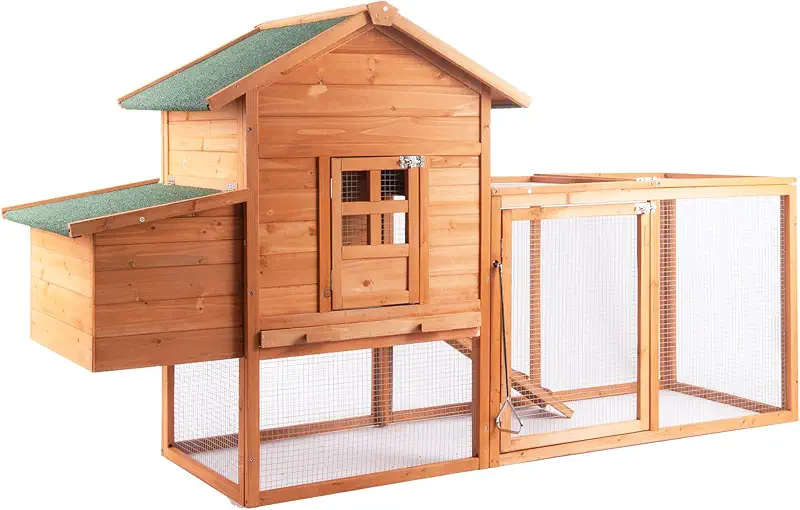
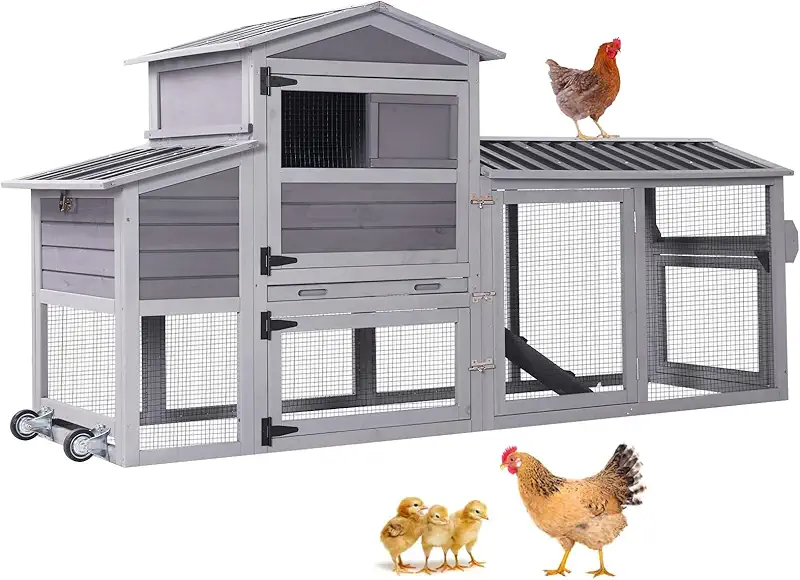
One of my runs is not fancy at all: just strong wire, posts, and a simple gate. But the birds dust‑bathe under a berry bush and lean against the warm wood of the coop in the sun. They do not care how it looks; they care that it is safe and dry.
Why I still choose wood over plastic for my coops
Over the years I have tried different materials, and I always walk back to a wooden chicken coop for 8 chickens rather than plastic. Wood feels calmer to me. It breathes a little. It holds warmth softly instead of turning into an oven.
With wood, I can add hooks, shelves, an extra little vent, or a small window with a bit of wire. When I see how my hens move inside, I can adjust the coop. I remember one winter when condensation built up near the roof. The next day I simply drilled a small extra vent hole, stapled mesh over it, and the problem was gone.
Plastic can be lighter, but on bright summer days it often gets hot unless shaded very well. Inside a solid wooden coop, the air feels quieter and more stable. That stable feeling shows in the hens’ behavior: less pacing, more settled preening on the perch before sleep.
Protecting wood from weather and time
Wood does need care. I treat the outside with a hen‑safe wood preserver and check it each spring. Any small gaps that appear get sealed before rain finds them. I learned this the hard way when a tiny crack in a roof board dripped onto the same nest box every storm, and one gentle hen kept choosing that wet box anyway.
Inside, I use a dry bedding method, adding layers of shavings or chopped straw and stirring it. This keeps the floor dry and the wood healthier. If a board ever starts to soften, you can usually replace just that piece instead of the whole coop.
Safety, ventilation, and light: quiet details that matter
When I think about a wooden chicken coop for 8 chickens, I picture three gentle promises I make to my birds: nothing will eat you, nothing will drip on you, and you will breathe easily all year.
Keeping predators out
I have lost birds in the past, and I never forget those nights. That is why I pay serious attention to hardware mesh, latches, and floor strength. The door should close with a firm click, not a wobbly slide. I like to check every opening at dusk with my hand, looking for any gap larger than a finger.
The run wire must be strong. Thin “chicken wire” keeps birds in but does not keep determined visitors out. For the bottom of the run, I either bury the mesh a little or bend it outward in an “apron” to stop digging.
Air without drafts
Ventilation is the quiet hero of a good coop. Eight chickens breathe out a lot of moisture, and their droppings give off ammonia. If the air is still and wet, their lungs suffer and frostbite risks rise.
In my own coops, I keep vents high up under the roof, on at least two sides, so fresh air can move without blowing across their backs. I also like a small window with wire, which I can open more on summer nights.
Natural light and daily rhythm
Hens are calmer when they have a sense of day and night. A wooden chicken coop for 8 chickens should have at least one source of natural light. Early mornings, mine hop down from the perch and stand in the soft light patch near the door, stretching one wing at a time. That small moment tells me they are living, not just surviving.
Setting up your new wooden coop: how I do it step by step
Let me walk you through how I set up a new coop for eight hens. I follow almost the same little ritual every time, and it has served my birds well.
1. Choosing the spot
I start by standing in the yard and watching how the sun moves. I look for a place with morning light and afternoon shade. Hens love the early warmth but suffer in strong afternoon heat. I keep the coop slightly raised to avoid damp ground.
2. Assembling and checking every joint
When the boxed coop arrives, I take my time. I put the pieces out, check that all panels are straight, and tighten every screw as if a curious fox will test it later. A wooden chicken coop for 8 chickens needs to be firm and steady before a single hen steps inside.
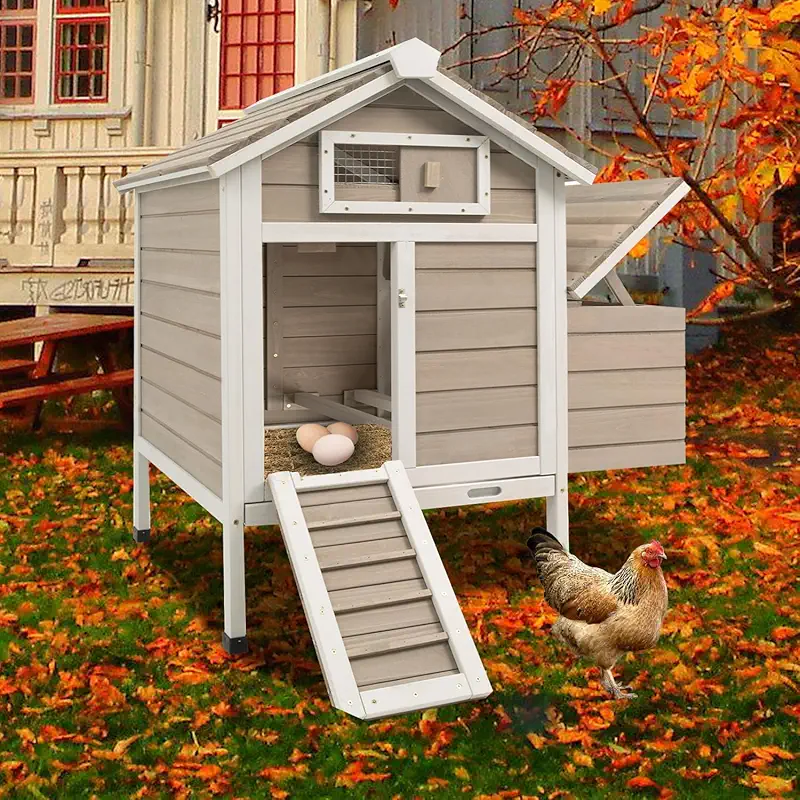
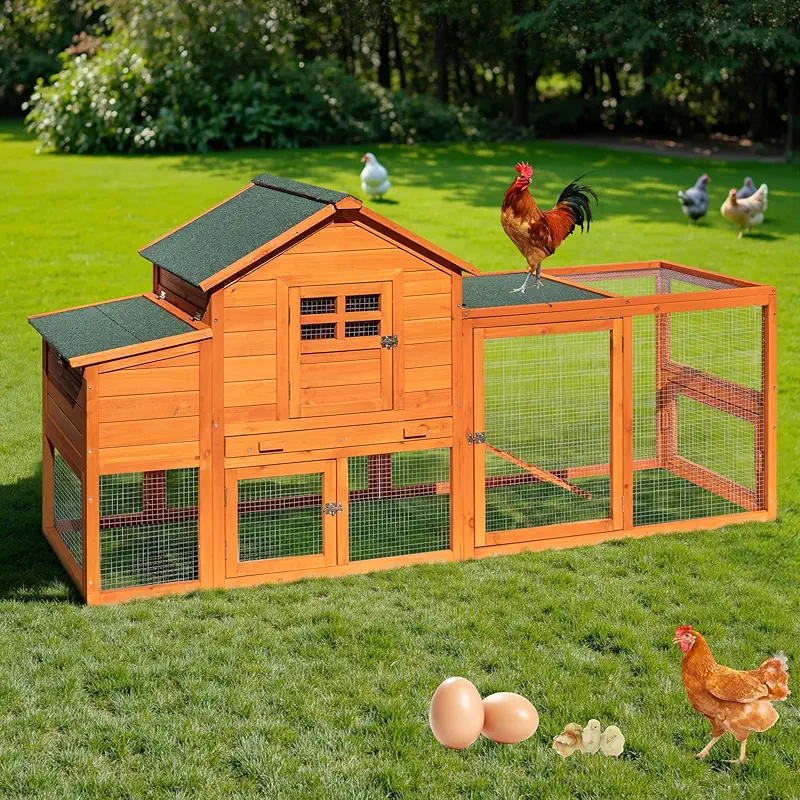
3. Bedding, feeders, and first night
I lay a generous layer of dry bedding and gently shake it level with my hands. Then I place the feeder and drinker so they are easy for me to reach and easy for hens to find, but not directly under the perches. Droppings fall mainly under the roosts, so I keep that area clear.
On the first evening, I help the birds find the ramp and door. Sometimes I quietly lift a shy hen into the coop, close the door, and talk to them a little while they settle. After a week or two, they put themselves to bed like clockwork.
4. Gentle routine and cleaning
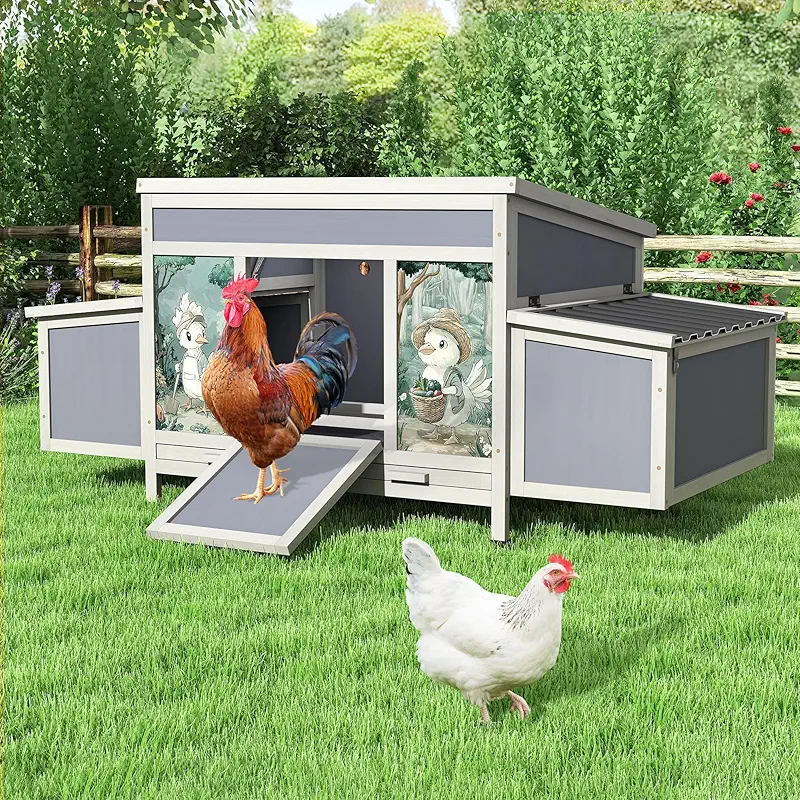
My daily routine is simple and calm. Each morning I open the door, greet them by name, and check the bedding by smell. Clean, dry wood has a sweet, light scent; if I sense ammonia, I remove the wet spot right away.
Once a week I do a deeper tidy, scraping the droppings under the perches and adding fresh shavings. Every few months I take out most of the bedding, let the coop air in the sun for a bit, and then re‑bed it. Hens in a clean wooden coop for 8 chickens stay healthier, and eggs stay fresher.
Little signs your coop is right for them
Sometimes people worry if they chose well. The birds will tell you, in their own quiet ways, whether your wooden chicken coop for 8 chickens is serving them.
- At night, most hens choose the perches, not the floor.
- They breathe with closed beaks; no panting when the weather is normal.
- Feathers around the neck and tail stay clean and smooth.
- Eggs appear in the nests more often than hidden in random corners.
- They walk in willingly at dusk instead of resisting the door.
When these small things line up, you can relax a bit. You built or chose a home that lets them live a quiet, dignified little life. To me, that is worth more than any pretty photo.
FAQ about a wooden chicken coop for 8 chickens
Is a “6–8 hen” coop really enough for 8 chickens?
I prefer to be on the generous side. If a coop is advertised for 6–8 birds, I think of it as most comfortable for six, and still workable for eight only if they have a big run and good ventilation. Crowding shows up on hot nights first, so watch how they behave in warm weather. If some always sleep apart or on the floor, they may be telling you they want more room.
How many nest boxes do I need for 8 hens?
Four boxes are plenty. My flocks have always shared nests, and often several line up to use the same favorite one. What matters more is that the boxes are quiet, slightly dark, and filled with soft bedding. Keep them clean and a little lower than the perches, and your hens will figure out the rest.
Do I need insulation in a wooden coop?
In many climates, good ventilation and dry bedding matter more than thick insulation. Chickens create a lot of body heat when they roost together. I focus on blocking drafts at roost height, keeping the roof dry, and layering bedding so their feet stay warm. In very cold areas, extra insulation can help, but never at the cost of fresh air.
How high should the perches be in a coop for 8 hens?
I like perches around 18–30 inches off the floor, with a gentle ramp if the birds are heavy breeds. That height keeps them away from dampness and drafts near the floor, but still allows easy cleaning underneath. Make sure the perches are all at similar height to prevent arguing over the “best” spot every night.
How often should I clean a wooden chicken coop for 8 chickens?
I do a quick spot clean every morning, removing wet patches or heavily soiled spots, and a deeper tidy once a week. Every few months I empty most of the bedding, scrub any dirty boards with a mild, bird‑safe cleaner, let the sun dry everything, and then rebuild the bedding. Your nose is a good guide: if it smells sharp or damp, the coop is asking for attention.