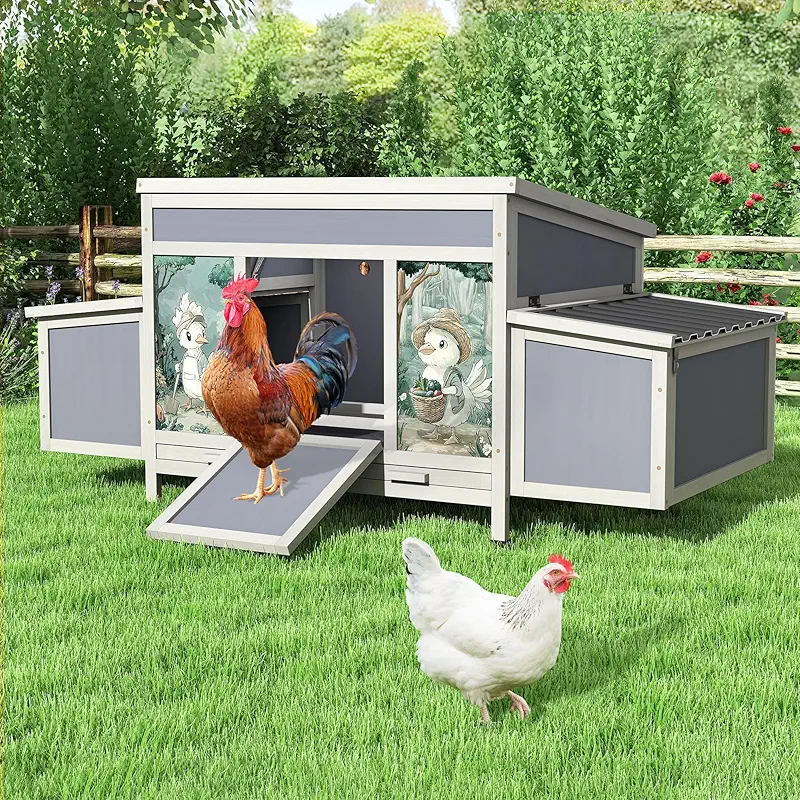
Wooden chicken coop for 20 chickens
I have shared my mornings with hens for more than twenty years. Their soft clucks, the little rush to the feeder, the warm eggs in my hands – they have become part of my family. When you care for around twenty hens, the coop is not just a wooden box. It is their safe bedroom, their shelter from cold wind, and the place where they feel calm at night.
On this page I want to help you choose a wooden chicken coop for 20 chickens that feels right for your birds and for your daily life. I will speak as I would to a neighbor over the fence: simple words, honest advice, and many lessons learned from muddy boots and early mornings.
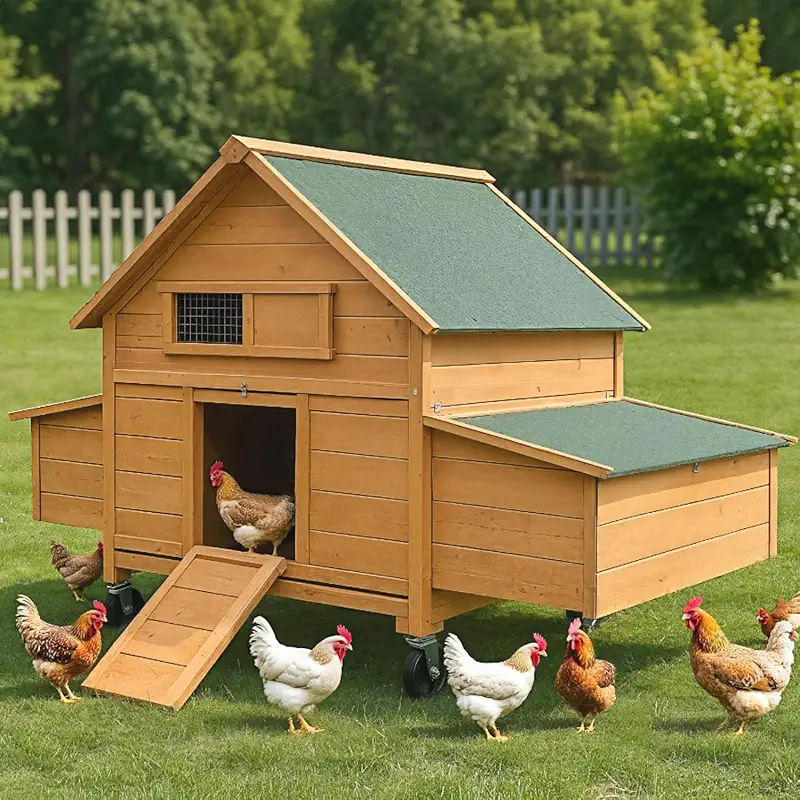
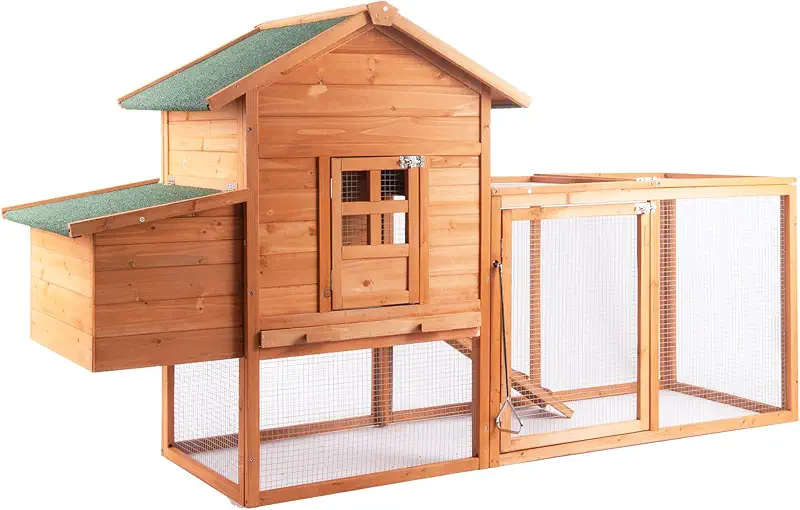
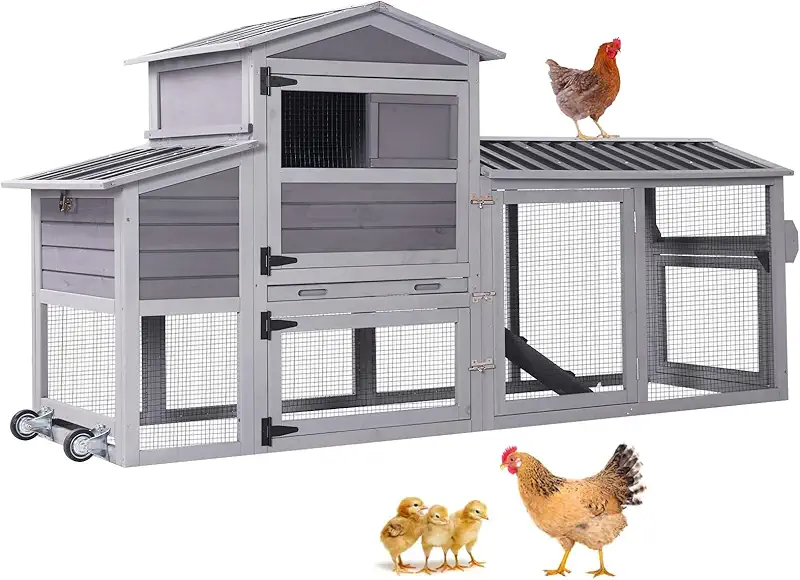
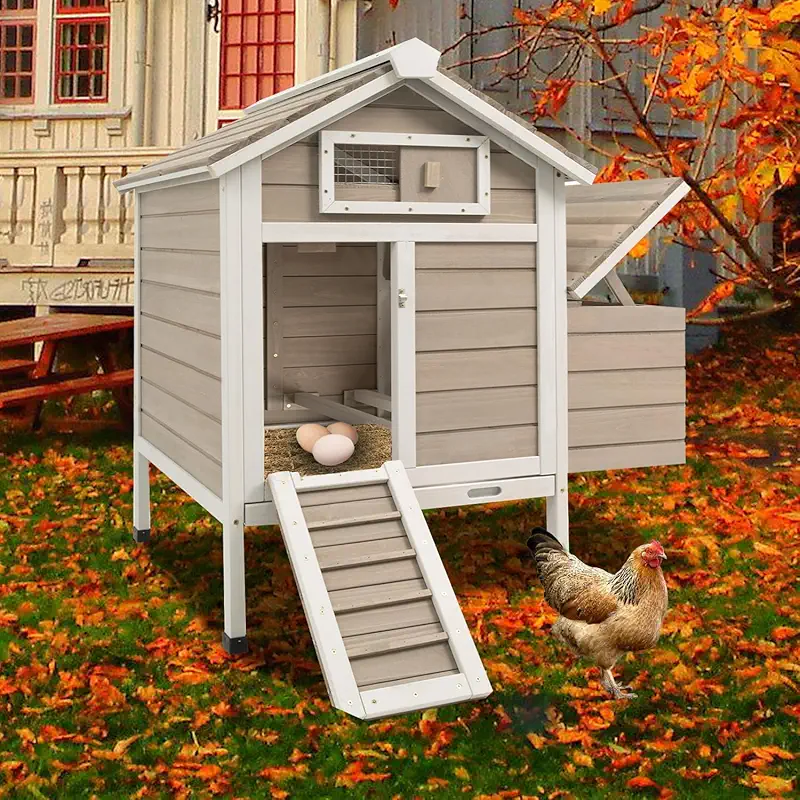
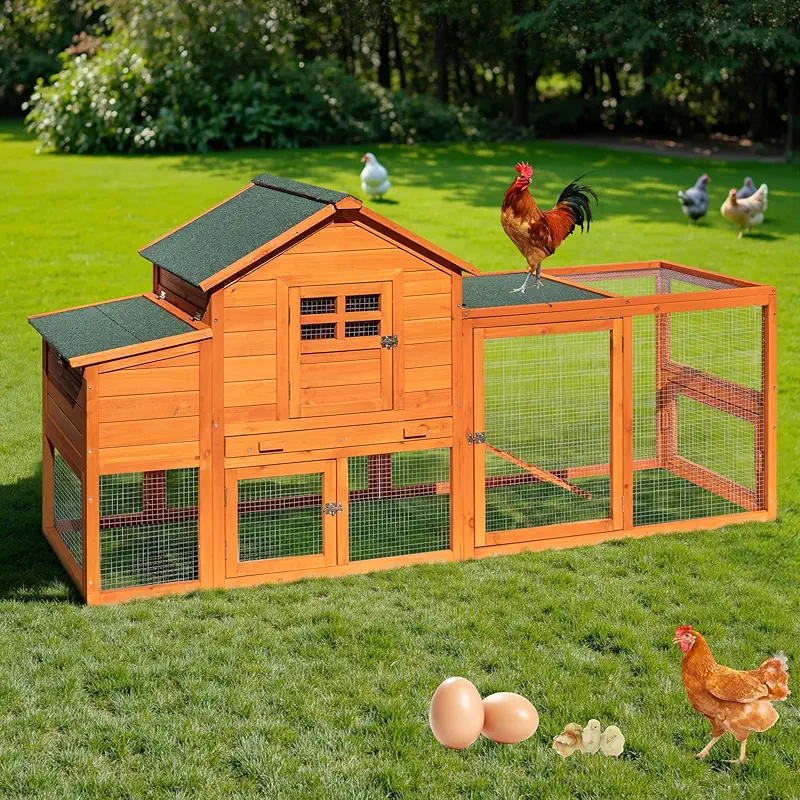
The coops you will see here are examples of what I look for: solid wood, enough space, easy access for cleaning, and small details that keep birds calm and safe.
When I pick a coop for a flock this size, I imagine myself doing chores on a dark rainy evening. Can I reach every corner? Are the perches at a gentle height? Will the hens stay dry if the wind changes?
Typical range: mid to higher budget
Strong wood and good hardware cost a bit more, but a calm, dry hen lays much more steadily. Cheap coops have always ended up costing me more in repairs and stress.
Let me see options I’ll check sizesHow much space a wooden chicken coop for 20 chickens really needs
Numbers on paper are one thing. Real hens, with their moods and pecking order, are another story. Over the years I have tried tight coops and generous coops. The calmest flocks always lived where they had just a bit more space than the minimum.
My simple space rule for 20 hens
For a wooden chicken coop for 20 chickens, I like these numbers as a starting point:
- Indoor coop floor: at least 80 square feet (about 7.5 m²) total – more if possible.
- Outdoor run: at least 200 square feet. Double that if they cannot free range.
- Perch length: around 8–10 inches of perch per hen.
- Nesting boxes: 1 box for every 4 hens (so 5 boxes for 20 hens).
I once tried to keep eighteen birds in a coop that was fine on paper but tight in real life. They still laid eggs, but they were louder, pushed each other more, and one shy hen always seemed to sleep on the floor. When I upgraded to a wider coop with better perch space, they settled almost overnight.
Key features I look for in a wooden coop for 20 hens
Not every big coop is a good coop. A large, badly designed space can be just as stressful as a small one. When I choose a wooden chicken coop for 20 chickens, I walk through a simple checklist in my head.
1. Solid wood and a dry floor
Hens do not like drafts under their feet. I prefer coops raised slightly off the ground, with strong wooden floors that do not bend when I walk on them. Smooth boards are easier to scrape clean and keep dry.
- Raised floor to avoid standing water and rot.
- Boards joined tightly, with no gaps at the corners.
- Non-slip ramp for the hens, with little cleats.
2. Roof that laughs at rain
Leaks are my biggest enemy. Even a small drip over a perch will chill a hen in winter. I always check:
- Roof with a good slope so water runs off quickly.
- Overhangs that protect the walls and the nest boxes.
- Sturdy waterproof material – shingles or metal over the wood.
3. Calm air: ventilation without drafts
Chickens breathe out a lot of moisture. If the air does not move gently, the inside of the coop becomes damp and smells of ammonia. My favorite coops have:
- Vent openings high under the roof peak.
- Wire-covered windows I can open more in summer.
- Solid walls at roost height so wind does not blow directly on the hens.
My personal story: growing into a coop for 20 hens
I did not start with twenty hens. At first, I had four little red pullets in a tiny wooden hut my father and I built from old boards. They were happy, and I felt quite proud, until I discovered how quickly a “small hobby” can grow.
Friends began to ask for eggs. My children named every hen. We added six more, then eight again. Soon I had almost twenty birds and a coop that felt like a cramped dormitory. I still remember one cold night when I checked them with a flashlight. They were squeezed on the roost, and a sweet lower-ranked hen named Daisy was sleeping on the floor in the corner, her feathers dusty.
That night I promised her I would do better. I started to study what a proper wooden chicken coop for 20 chickens should look like. I measured floor space, counted perches, and read every review I could find, always asking myself: “Would Daisy feel safe in this one?”
What changed when we moved to a bigger wooden coop
When I finally moved them into a larger coop, the change felt almost magical:
- They went to bed more quietly, with fewer arguments on the perches.
- Daisy finally found a spot on the roost, not on the floor.
- The coop smelled fresher because the air moved better.
- Eggs stayed cleaner since there was less crowding in the nest boxes.
That experience taught me to respect the quiet needs of hens. Space, good air, and a dry wooden home do more for their health than any vitamin you can buy.
Design details I love in a wooden chicken coop for 20 chickens
When you browse different coops, many look similar at a quick glance. But some small details can make daily life much easier for you and gentler for your birds.
Gentle ramps and doorways
Heavy hens, especially older ones, do not like steep ramps. I look for:
- Ramps with a soft angle and close-set cleats for grip.
- Pop doors wide enough for two birds to pass without pushing.
- No sharp edges or nails that could catch a wing.
Smart perch and nest layout
The inside of a wooden chicken coop for 20 chickens should feel like a small wooden village, not a pile of boards. I like:
- Perches all at the same height so the hens do not fight for the “top bunk”.
- Nest boxes slightly lower than the perches, so hens sleep on the roosts, not in the nests.
- A little lip on each nest to keep bedding and eggs from rolling out.
Easy-to-clean surfaces
I am not a fan of spending half a day scrubbing. Smooth wood and good access save my back and my time:
- Large doors or lids that open fully, not half-way.
- Removable perches so I can scrape them outside.
- Flat floor with no deep corners where droppings collect.
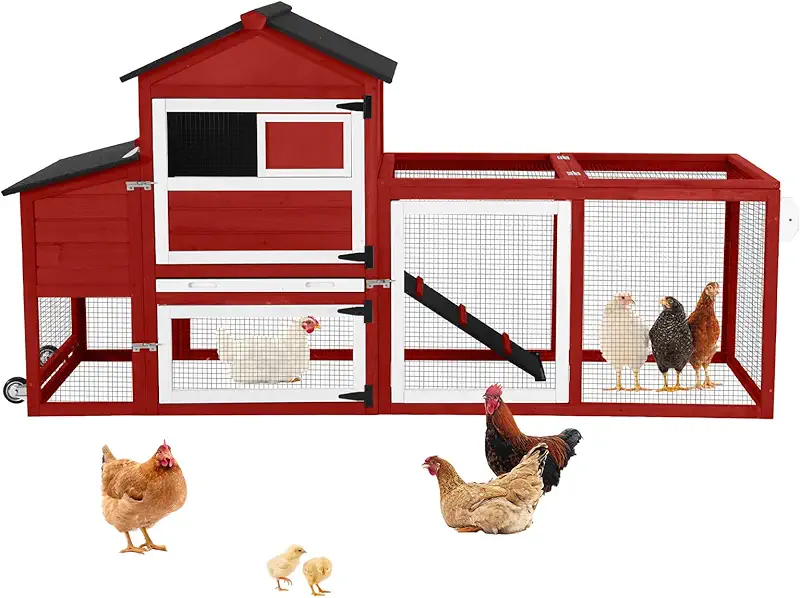
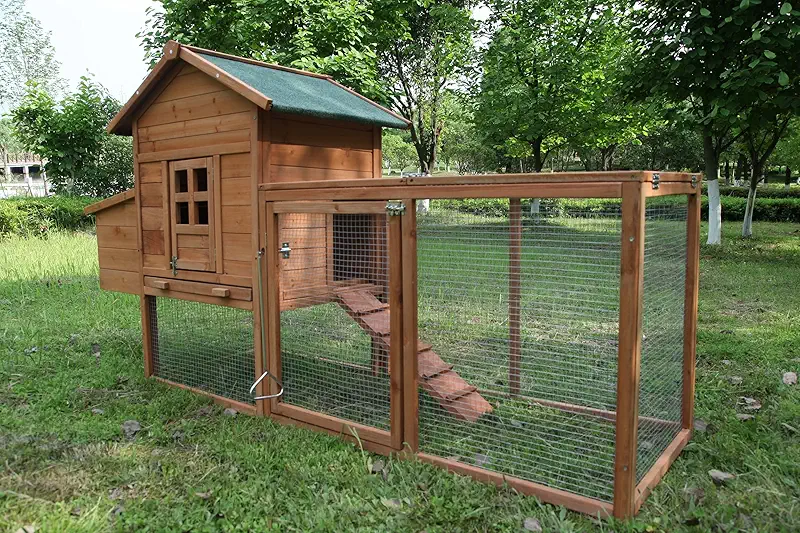
Protecting your flock: safety and predators
A coop for twenty hens is not just a home; it is also a fortress. Foxes, raccoons, dogs, and hawks watch a busy flock like we watch a bakery window. A strong wooden chicken coop for 20 chickens keeps them safe while they sleep.
Wood, wire, and latches that hold
I always walk around a new coop and tug on doors and wire as if I were a fox. Some things I insist on:
- Hardware cloth or strong welded wire, not thin chicken wire alone.
- Doors that close tight, with no loose corners.
- Metal latches that raccoons cannot simply pull open.
One year, a curious dog kept visiting at night. He never caught a hen, but he worried them badly until I reinforced the lower boards and added better latches. Peace returned, and egg laying steadied again.
Run layout and shade
For a flock of twenty, the run becomes a busy place. I like runs where:
- Part of the run has a solid roof or shade cloth.
- Hens have things to explore – a branch, a low platform, a dust-bath corner.
- The ground drains well so it does not turn into a swamp after rain.
A shaded, varied run keeps the flock calmer, so they pick at the ground instead of picking at each other.
Wooden coop care through the seasons
A good wooden chicken coop for 20 chickens can last many years if you give it a little gentle care. Wood is alive in its own way: it swells, dries, and weathers. I treat my coop like an old barn – steady and loved.
Spring: fresh start
In spring, I:
- Do a slow, deep clean – remove all bedding, scrape and sweep.
- Check for soft or dark spots in the wood that might mean moisture problems.
- Repaint or re-stain edges that face the weather.
Summer: shade and airflow
Hot days are hard on hens, especially in a crowded coop. I:
- Open all safe vents and windows, always covered in strong wire.
- Place cool water in the shade, not in direct sun.
- Add a small fan outside the coop, blowing across a vent (never directly at the birds).
Autumn and winter: staying dry and calm
In cold weather, I think more about moisture than about temperature:
- Keep bedding dry and fluffed – I like a deep layer of straw or shavings.
- Close low vents where wind can hit the birds, but keep high vents open.
- Check the roof and walls after big storms for tiny leaks.
Choosing your wooden chicken coop for 20 chickens step by step
When I help friends pick their first big coop, I walk them through a simple set of questions. You can use the same steps while looking at different models.
1. Where will the coop sit?
Go outside and stand where you plan to put it. Notice:
- Does the ground drain well after rain?
- Is there some shade during the hottest part of the day?
- Can you reach it easily in winter with snow or mud?
2. How many hens now, and later?
If you already know you might go from fifteen to twenty hens, choose a wooden chicken coop for 20 chickens now instead of “just enough” for today. It is easier to grow into a coop than to replace one.
3. How much time do you have for cleaning?
If you are busy, do not feel guilty. Just pick a design that works with your life:
- Removable trays under perches can make quick cleaning less of a chore.
- Large access doors reduce the time you spend hunched over.
- Well-planned roosts mean less mess in nest boxes.
4. Check real measurements, not only pictures
Always read the size details carefully. A photo alone can be misleading. I look for:
- Overall footprint of the coop and run.
- Interior floor area where birds actually sleep.
- Height inside – can I comfortably reach the back?
If you want to see different layouts and sizes of wooden chicken coop for 20 chickens in one place, you can explore several options and compare the measurements and photos side by side.
I’ll compare designs Check real dimensionsFAQ about choosing a wooden chicken coop for 20 chickens
For me, yes, most of the time. Wood “breathes” a little, which helps with moisture. It also feels more natural and keeps a steadier temperature. Metal can get very hot or very cold, and plastic can sweat inside if ventilation is poor. A well-built wooden coop, kept dry and cared for, gives a calm, stable home for a flock of twenty.
I like five good-sized nest boxes for twenty hens. They will still try to share their favorites, but with five boxes they rarely queue up or lay on the floor. Make sure the nests are slightly darker and quieter than the rest of the coop, with soft bedding and a little front lip to hold it in.
Free ranging helps, but the coop still needs enough room for nights and bad-weather days. Even if your hens spend most of their time outdoors, storms, snow, or very hot days may keep them inside for hours. A cramped coop will show its problems on those days. I always plan the coop as if they might need to stay in there all day from time to time.
With decent wood and a bit of care, I expect at least 7–10 years, often more. The coops I have loved the most lasted over a decade. The secret is to keep the wood dry: good roof, no standing water under the floor, and a light coat of stain or paint when the boards begin to look tired. Fix small cracks or leaks before they become big problems.
The biggest mistake I see is falling in love with a pretty picture and not reading the measurements closely. Many coops that are sold “for 20 chickens” are really comfortable for fewer birds, especially if winters are long in your area. Take a moment to measure your yard, compare floor space and perch length, and imagine your flock on a cold, windy night. Choose the coop that leaves them with a bit of room to breathe.
Walking towards the right wooden coop for your flock
If your heart is already with your hens, you are halfway there. The rest is choosing a wooden chicken coop for 20 chickens that matches that care with solid wood, calm air, and enough space for every bird to feel safe.
Think of your future self, stepping out at dawn with a mug of something warm. You open the coop, the smell is fresh, the hens murmur softly, and not one looks crowded or anxious. That feeling comes from the choices you make today.
You do not need the fanciest coop in the world. You just need one that is honest in its size, steady in its build, and kind in its design. Your hens will thank you in their own quiet way – with clean feathers, steady eggs, and peaceful evenings on the roost.
If you would like to look through different styles and sizes of wooden coops that can suit a flock around this size, you can explore them, check the dimensions, and see which one fits both your yard and your hens’ gentle needs.
Let me browse calmly See real coop photos